





 Subscribe


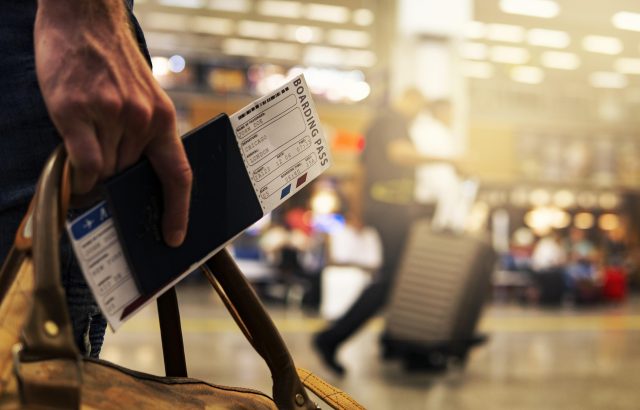
Biometric data replaces passport stamps across 29 countries, promising stronger security but raising concerns over airport delays
A major transformation in European border management has officially come into force. As of April 10, 2026, the European Union’s Entry/Exit System (EES) is fully operational, marking the end of traditional passport stamps and the beginning of a new era of digital, biometric-based border controls for non-EU travellers.
The system, gradually introduced since October 2025 across 29 European countries, is now fully implemented. It records entries and exits electronically, collecting not only passport data but also fingerprints and facial images of travelers entering the EU for short stays. The shift is designed to modernize border procedures, enhance security, and reduce fraud—but it is also expected to create initial disruptions, particularly in busy airports.
A system now fully in force
From April 10 onward, the new rules apply universally across participating countries. The EES replaces manual passport stamping with a centralized digital system that tracks when and where non-EU travelers enter and leave the Schengen area.
According to the European Commission, the system has already demonstrated its effectiveness during its phased rollout. More than 24,000 individuals have been denied entry due to issues such as expired or falsified documents, or failure to justify the purpose of their visit. In addition, over 600 people have been flagged as potential security risks.
The full activation of the system represents a significant milestone in the EU’s broader effort to strengthen its external borders while facilitating legitimate travel.
Who is affected—and who is not
The EES applies to non-EU and non-Schengen citizens traveling to Europe for short stays—defined as up to 90 days within any 180-day period. This includes tourists, business travelers, and individuals making short cross-border visits.
For example, British citizens—now treated as third-country nationals following Brexit—fall under the system, even though they are visa-exempt for short stays. The same applies to travelers from other visa-free countries, regardless of whether they are visiting for tourism or work. Even individuals who own property within the EU but lack residency permits must comply with the new procedures.
The system is implemented across 25 EU member states within the Schengen area, including countries such as France, Germany, Italy, and Spain, as well as four associated non-EU countries: Iceland, Liechtenstein, Norway, and Switzerland.
However, not all European countries are included. Ireland and Cyprus, which are not part of the Schengen area, continue to rely on traditional passport checks. Certain categories of travelers are also exempt, including family members of EU citizens holding valid residence cards, international transport crew, and military personnel participating in NATO or Partnership for Peace missions.
Citizens of microstates such as Andorra, San Marino, the Vatican City, and Monaco are likewise excluded from the system.
Concerns over delays at airports
Despite its long-term benefits, the EES is expected to cause significant disruptions in the short term. Airport authorities and airline associations have warned of longer waiting times, particularly during peak travel periods.
According to industry groups, waiting times at border controls have already reached up to two hours in some cases during the transition phase, with even longer queues reported at certain airports. One of the main reasons is that, as of late March, all third-country travelers must now be processed through the EES without exception.
Previously, border authorities had the flexibility to suspend or scale back EES procedures during periods of heavy traffic. This is no longer possible under full implementation, increasing pressure on already busy entry points.
As a result, travellers are being advised to arrive at airports at least 90 to 120 minutes earlier than usual to account for potential delays. While these disruptions are expected to ease over time as procedures become more streamlined, industry stakeholders are urging the European Commission to allow temporary flexibility during the summer 2026 travel season.
The role of biometric passports
Although biometric passports are not mandatory under the EES, they offer a significant advantage. Travelers with biometric documents can use self-service kiosks to register their data more quickly, reducing time spent at border controls.
Those without biometric passports must complete the registration process at staffed counters, where they will be required to provide fingerprints and a facial image. This initial registration may take longer, but the data will be stored for three years, making subsequent entries into the EU much faster.
Refusal to provide biometric data will result in automatic denial of entry, underscoring the system’s strict enforcement framework. Children under the age of 12 are exempt from fingerprinting but must still have their photograph taken.
Importantly, travellers do not need to pre-register for the EES. All data collection takes place at the point of entry into the EU.
A balancing act between security and efficiency
The launch of the Entry/Exit System represents a landmark shift in how Europe manages its borders. By replacing outdated manual processes with advanced digital tracking, the EU aims to enhance both security and efficiency.
However, the transition comes with challenges. The coming months will test the system’s ability to handle high passenger volumes without causing excessive delays.
If successful, the EES could become a model for border management worldwide—combining technological innovation with stricter oversight in an increasingly complex global travel environment.
Alessandro Fiorentino