





 Subscribe


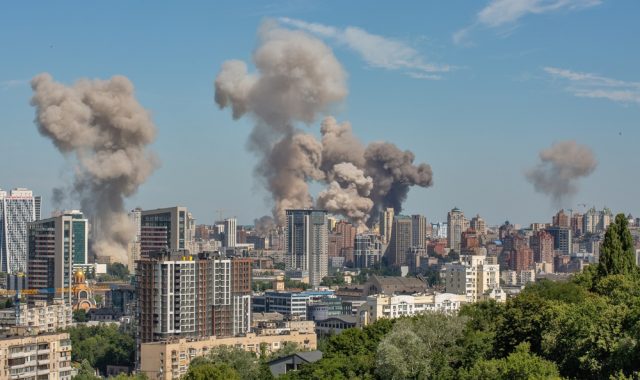
On August 24, 2026, Ukraine will celebrate the thirty-fifth anniversary of its regained independence from the Soviet Union, at a time in history when this national anniversary takes on a significance that transcends the mere celebration. The day represents the culmination of a thirty-five-year journey of transforming the Ukrainian state into a modern, democratic, and Europe-oriented political entity, but also a manifestation of the resilience developed by Ukrainian society in the face of large-scale Russian aggression that began in 2022. On the fifth Independence Day celebrated since the invasion, Kyiv became the symbolic center of European solidarity. In Kyiv, Zelensky recalled how unlikely the survival of the Ukrainian state had been in the early days of the invasion, when the Russian advance toward the capital led many Western observers to speculate on the city’s rapid fall. Four and a half years after the start of its large-scale aggression, Ukraine continues to fight and celebrate its independence. However, the traditional large parade in downtown Kyiv did not take place. Instead, drones and technologies developed by the domestic industry, which have become essential elements of contemporary warfare, were showcased.
AN EVEN MORE INTENSE WAR ON THE EVE OF WINTER
The independence celebration, however, takes place against a particularly challenging military backdrop. Russia has intensified its use of drones, ballistic missiles, and long-range launchers, increasing pressure on Ukrainian cities and civilian infrastructure. In July 2026 alone, 376 missile attacks were recorded, while the United Nations Human Rights Monitoring Mission (UNMM) reported July as the month with the highest number of civilian deaths in Ukraine since May 2022: at least 437 people died and 2,610 were injured. These data explain Kiev’s growing concern about the availability of air defense systems and interceptors. Winter preparations therefore take on a strategic dimension: in addition to protecting the population, it is necessary to ensure the continuity of the energy grid, already repeatedly hit by Russian attacks.
THE EUROPEAN RESPONSE: €6.1 BILLION FOR DEFENSE
It is against this backdrop that the European Union approved, on Ukraine’s Independence Day, €6.1 billion for new military procurement. The funds will finance air and missile defense systems, missiles, munitions, and radar, meeting the most urgent needs of the Ukrainian armed forces. The decision is part of the broader Ukraine Support Loan, a €90 billion European program for the 2026-2027 period. The new allocation adds to €16 billion in procurement plans already approved, of which €8.35 billion has already been disbursed. The goal is to ensure that essential supplies reach Ukraine promptly and in the necessary quantities. A significant portion of the purchases will also be made from European defense companies, thus strengthening not only Ukraine’s military capacity but also Europe’s industrial capacity.
THE FINANCIAL FRAMEWORK OF EUROPEAN SUPPORT
European support is based on a broader financial structure. In February 2026, the European Parliament and the Council established, through EU Regulation 2026/467, the Ukraine Support Loan, making up to €90 billion available. The program encompasses two complementary strands: on the one hand, strengthening Ukraine’s defense capabilities and military industry; on the other, supporting essential state functions, public services, and economic resilience. The program provides a total of €30 billion in budget support and €60 billion for defense over the two-year period 2026-2027. In 2026 alone, €28.3 billion is earmarked for Ukraine’s military industrial capacity. The defense component aims to rebuild and modernize the country’s defense technological and industrial base, gradually promoting its integration into the European Defense Technological and Industrial Base. Since 2022, the European Union and its member states have provided a total of €220.2 billion in assistance to Ukraine, including humanitarian, financial, and military aid. Of this sum, €3.8 billion comes from the proceeds of Russia’s immobilized assets. European support is therefore taking on a structural and no longer exclusively emergency nature.
THE ITALIAN GOVERNMENT’S COMMITMENT
Within this European framework, the Italian Government’s action is particularly important. Prime Minister Giorgia Meloni participated in the meeting of the leaders of the Coalition of the Willing on August 24, via video link, convened to coincide with the anniversary of Ukrainian independence. During the meeting, Meloni expressed the Italian Government’s congratulations to Zelensky and the Ukrainian people, reaffirming Italy’s support for Ukraine’s sovereignty, territorial integrity, and independence. The Italian intervention had a marked humanitarian component. Meloni expressed her sympathy to the population affected by attacks on civilian infrastructure and confirmed that Italy will continue its commitment ahead of the winter by sending additional generators. These devices are intended primarily to strengthen the population’s resilience and contribute to the continuity of the energy grid, which is particularly vulnerable to Russian attacks. The Italian position also falls within the diplomatic dimension of the crisis. During the meeting of the Coalition of the Willing, leaders emphasized the need to make the sanctions system against Moscow more effective and to combat its circumvention, with the aim of reducing the resources available to the Russian war machine. Meloni reaffirmed Italy’s determination to work together with international partners to foster a negotiating process capable of leading to a just and lasting peace. The Italian government’s commitment is therefore evident on three complementary levels: political support for Ukrainian independence, humanitarian assistance, and participation in diplomatic and multilateral efforts.
THE COALITION OF THE WILLING AND THE EUROPEAN ROLE
Europe’s centrality was also highlighted by the composition of the international day. Present in Kiev were British Prime Minister Andy Burnham, on his first international trip since taking office, and European Council President António Costa. Giorgia Meloni, Emmanuel Macron, and Friedrich Merz participated remotely in the meeting of the Coalition of the Willing, the format that brings together states willing to strengthen military support and discuss future security guarantees for Ukraine. Costa reiterated that European support must continue for as long as necessary and may extend beyond the end of the conflict. This perspective is closely linked to Ukraine’s European integration. Meanwhile, the country opened two rounds of EU accession negotiations over the summer, demonstrating a significant capacity to continue the reform process despite wartime conditions. Ukraine’s European orientation is thus considered an integral part of the continent’s long-term strategy for stabilizing the continent.
THE AMERICAN POSITION AND THE SEARCH FOR PEACE
The day also highlighted a significant difference in the presence of Europe and the United States. Trump administration envoys Steve Witkoff and Jared Kushner did not attend the events in Kiev, despite their planned visit. Witkoff also met repeatedly with Russian interlocutors and traveled to Moscow eight times, while neither of the two main representatives had visited Ukraine since taking office. This highlights Europe’s growing role in military support, while Washington retains a central role in diplomacy. The search for a negotiated solution remains a fundamental component of the crisis, but Europe insists that any agreement must be fair, lasting, and respectful of Ukrainian sovereignty. In parallel, the EU adopted the twenty-first package of sanctions against Russia in July 2026, with the aim of further limiting Moscow’s ability to finance the war and target infrastructure and the civilian population. European policy thus combines economic pressure, military support, victim protection, and the pursuit of legal accountability.
SUPPORT AND PEACE AS COMPLEMENTARY OBJECTIVES
The thirty-fifth anniversary of Ukrainian independence thus demonstrates the progressive transformation of the conflict into a central issue for European security. In this multilateral system, Italy maintains a significant role through the Meloni government, combining political support, humanitarian assistance, strengthening energy resilience, participation in the Coalition of the Willing, and commitment to a diplomatic solution. The planned dispatch of additional generators takes on particular importance on the eve of winter, while Italy’s position on sanctions and the need for a just and lasting peace places Rome in the European strategy to support Kyiv.