





 Subscribe


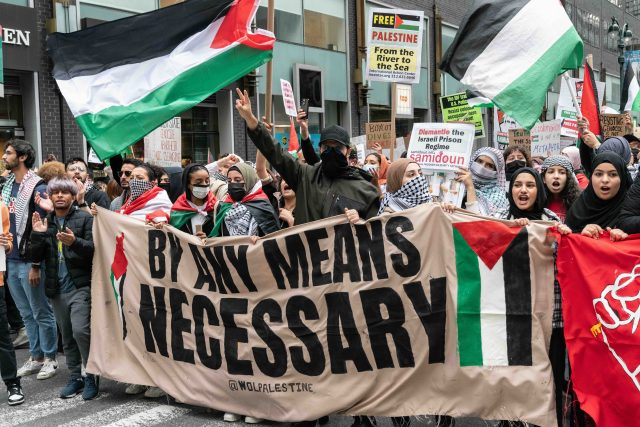
Twenty-five suspects under investigation as authorities trace millions of euros from Italian charities to the militant group, sparking political clashes and raising questions about humanitarian aid oversight.
Italian prosecutors have unveiled a wide-ranging anti-terrorism investigation that has placed 25 people under formal scrutiny for allegedly financing Hamas through ostensibly charitable organizations. At the centre of the probe is Mohammad Hannoun, president of the Association of Palestinians in Italy, who was arrested along with eight others on accusations of channelling more than seven million euros to the Palestinian militant group.
According to investigators from the Genoa District Anti-Mafia Directorate (DDA), Hannoun’s wife and two sons are also among the suspects. Authorities believe they were aware of the true destination of the funds raised and, in the case of the sons, may have occasionally handled or transported the money. The investigation paints a picture of a tightly knit network operating under the cover of humanitarian aid while allegedly supporting a designated terrorist organization.
The nine individuals subjected to precautionary measures include two suspects who are currently at large—one believed to be in Turkey and another in Gaza. Formal questioning before investigating judge Silvia Carpanini has not yet been scheduled but is expected to begin on December 30, largely via video link. Hannoun, the only suspect detained in Genoa’s Marassi prison, will be questioned in person. His lawyers are expected to meet him in the coming days.
Interior Minister Matteo Piantedosi has described the operation as a significant success for Italian law enforcement and intelligence agencies. Speaking to the press, Piantedosi emphasized that investigators meticulously followed financial flows, identifying irregularities in donations that initially appeared legitimate. “Terrorism is also fought by cutting off its resources and operational capacity,” he said, adding that the investigation could open up “new and interesting scenarios.”
The minister highlighted the role of international cooperation, noting information exchanges with other European Union countries, including the Netherlands. “When it comes to defending national security, there should be no party flags,” Piantedosi stressed, underlining the non-partisan nature of the operation. He also insisted that the inquiry aims to distinguish between lawful solidarity efforts and activities that provide cover for criminal purposes.
Among the most striking elements of the case are intercepted conversations that suggest awareness of illegal activities. In July 2024, one of the suspects, Ra’ed Hussny Mousa Dawoud—also known as Abu Falastine and described as a close associate of Hannoun—allegedly warned colleagues: “If they get into this computer, they’ll give us six years.” Investigators say Dawoud was a key figure in fundraising efforts and had longstanding ties to Hamas, including a past meeting in Gaza with former Hamas leader Ismail Haniyeh, who reportedly praised his role as a financial conduit.
To bypass account freezes imposed on one charity, prosecutors allege that new associations were created. In June 2023, an organization called “La Cupola d’Oro” was founded in Milan, followed by “La Palma” in Bergamo in January 2025, allegedly to facilitate continued transfers. Dawoud is also accused of personally transporting large sums of cash abroad, including €170,000 to Turkey and €200,000 to Egypt, as declared at customs.
The investigation has ignited fierce political debate in Italy. Prime Minister Giorgia Meloni praised the operation as a decisive blow against terrorism, while centre-right parties accused the left of previously defending Hannoun. Opposition parties, including the Democratic Party, the Five Star Movement, and the Greens and Left Alliance, responded by supporting the fight against terrorism but warning against “criminalizing” pro-Gaza demonstrations and broader solidarity movements.
Tensions spilled into Parliament, where members of the Brothers of Italy party demanded formal briefings from both Interior Minister Piantedosi and Foreign Minister Antonio Tajani on the Hannoun case. Opposition lawmakers criticized the procedural handling of these requests, accusing the majority of politicizing the investigation.
International reactions have also followed, with Israeli officials welcoming the arrests as an “important step in the fight against Hamas.”
Meanwhile, the charity founded by Hannoun has vowed to continue its humanitarian mission despite the freezing of its accounts. In a statement released on Christmas Day, the Association of Solidarity with the Palestinian People in Italy declared: “Even if our accounts remain closed, we will not stop doing good.”
As the judicial process moves forward, Italian authorities insist that individual responsibilities will be assessed case by case. The outcome of the investigation may have lasting implications for how charitable organizations are monitored and how European states balance humanitarian aid with the imperative of countering terrorism.
Alessandro Fiorentino