





 Subscribe


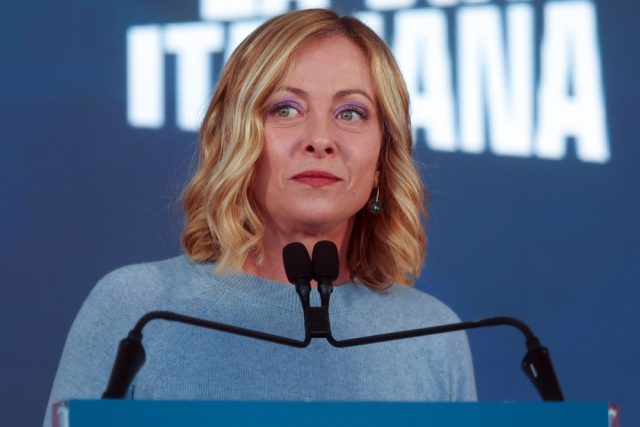
Prime Minister Giorgia Meloni’s speech at the Atreju Convention of the FdI party was a programmatic and identity-building intervention, aimed at outlining a comprehensive vision of Italy’s role in the European and international context. The Prime Minister frames the current political phase as a historic opportunity to build a country capable of transmitting credibility, stability and prosperity to future generations, placing responsibility toward the Italian people and the recovery of fully exercised sovereignty at its core.
ECONOMIC AND FINANCIAL CREDIBILITY AS THE FOUNDATION OF GROWTH
One of the key pillars of the speech concerns the theme of national credibility. Meloni defines it not only as recognition by investors, financial markets, and international institutions, but above all as internal trust, demonstrated by the growing propensity of Italians to invest in government bonds. This credibility, according to the Prime Minister, generates tangible wealth. The reference to the rating agencies’ upgrades, Italy’s return to the top-tier financial league, and the €80 billion in investments attracted over three years through agreements with states and large companies are presented as tangible evidence of structural change.
POLITICAL STABILITY AND VIRTUOUS MANAGEMENT OF PUBLIC RESOURCES AND THE NRRP
Meloni emphasizes the connection between government stability and economic sustainability, citing data according to which past political instability has cost the government €265 billion over ten years. In contrast, the current government is touting the drastic reduction in the spread, now down to a third compared to when the government took office, and the reduction in government bond rates, resulting in billions of euros in interest savings to be allocated to social policies and citizens’ needs. Particular emphasis is placed on the management of the National Recovery and Resilience Plan. The approval of the eighth instalment is hailed as a historic turning point: Italy, once at the bottom of the list in spending European funds, becomes a leader and a model of efficiency. This result contributes to changing the international perception of the country, belying the catastrophic predictions that had accompanied Meloni’s rise to power. Quotes from newspapers such as the Financial Times, Bloomberg, and Le Monde are used to certify the shift in external opinion.
FOREIGN POLICY, SECURITY, AND RELATIONSHIP WITH THE UNITED STATES
The Prime Minister places Italy within a West facing new geopolitical challenges. Faced with the prospect of US disengagement from Europe, Meloni emphasizes the need to strengthen Europe’s defense capacity, advocating the creation of a European NATO pillar on an equal footing with Washington. Freedom, she argues, comes at a cost, but it is preferable to comfortable and restrictive servitude. Support for Ukraine against Russian aggression fits into this framework, justified both for ethical reasons and by the protection of national interests and European security.
THE MEDITERRANEAN, THE MIDDLE EAST, AND THE GULF AS STRATEGIC AXES
Italy is described as a key player in the Mediterranean, a crucial area for energy, trade, and migration management. In the context of the Gaza crisis, the government advocates an active mediation role, engaging in dialogue with all stakeholders, and demonstrating a humanitarian commitment that has made Italy the leading non-Muslim nation in sending aid to the Strip. A similar central role is attributed to the Gulf, with participation in the Gulf Cooperation Council summit in Bahrain and the reaffirmation of the principle that those living in Europe must respect its laws, traditions, and customs.
IDENTITY, INTERNAL SECURITY, AND MIGRATION POLICY
The speech explicitly addresses the issue of national identity and the fight against Islamic fundamentalism, recalling the proposed law to ban the full-face veil. On migration, Meloni calls for a shift in the European paradigm: from open ports policies to a strategy based on border defense, repatriations, agreements with countries of origin and transit, regulation of NGOs, and non-EU hotspots, including the Italy-Albania protocol. The results already achieved, such as the reduction in irregular arrivals and the increase in repatriations, are presented as a prelude to further improvements.
A REALISTIC AND NON-IDEOLOGICAL EUROPE
In conclusion, the Prime Minister proposes a respected and influential Italy in Europe, capable of leading a critical review of EU policies, particularly in environmental and industrial matters. The defense of businesses from the ideological drifts of radical environmentalism and the construction of alternative majorities in the European Parliament, together with the European Conservatives, complete a vision that rejects a bureaucratic and distant Europe, instead calling for a living, sovereign civilization, aware of its historical mission.