





 Subscribe


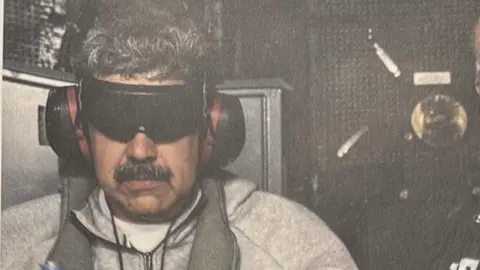
Two American friends have contacted me to criticise my support of Giorgia Meloni’s statement that President Trump was right on Venezuela and wrong on Greenland. They say that Trump should have sought the consent of Congress to wage war on Venezuela and that he broke international law by dispatching a military force to Caracas to pick up Nicolas Maduro and his wife, both of whom had arrest warrants against them in the United States. Their criticisms prompted me to reflect on the case.
Secrecy Key to Success
First, Trump was not waging war on Venezuela. Therefore, he did not require the consent of Congress. His team was apprehending two criminals and bringing them to justice. Although the couple has not been convicted in a U.S. court, the evidence against them is overwhelming. The key to the success of this operation was its strict secrecy. If Congress had been informed in advance, a leak would undoubtedly have led to its failure.
Maduro: Usurper and Electoral Fraudster
Nicolas Maduro was not the legitimate President of Venezuela. He had not only vacated his office by becoming a tyrant—as medieval philosophers would have put it—but he had also lost the 2024 presidential election. It was clear to all impartial observers that María Corina Machado (who was not allowed to run) was supported by a majority of the voters. So, Maduro was not only a usurper but also an electoral fraudster, although this was not the reason he was apprehended.
Eichmann’s Abduction
The latter objection, that Trump broke international law, cannot be as easily disposed of. When a military force from country A enters country B without the consent of the relevant authorities and seizes someone, whether or not he or she is a known criminal, the sovereignty of country B is violated. Respect for national sovereignty seems to be an integral part of international law.
Here, some precedents might be helpful. In 1960, the state of Israel sent a special team to Argentina. They abducted the German Nazi Adolf Eichmann, who lived there under a false name, and brought him to Israel. Argentina protested against this violation of her sovereignty, and the U.N. Security Council found that such a violation of sovereignty might, if repeated, threaten peace. Israel and Argentina resolved the case by a joint declaration that the two states considered the case closed. Argentina tacitly acknowledged the right of Israel to try Eichmann. The Israeli courts decided that the possibly illegal manner in which Eichmann was apprehended was not material to the case against him, which rested on his participation in the murder of millions of Jews during the Second World War.
Uganda and Panama
Two other cases should be recalled. In 1976, Arab terrorists hijacked an aeroplane on its way to Israel and directed it to Entebbe Airport in Uganda. In a daring operation, a team from Israel stormed the airport and rescued the hostages. All the terrorists and some Ugandan soldiers assisting them were killed, but only one member of the Israeli team. While U.N. Secretary General Kurt Waldheim accused Israel of having violated the sovereignty of Uganda, the operation was widely acclaimed. In 1989, U.S. military forces invaded Panama and apprehended the dictator Manuel Noriega who had previously annulled a presidential election and harassed U.S. citizens.
Acceptance Crucial
The Entebbe raid and the invasion of Panama are different from the other two cases in that, arguably, they were undertaken in self-defence. This was not obviously true of Maduro, and much less so of Eichmann. The difference, however, between Eichmann and Maduro was that Eichmann was tried and convicted under international rather than Israeli law, whereas Maduro was apprehended and indicted for breaching U.S. law. It is certainly problematic if the U.S. can at will apply her laws to citizens of other states under other jurisdictions. But what is crucial in both cases is that the legitimate representatives of the two countries whose sovereignty had been infringed, Argentina and Venezuela, accepted the need to bring the two criminals to justice. Machado has the right to speak on behalf of Venezuela, and she supported Maduro’s arrest.