





 Subscribe


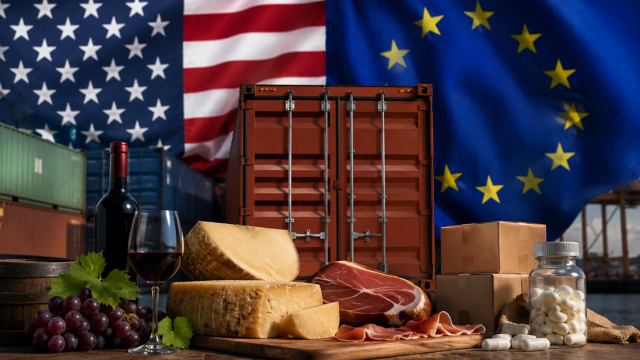
Washington’s latest trade measures introduce tariffs of up to 12.5% on dozens of trading partners, including the European Union, raising fresh concerns for Italian industries that rely heavily on the U.S. market.
The United States has once again tightened its trade policy under President Donald Trump, introducing a new tariff framework that affects around 60 trading partners, including the European Union. Within just 48 hours, the White House moved from announcing the measures to implementing them, replacing the temporary 10% global tariff with a more structured system ranging from 10% to 12.5%.
Unlike previous initiatives that faced legal setbacks, the latest package is based on Section 301 of the U.S. Trade Act of 1974, providing a stronger legal foundation. The administration argues that the new tariffs are aimed at countries that have failed to adequately prevent products made with forced labor from entering their supply chains. Together, the targeted nations account for approximately 99.4% of all U.S. imports.
For Italy, the key question is straightforward: how will these new tariffs affect one of Europe’s largest exporting economies?
The answer depends largely on the sector involved. Italian wine producers are expected to face some of the greatest challenges, as wine generally falls within the new tariff regime unless specific exemptions apply. This is particularly significant because the United States remains Italy’s largest non-European export market for wine, making American consumers crucial for many wineries.
The pharmaceutical industry, however, is in a much stronger position. Generic medicines and active pharmaceutical ingredients are among the products exempted from the new measures, protecting one of Italy’s most competitive manufacturing sectors from immediate disruption.
The situation is also mixed across Italy’s renowned food industry. Parmigiano Reggiano remains subject to its existing 15% tariff, meaning no additional burden has been introduced. Prosciutto di Parma continues to face a 10% tariff. For other iconic Made in Italy products—including fashion, furniture, machinery and various food specialties—the impact depends on their specific customs classification. Products that are not covered by exemptions generally face total U.S. tariffs between 10% and 12.5%.
Some analysts believe the economic consequences may be less dramatic than initially feared. Kelly Ann Shaw, a former White House trade adviser, has suggested that the new measures represent more of a confirmation of the current trade environment than the beginning of a completely new tariff war.
Nevertheless, the importance of the American market for Italian exporters cannot be overstated. In 2025, the United States purchased €69.6 billion worth of Italian goods, marking the highest level ever recorded and representing a 7.2% increase compared with the previous year. The U.S. is now Italy’s second-largest export destination after Germany, while Italy recorded a trade surplus of more than €34 billion with America during the same year.
This strong commercial relationship explains why Italian businesses are watching developments closely. Industries such as mechanical engineering, pharmaceuticals, fashion, furniture and food have spent decades building their presence in the U.S. market. Replacing that demand with alternative destinations would be extremely difficult in the short term.
Although the new tariffs cover almost all imports into the United States, the White House has maintained several important exemptions. Oil and natural gas, fertilizers, selected food products, critical minerals, aircraft and aerospace components are excluded. For the European Union, exemptions also remain in place for generic medicines, pharmaceutical ingredients, cork products and diamonds.
Additionally, products already subject to tariffs under Section 232—including automobiles, steel, aluminium and copper—remain outside the scope of the new package. While Brussels continues to dispute Washington’s justification for the measures, European officials acknowledge that the United States has respected the tariff limits previously negotiated between the two sides.
Italian consumers are unlikely to notice an immediate increase in prices at home because the tariffs apply only when goods enter the American market. However, indirect consequences could eventually affect Italy’s domestic economy. Companies facing reduced sales in the United States or shrinking profit margins may decide to slow production, postpone investment plans or delay hiring. Perhaps even more damaging is the uncertainty generated by constantly changing trade rules, making long-term business planning considerably more difficult.
A common misconception is that exporters directly pay tariffs. Legally, the responsibility falls on the American importer, who pays the duty to U.S. Customs. In practice, however, the financial burden is usually shared across the supply chain. Importers may raise retail prices for American consumers, negotiate lower prices with Italian suppliers or absorb part of the additional cost themselves. The final distribution depends largely on market dynamics. Premium Italian brands with strong reputations often have greater pricing power, while companies facing intense competition from alternative suppliers may be forced to sacrifice a larger share of their profits.
What makes this latest tariff package particularly significant is its legal durability. By relying on Section 301 rather than previous emergency authorities that were challenged in court, the Trump administration has adopted a mechanism that has existed for decades and has repeatedly survived judicial scrutiny. As a result, businesses on both sides of the Atlantic increasingly view these tariffs not as temporary political measures, but as a trade framework that could remain in place for years, requiring exporters to adapt rather than simply wait for policy to change.
Alessandro Fiorentino