





 Subscribe


Neither a European Defeat nor a Sovereigntist Victory
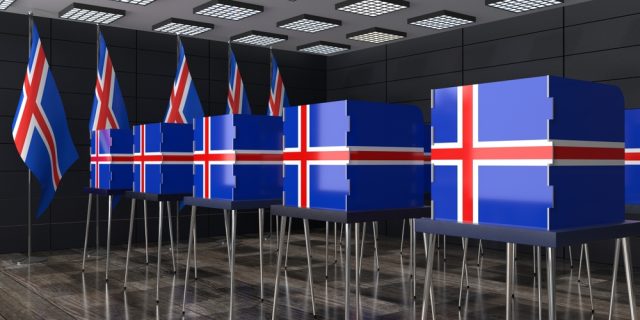
The Icelandic referendum has been interpreted as another instalment in the interminable contest between Europhiles and Eurosceptics. For the former, the decision not to reopen accession negotiations represents a defeat for the European project. For the latter—many of them self-proclaimed “patriots”—it proves that a small, prosperous, and self-confident nation can still resist Brussels.
Both interpretations are self-serving and, more importantly, mistaken.
Iceland has not rejected Europe. Nor has it voted to abandon European rules, close its borders, or recover some supposedly lost sovereignty. What Icelanders have chosen is to preserve their current relationship with the European Union: one of extraordinarily deep economic and legal integration, but without full participation in its political institutions.
The result, therefore, is neither a failure of the EU nor a victory for the so-called “sovereigntists.” It reveals something far more interesting: Europe already operates through different levels of integration, even if it still refuses to recognise that reality as a coherent political model.
What Icelanders Actually Voted On
It is worth beginning with the question put to voters, because this would hardly be the first European debate to begin before anyone had read the ballot paper.
Iceland did not vote on whether to join the European Union immediately. It voted on whether to reopen accession negotiations that had been suspended for more than a decade. The victory of the “no” campaign was, above all, a decision against change—a decision to preserve the status quo.
And what does that status quo entail? Iceland belongs to the European Economic Area (EEA), participates in the single market, and accepts the free movement of goods, services, capital, and people. It is also part of the Schengen Area and incorporates into its domestic legal order a considerable share of European legislation concerning the internal market.
It does not, however, participate in the Common Agricultural Policy, the customs union, the monetary union, or—most importantly for its national interests—the Common Fisheries Policy.
Icelanders have not chosen isolation. They have preferred a relationship that provides most of the benefits of European integration while allowing them greater autonomy in several areas they regard as essential.
The EEA’s Democratic Paradox
The model chosen by Iceland comes with a cost that enthusiasts for national sovereignty tend to omit. As an EEA member, the country must implement a substantial body of European rules, contribute financially to various programmes, and accept common supervisory mechanisms. It can attempt to influence legislation during its preparation, but it does not vote on that legislation when it is adopted.
Iceland is inside the single market but outside the institutions that determine many of its rules.
It is therefore curious to watch certain “patriots” distort the result and present it as an act of democratic emancipation from Brussels. The EEA—a system under which countries comply with rules without fully participating in their adoption—already resembles the anti-democratic caricature they habitually attribute to the European Union itself.
Membership would have required Iceland to share additional powers, but it would also have granted the country representation in the European Parliament, a seat in the Council, a commissioner, and formal participation in the legislative process. Iceland would have moved from implementing many European rules from the outside to helping make them from within.
This is not, therefore, a choice between submission and independence. It is a trade-off between influence and autonomy. Iceland has chosen to sacrifice some of the former to preserve more of the latter in matters it considers vital.
Fishing Explains the Result Better Than Brussels
Fisheries occupy a central place in that calculation. For Iceland, fishing is not simply another economic activity. It is a decisive component of the country’s prosperity, history, and national identity.
Iceland fought three “Cod Wars” against the United Kingdom—and won them. The Royal Navy received a rather practical explanation decades ago of how seriously Icelanders take control of their fishing grounds. It would be unreasonable to expect them to surrender that authority easily.
The Icelandic decision therefore shows a pragmatic assessment of costs and benefits more than an ideological revolt against the European Union. The present arrangement offers access to the European market and extensive opportunities for cooperation whereas keeping fisheries and other important matters outside the EU framework.
It is an imperfect solution, but serious political settlements usually are. Iceland neither enjoys every benefit without accepting obligations, as some Europhiles complain, nor retains its sovereignty entirely intact, as some Eurosceptics celebrate. It has accepted a compromise that, for the moment, it considers advantageous.
Sovereignty Does Not Mean the Absence of Obligations
Part of the confusion derives from an infantile conception of sovereignty. It is discussed as though it were an object that a state either possesses intact or loses forever. Yet every international agreement requires accepting obligations and limiting certain courses of action.
A NATO member assumes commitments that do not bind a neutral state. A country signing a free-trade agreement restricts its ability to impose tariffs. Even diplomatic relations rest upon rules, reciprocal duties, and restraints.
The relevant question is not whether national freedom is constrained, because it always is. The question is who establishes those constraints, for what purpose, through which procedures, in exchange for which benefits, and with what possibility of revision.
From a democratic perspective, the problem with the EEA is not that it imposes obligations. It is that it partly separates compliance from representation: Iceland accepts numerous European rules but has fewer instruments to participate in their adoption than any other EU member state.
European Integration Already Has Several Layers
The Icelandic case demonstrates that Europe is not a single, uniform institutional space. Some EU members use the euro, while others do not. Most participate in the Schengen area, although exceptions remain. Iceland and Norway belong to the single market through the EEA. Switzerland maintains a complex network of bilateral agreements. Turkey has a customs union with the EU. The United Kingdom has constructed a more distant relationship following Brexit.
Europe already operates through overlapping circles of rights, obligations, and institutional participation. What it lacks is a willingness to recognise this reality as a stable political principle.
This is not quite a Europe of “different speeds.” That expression assumes that every country is travelling towards the same destination, albeit at a different pace. Iceland is not moving slowly towards membership. It has chosen another destination. Norway is not waiting for its turn. Neither is Switzerland.
It would be more accurate to speak of a Europe of different layers.
At its centre could remain a group of states pursuing deeper political, monetary, and fiscal integration. Around them would be other members with permanent opt-outs in particular areas. Beyond them could stand an economic and security community composed of countries that accept defined obligations without fully joining the Union’s political institutions. Finally, the EU could establish specific partnerships with states closely connected to Europe for economic or strategic motives.
An Alternative for a Larger and More Diverse Union
Such a model could be especially useful as the Union confronts the limits of further enlargement. An EU of more than thirty states cannot plausibly demand identical levels of integration from countries with profoundly different histories, economies, security concerns, and political cultures.
Portugal and Poland do not view the Atlantic world from the same position. Finland and Spain do not face the same security environment. Ireland, Greece, Hungary, and Estonia do not have interchangeable economic or demographic interests.
Uniform institutions do not eliminate these differences. They often merely transfer the resulting conflicts to a level at which democratic correction becomes more difficult.
A multi-layered structure could expand European cooperation without rendering every partnership into an automatic argument for eventual accession or further centralisation. It could also put an end to the false choice between national isolation and submission to an ever-closer union.
Each country could adopt a stable degree of integration suited to its interests and democratic preferences. But the costs of every layer would need to be stated honestly. Access to the single market would require the acceptance of common rules, financial contributions, and supervisory mechanisms. Greater autonomy would come at the price of reduced decision-making power.
The Icelandic example demonstrates precisely that there are no magical arrangements.
The British Lesson
The United Kingdom could find new possibilities within such a system. A relationship inspired by the EEA could restore broader access to the European market without requiring formal readmission to the Union.
In exchange, Britain would have to accept free movement, a considerable body of EU legislation, financial contributions, and institutional supervision. It would not recover its vote over the rules it was required to follow.
In other words, it would produce something remarkably similar to everything Brexit’s supporters promised to escape. It would be ironic if the culmination of British sovereignty were to consist of following European rules without participating in their adoption.
A multi-layered Europe would offer the United Kingdom more alternatives, but it would not erase the consequences of Brexit. London cannot reasonably demand access, influence, and exemptions simultaneously. The closer its relationship with the European market, the greater its corresponding obligations.
Britain’s geography did not change in 2016. Any serious attempt to deepen its economic relationship with Europe will require the country to confront the trade-offs that the Brexit campaign tried so hard to conceal.
Canada and Europe’s Atlantic Opportunity
A multi-layered European order need not stop at the continent’s geographic boundaries. Donald Trump’s treatment of traditional allies—and Canada in particular—has made intermediate forms of international alignment increasingly relevant.
Canada cannot join the EEA, which was designed for European members of the European Free Trade Association. It could, however, build a much deeper relationship with the EU in defence, energy, technology, critical minerals, strategic infrastructure, and mobility. The Comprehensive Economic and Trade Agreement, or CETA, already provides a base upon which such cooperation could be expanded.
This would give the European project an Atlantic dimension extending beyond its formal borders. A stronger relationship with Canada would also help the EU behave less like a regulatory dependency caught between the United States and China and more like a serious middle power with its own network of strategic partners.
Such an arrangement would not make Canada European or grant it participation in institutions designed for European states. That is precisely the point of a layered model: countries could cooperate deeply in selected areas without pretending that every relationship must culminate in EU membership.
Canada’s growing need to diversify its strategic relationships creates an opportunity that Europe should not ignore. The EU could draw a close Western ally into its economic and security orbit without engaging in the legal fiction of prospective membership.
A multi-layered Europe would therefore look not only eastwards or towards the Balkans, but also towards the North Atlantic—potentially bringing it into direct competition with American ambitions in the Western Hemisphere.
Ukraine and the Suicidal Temptation of Endless Enlargement
A multi-layered Europe could nevertheless be used recklessly. Perhaps the clearest—and, unfortunately, most plausible—example would be the invention of a pseudo-accession for Ukraine as a preliminary step towards full membership.
Ukraine’s desire to bind itself to the West is understandable. It is fighting for its survival against Russia and sees membership of Western institutions as a guarantee of independence and security. But what is rational from Kyiv’s perspective is not necessarily rational from Europe’s.
Bringing Ukraine into the European Union would import an unresolved territorial conflict, immense reconstruction costs, institutional weakness, demographic collapse, agricultural disruption, and a permanent confrontation with Russia into the heart of the European political order. It would also transform every future escalation on Ukraine’s borders into an internal European crisis.
For the EU, proceeding towards Ukrainian membership would not be an act of strategic courage. It could amount to strategic suicide.
Europe can support Ukraine’s sovereignty, trade with it, contribute to reconstruction, cooperate on energy, and offer security assistance but not admit it to the Union. Solidarity does not require membership, just as opposition to Russian aggression does not require Europe to assume unlimited and permanent liabilities.
A multi-layered system should therefore offer Ukraine a defined external partnership instead of a disguised path towards accession. The distinction is essential. Gradual integration must not become a rhetorical device through which European leaders advance a policy that citizens have never seriously debated and whose consequences they have scarcely begun to calculate.
The purpose of a flexible European order should be to establish sustainable limits, not to conceal the absence of them.
Turkey and the Value of an Honest Relationship
Turkey presents a related but different problem. Its decades-long candidacy has preserved the fiction of convergence despite mounting evidence of political and strategic divergence.
A layered system could replace that fiction with a more honest relationship based on trade, security, migration, and shared regional interests. Turkey could remain an important European partner without either side pretending that full membership remains just around the corner.
The same principle should apply to Ukraine. Not every strategically important neighbour must become a member, and not every refusal of membership constitutes abandonment. Sometimes a durable partnership outside the Union is more responsible than an accession process driven by sentiment, geopolitical panic, or institutional inertia.
A Union With Atlantic Partners… and Defensible Borders
The Icelandic referendum points towards a European order composed of several layers: the EU itself, its members with permanent exceptions, the EEA, bilateral arrangements such as Switzerland’s, the Turkish customs union, and external strategic partnerships.
Canada could become an important Atlantic partner within that broader constellation. Ukraine and Turkey could be offered substantial but clearly external relationships. Britain could negotiate closer access if it accepted the corresponding obligations. Iceland and Norway could maintain their present balance between integration and autonomy.
This would not be a Europe of different speeds, because not every country would be travelling towards the same destination. It would be a Europe capable of distinguishing membership from partnership—and cooperation from absorption.
For such a model to work, the EU would have to abandon the assumption that every close relationship represents an unfinished accession process. Integration must be capable of stopping. A country should be able to cooperate closely with Europe without being told that history requires it eventually to join the same political structure.
Unity Does Not Mean Uniformity
Iceland’s “no” does not demonstrate that European nations must recover their independence from Brussels. Iceland is already deeply embedded in the European economic and legal order. Nor does it prove that EU membership is necessarily superior: Icelanders have concluded that retaining control over fisheries and other matters compensates for their lack of a vote on many single-market rules.
The lesson is more modest yet more useful. Europe can accommodate different forms of integration without treating every exception as a failure or every external relationship as a temporary stage on the path towards membership.
Such alternatives must, however, be described honestly. A country that participates in the single market without belonging to the Union does not escape European rules: it applies them with less authority to shape them. Presenting this arrangement as a great victory for sovereignty requires concealing the most important half of the bargain.
Iceland has not rejected Europe. It has chosen a particular way of belonging to it, with clearly identifiable advantages and costs. Its decision does not call the value of European integration into question. It shows that such integration is already organised in different layers.
Europe needs the flexibility to draw certain countries closer. It also needs the confidence to decide where enlargement must stop.
Europe needs unity, but it does not necessarily need uniformity. That is precisely why it must stop confusing institutional diversity with political failure.