





 Subscribe


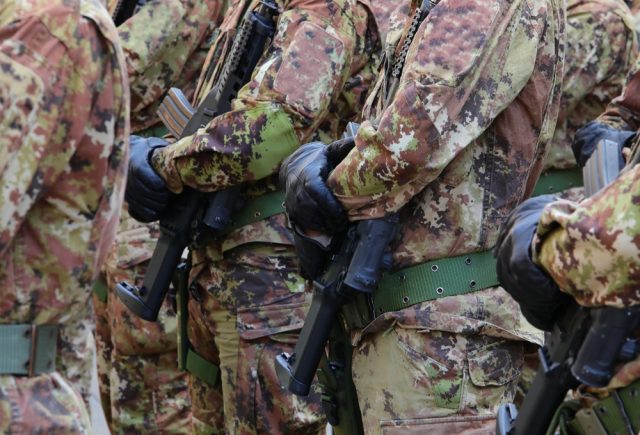
In the context of a structural and seemingly irreversible transformation of the European security ecosystem, Italy finds itself in need of a systematic reassessment of its defense posture, ensuring it is consistent with current strategic needs and projected risks for the near future. The presentation of the 2025-2027 Multi-Year Planning Document by the Minister of Defense is a particularly significant moment in this redefinition, as it clearly outlines the areas in which the country perceives urgent action: the numerical expansion of the Armed Forces, the qualitative improvement of internal skills, the updating of infrastructure and technologies used in the aerospace, cyber and logistics sectors, as well as the creation of a pool of volunteer personnel capable of being mobilized in crisis situations, national emergencies or scenarios characterized by hybrid threats. These objectives cannot be interpreted as purely contingent measures or piecemeal responses to immediate needs. Rather, they are part of a broader trajectory shared by numerous European Union countries, committed to redefining their military posture and strengthening their defense capabilities in a particularly volatile geopolitical context. Among its most significant elements, this trajectory includes the progressive return—in innovative and differentiated forms—of military or paramilitary service models and the constant increase in resources allocated to defense budgets. This phenomenon demonstrates a paradigm shift compared to the years following the end of the Cold War, when the prevailing belief was that continental security was consolidated and permanently guaranteed. The escalation of international tensions has profoundly altered this framework. The conflict between Russia and Ukraine represented a turning point in the European strategic imagination, demonstrating not only the vulnerability of Europe’s eastern borders, but also the speed with which conventional and unconventional threats can materialize. Added to this is NATO’s internal reorganization, marked by a progressive reduction in US interest in maintaining its traditional role as the primary guarantor of Euro-Atlantic security. This combination of factors has accelerated, even in Italy, the awareness of the need to strengthen its military capabilities and equip itself with adequate tools to address an increasingly complex, competitive and unpredictable international scenario.
A NEW PERSONNEL MODEL: SELECTED CONSCRIPTION AND VOLUNTARY RESERVE
The first element of the Italian proposal concerns the creation of a flexible conscription mechanism. According to the minister, there is no single solution to the historic problem of personnel shortages in the Armed Forces. A coordinated set of tools is needed, with the idea of a modern conscription playing a central role. The stated objective is to develop a pool of citizens with technical and operational skills, ready to be deployed not only in traditional military contexts but also in civil emergencies and natural disasters. The draft does not reintroduce the mandatory model suspended in 2005, but introduces voluntary programs, including short-term ones, that can culminate in entry into a permanent reserve or periodic recall if necessary. The initial creation of an auxiliary reserve of approximately ten thousand volunteers is planned, with the aim of quadrupling this number in the medium term. The reservists will not replace personnel deployed on international missions, but will provide logistical support, technical capabilities, and cyber defense expertise. The Italian model draws inspiration from recent decisions taken by France and Germany, countries that are experimenting with innovative forms of service—voluntary and semi-mandatory, respectively. However, adapting to the national context requires precise regulation, which the Minister intends to entrust to Parliament. This approach aims to prevent the rules from being perceived as partisan initiatives, aiming for a shared approach with those who work in the sector on a daily basis.
REQUIREMENTS, SKILLS, AND FORMALIZATION OF THE PROPOSAL
The new reserve will be open to a wide audience: former military personnel, civilians with specialized skills—from doctors to engineers, from IT experts to security guards—and young people interested in a short but highly professional training program. The age limits, selection criteria and duration of service will be defined in a bill that the government plans to present between early 2026 and spring of the same year. In addition to the distinction between technical and combat profiles, requirements tailored to the type of activity performed will be introduced. The minister emphasized the need for adequate financial incentives and recognition, comparing the responsibility of military personnel to that of company managers. This aspect reflects the desire to build a competitive system through the selection of the best available skills.
THE EUROPEAN RETURN OF CONSCRIPTION AND THE CONTINENT’S CLIMATE OF REARMAMENT
The Italian proposal lies at the heart of a European debate that has taken on increasingly concrete contours in recent years. France has announced a ten-month voluntary military service for young adults, effective from 2026, while Germany is aiming to significantly increase the number of its military personnel through a selection system among 18-year-olds that includes mandatory elements for men. This gradual but visible rearmament process is part of a continental context marked by the impact of the war in Ukraine and the recognition that Europe must assume greater strategic autonomy. The progressive disengagement of the United States, increasingly focused on the Indo-Pacific theater, has accelerated the need for a domestic strengthening of the Atlantic Alliance and national defenses. In this context, the Italian proposal appears consistent with the orientations of its European partners, both in terms of conscription and emerging technologies.
THE AEROSPACE SHIELD: A NEW NATIONAL PRIORITY
Alongside the issue of personnel, the minister has identified a second strategic priority: the construction of a national aerospace shield. This is a multi-layered system designed to intercept drones, missiles and threats from space. This architecture, unlike anything Italy has ever possessed, has become essential today, given the events in Ukraine and Israel’s defenses, considered a benchmark. The planned investment amounts to approximately €4.4 billion, earmarked for the development of satellite sensors for early warning, advanced radars, airborne platforms, and next-generation anti-missile batteries. The project also includes Italy’s contribution to the European GCAP program, which will lead to the development of the sixth-generation fighter and of the integrated counter-drone systems. The interoperability of the entire system is crucial, in line with NATO requirements and the progressive integration of European capabilities.
CYBERSECURITY, TECHNOLOGICAL THREATS AND THE “DRONE WAR”
The third pillar of the modernization of Italy’s defense concerns cyberspace. The current budget, approximately half a billion euros a year, is deemed insufficient given the complexity of contemporary threats. The growing use of artificial intelligence in offensive technologies, the widespread deployment of low-cost drones, and the proliferation of attacks against critical infrastructures require a change of pace. The lessons learned from the Russian-Ukrainian conflict are clear: modern warfare is increasingly a “war of drones,” an asymmetric competition in which cheap and readily available devices can inflict significant damage. According to the minister, Italy cannot afford to address these challenges with delays or with lower investments than those planned by its main allies. Data collection, timely analysis, and network protection are becoming crucial elements in ensuring national security.
A COMPLEX BUT INEVITABLE PATH
The reform package presented marks a profound shift in Italy’s conception of defense. The combination of selected conscription, voluntary reserves, an aerospace shield and a strengthened cybersecurity responds to a radically changed European and international context. The war in Ukraine has redefined the continent’s security priorities, while the gradual US disengagement has pushed European states to shoulder a greater share of their own protection. Italy is entering this scenario with an ambitious project, which will require resources, political cohesion and constant dialogue with the Armed Forces and civil society. The challenge is twofold: on the one hand, building modern tools capable of meeting global threats, and on the other, strengthening the collective awareness that national security is a common good. The transformation initiated will not be immediate, but it represents an inevitable step to ensure the country a credible role in the European and Atlantic defense of the future.