





 Subscribe


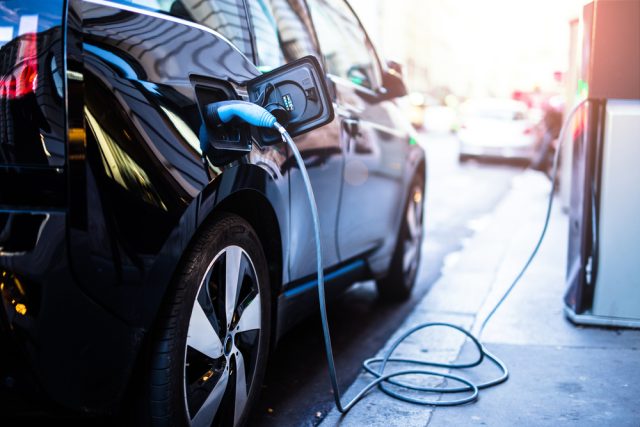
The European Union is on the verge of a major change in strategy regarding the future of the transition to electric cars. After years of discussions and negotiations in which the ban on internal combustion engines from 2035 was presented as a firm objective, officials in Brussels are currently analyzing several options that could significantly change this timetable. The rather slow pace of electric vehicle adoption, economic difficulties, and pressure from the European automotive industry have prompted the European Commission to consider adjusting the previously agreed rules.
Sources close to the discussions at European level indicate that a set of measures is being worked on that would allow the sale of petrol and diesel cars to be extended by up to five years beyond the initial deadline. At the same time, significant incentives would be introduced for the production of small electric cars within the EU, in an attempt to support the competitiveness of European industry in its battle with China. This reconfiguration of EU policies comes at an extremely delicate moment for the European automotive sector, which is simultaneously facing declining demand, high technological adaptation costs, and increasingly aggressive competition from Asian manufacturers. For many manufacturers, the relaxation of the rules could represent not only a breath of fresh air, but also an essential condition for maintaining operations in Europe.
The European automotive industry, between survival and loss of global relevance. Electromobility, from enthusiasm to recalibration
Information recently published and analyzed by the international press shows that Brussels is not only considering a simple postponement of deadlines, but a broader rethinking of the regulatory framework. Among the options on the table for decision-makers are a significant reduction in administrative and technical requirements for certain categories of vehicles, particularly compact electric models produced in Europe. The proposals under discussion include temporary exemptions of up to ten years from certain safety and environmental standards, the granting of direct or indirect financial incentives, and the introduction of urban benefits such as dedicated parking spaces. At the same time, the aim is to limit the risk of major manufacturers being fined billions of euros for failing to meet emission targets. For industrial groups such as Stellantis, Mercedes-Benz, and Volkswagen, these adjustments could make the difference between maintaining production in Europe and relocating investments to other regions of the world where production and labor costs would be much lower. In a global context dominated by competition with China and the United States, the pressure on European industry is greater than ever.
At political level, more and more European leaders have drawn attention to the risks of a forced transition that does not take economic realities into account. Among those who have raised this socio-economic issue is German Chancellor Friedrich Merz. He recently emphasized that the European Union’s ambitious climate goals cannot be achieved without a strong industrial sector. According to Chancellor Friedrich Merz, environmental protection must go hand in hand with maintaining economic competitiveness, otherwise the social and industrial costs could become unbearable for the EU. On the other hand, there are voices warning that excessive relaxation of the rules could have the opposite effect. Jos Delbeke, professor at the European University Institute, believes that flexibility must be strictly limited in time. In Professor Jos Delbeke’s opinion, any sign of abandoning the objectives set risks slowing down innovation and placing Europe behind its major technological competitors.
Globally, the trend toward accelerated electrification of ground transportation appears to be entering a phase of reassessment. For example, the United States has begun to reduce some tax incentives, while several European countries are adjusting their subsidy programs, and major manufacturers are announcing factory closures or restructuring. In this context, the transition to zero-emission vehicles is no longer seen as a linear and rapid process, but as one that requires adaptation to current economic and social conditions. According to analysts, the explosion in the supply of electric cars in China, combined with falling domestic demand in Europe, has put enormous pressure on car manufacturers in the European Union. For the European Union, the stakes are high: how can the balance be maintained between climate ambitions and protecting a sector that is one of the pillars of the old continent’s economy?
Possible consequences for Romania: a strategic sector under pressure. Germany, the epicenter of industrial pressure
Any decision to abandon or postpone the ban on conventional engines would have significant effects on Romania, where the automotive industry plays a key role in the country’s economy. Contributing over 13% to gross domestic product and providing tens of thousands of jobs, this sector is heavily dependent on decisions taken at European level and subsidies provided by the Romanian state. Energy policy expert Corina Murafa, who is directly involved in the discussions in Brussels, explained that several scenarios are being considered. A first scenario would be to postpone the 2035 deadline by about five years. The second scenario on the table for Brussels decision-makers is to redefine the green transition criteria so that vehicles achieve an emissions reduction threshold of over 90%, including through the use of synthetic fuels or biofuels. At the same time, the European Commission is also preparing other initiatives, such as a directive on greening company fleets, aimed at stimulating demand for less polluting vehicles and reducing their prices by increasing production volumes.
Unfortunately, alarm bells are also ringing in Germany, where, for the first time in almost nine decades, Volkswagen has decided to close a factory on national territory. The shutdown of production at the Volkswagen plant in Dresden reflects the major difficulties facing Europe’s largest car manufacturer: weak sales in China, low demand in Europe, and the impact of trade tariffs recently imposed by the United States. In addition, the prospect of a longer lifespan for conventional engines is forcing the German group to rethink its investment strategy. The company’s multi-year budget has already been reduced, and analysts warn that pressure on cash flow will continue in the coming years.
European automotive industry: Automation, layoffs, and an uncertain future
For Romania, the effects of the transition to green transport are already being felt. The management of manufacturers such as Dacia have announced restructuring programs, while major automotive component suppliers have begun to reduce their workforce. According to automotive industry experts, these layoffs are caused not only by the energy transition, but also by factors such as accelerated automation and the integration of artificial intelligence into production processes. Automotive market analysts point out that the global trend is very clear, with factories becoming increasingly automated and the number of jobs continuing to decline. In the opinion of analysts, the real challenge is to manage this green transition in such a way that the social impact is gradual and allows for the professional retraining of affected employees.
An inevitable but slower transition. The electricity market, between perception and reality
Although statistics show an increase in electric vehicle sales, European automotive market analysts point out that these figures are often interpreted superficially. In many analyses, the same label includes both fully electric cars and hybrids or plug-in hybrids, which have seen significant growth in recent years. In reality, however, the full-electric segment has grown more moderately than public perception suggests, and the lack of government subsidies risks further slowing this development. Without support programs such as Rabla (a Romanian government program that subsidizes the replacement of old cars with new ones), interest in purchasing electric vehicles could decline considerably in the near future. In conclusion, the general direction towards electric mobility remains unchanged, but the pace and manner of implementation are being reassessed at the European Commission level. The postponement of the ban on conventional engines after 2023 does not imply abandoning climate targets, but rather represents an adaptation to an economic and industrial context that is much more complex than initially anticipated when the Green Deal program was adopted. For both the European Union and Romania, the coming years will be decisive in defining a transition model that is sustainable not only from an ecological point of view, but also from a social and economic point of view.