





 Subscribe


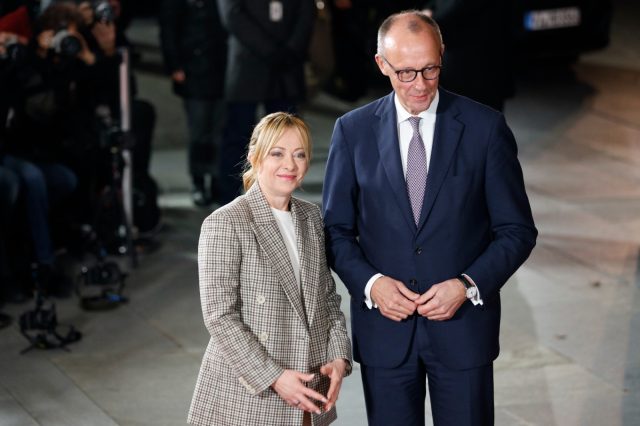
In Rome, on January 23, 2026, Giorgia Meloni and Friedrich Merz signed an Italian–German “Action Plan” which, although not legally binding, aims to impose a political turning point on Europe’s trajectory: fewer rituals, more interests; less rhetoric, more capability. The document reaffirms the centrality of the transatlantic bond, adherence to the principles of territorial integrity and sovereignty, and a particular responsibility for Italy and Germany—as founding countries—to make the Union more effective in defending strategic values and interests. The political meaning of the operation, however, must be read beyond the formulas: Rome and Berlin are trying to answer the same question that has haunted Europe for at least a decade, now aggravated by Russia’s war in Ukraine and by great-power competition. How can Europe remain prosperous without becoming vulnerable? The implicit answer of the Italian–German “engine” is straightforward and, at bottom, conservative: security is not financed with press releases, and competitiveness is not achieved through regulations. What is needed is industry, energy, value chains, and a credible architecture of deterrence within NATO.
Competitiveness: the end of Europe as a “regulatory superpower”
The most interesting part of the Rome–Berlin message lies in the vocabulary it chooses: “simplification,” “legislative self-restraint,” “non-bureaucratic” implementation that is “business- and SME-friendly,” and improving the “framework conditions” without lowering standards. This is a stance against a structural European vice: confusing the production of rules with political action, and calling “ambition” what is often merely regulatory proliferation.
It is no coincidence that, in the days preceding the summit, an Italian–German paper on competitiveness (intended to weigh in on the EU debate) laid out figures and priorities in brutally direct terms: without reforms, Europe risks falling behind the United States and China; “living standards” and “sovereignty” are at stake; “continuing on this path is not an option.” And, above all, the indictment is not only “outward-facing” but internal: barriers within the single market are equivalent to “internal tariffs” of up to 44% for goods and over 110% for services.
This is where the Rome–Berlin axis can change the rules of the game. Italy and Germany are not merely two capitals with a political agenda: they are, as the Protocol stresses, the two leading manufacturing economies on the continent, deeply interconnected. In other words: if they decide that Europe must stop being the “museum” of other people’s growth, they have the critical mass to impose a course correction.
The point, however, is not to wage war on European standards (environmental, social, safety-related). The point is to restore the hierarchy of means and ends. The Union can maintain its objectives and the quality of its regulatory framework, but it must stop turning every political priority into an administrative labyrinth that favors large incumbents, discourages investment, and kills execution speed. Because in the real world—Washington and Beijing, but also Moscow and Tehran—speed is a component of power.
The single market: “integration” means removing obstacles, not adding layers
In the Protocol and in the reconstructions of the summit, an idea emerges that—if implemented—would be more revolutionary than many lofty declarations: cooperating to reduce the “remaining obstacles” to the free movement of goods and services, and supporting an agenda for a single market that truly works.
Europe does not become stronger by centralizing every dossier in Brussels; it becomes stronger by making the common economic space coherent and by restoring predictability. A single market that is not fractured by administrative practices, redundant national standards, endless permits, and legal uncertainty is the cleanest industrial policy there is: it lowers costs, increases scale, and rewards those who innovate.
In the same vein sits the reference to the idea of a “28th regime” of company law, following the Letta and Draghi reports, aimed at overcoming fragmentation and cross-border costs. This is not technocracy: it is an attempt to address a chronic European problem—namely, the inability to nurture continental champions without losing them in a patchwork of rules and authorizations.
Deterrence: without capabilities, Europe speaks but does not shape outcomes
If competitiveness is one leg, the other is security. And security, for a serious Europe, cannot be a semantic shortcut for saying “more Europe”: it must translate into deterrence, operational readiness, and a defence industrial base.
In the text of the Action Plan, the commitment is explicit: to maintain credible deterrence and defence against all Euro-Atlantic threats, strengthening the European pillar within the Alliance and remaining united in support of Ukraine against Russian aggression.
Here lies the core of realism: Europe does not become “strategic” by opposing the United States or imagining alternative architectures. It becomes strategic by doing its part in NATO, closing capability gaps, increasing production, and simplifying interoperability and procurement. Merz puts it in almost didactic terms: “it is not enough to do more to defend ourselves; we must first simplify our systems,” to arrive at a defence industry that is “effective and efficient” through joint contributions.
This is not a detail: today Europe suffers from an industrial and operational fragmentation that is, in effect, a tax on security. Too many parallel programs, too many standards, too many “small nationalisms” in procurement. The war in Ukraine has made clear that deterrence is not an abstract concept: it is ammunition, air defence, drones, logistics, maintenance, training, cyber, and energy resilience.
And indeed, in the section devoted to Ukraine, the agreement moves into operational detail: training under EU auspices, donations from military stocks, bilateral industrial supplies, defence-industrial cooperation with Kyiv and the use of EU and NATO instruments, with particular attention to air defence and to energy and cyber resilience.
The political message is clear: supporting Ukraine is not an act of “moral virtuosity.” It is an insurance policy for Europe. A continent that lets Russia’s aggression consolidate at its doorstep does not buy peace; it buys only a war that is closer, more expensive, and more likely.
Value chains: from industrial vulnerability to economic security
There is a third pillar, often underestimated, that links competitiveness and deterrence: supply chains. At the same summit, Italy and Germany linked European security to economic security, with particular attention to critical raw materials and supply chains.
Reuters reported that Rome and Berlin intend to cooperate to ensure “stable and secure” supply chains for raw materials that are decisive for defence technologies, semiconductors, renewables, and batteries, against the backdrop of concerns about China’s ability to influence prices and availability. The argument is not “anti-China” by ideological reflex; it is pro-European by an instinct of preservation. Whoever controls raw materials and technological bottlenecks ultimately controls the freedom of action of others.
This is the point at which the EU must choose between two postures:
- the illusion of a “zero-cost” transition, built on external dependencies;
- an orderly transition—technologically neutral and industrially sustainable—that reduces strategic vulnerabilities.
And this is where the Rome–Berlin axis can make a difference: because the two leading manufacturing economies in Europe have every interest in preventing Europe from becoming an industrial colony—green in press releases, but dependent along its value chains.
The Washington factor: Atlanticism as a multiplier, not an alibi
The Protocol insists on the “fundamental importance” of the transatlantic bond. This is a precise political choice, especially at a time of trade tensions and strategic repositioning. The point, from a realist perspective, is not whether to “trust” or “distrust” the United States; it is to avoid Europe’s most recurring mistake: outsourcing security to Washington and then complaining about dependence.
Rome and Berlin seem to want to set the relationship on a more mature basis: cooperation with the US, yes—but with a stronger European pillar within NATO, capable of reducing imbalances and increasing Europe’s negotiating weight.
This is, in essence, the Atlanticism Europe needs: not a faith, but a political contract grounded in converging interests and shared responsibilities. Without this leap, Europe will continue to oscillate between two equally sterile extremes: anti-Americanism as a principle, and Americanism as a convenience.
Migration and Africa: realism at the borders, too
The Action Plan is not limited to the economy and defence: it recognizes the challenge of irregular migration and the need for global partnerships with a focus on Africa. Integration is possible only if the state controls borders, and social cohesion—conservative by definition—rests on enforceable rules, not on narratives.
This is an area where Europe often takes refuge in inconclusive moralism: it reduces everything either to “welcome” or to “closure,” avoiding concrete policy. An axis between Rome and Berlin, if truly operational, can shift attention to what matters: cooperation with third countries, effective returns, crisis management, selective legal channels, and targeted investments that reduce upstream pressures.
The Rome–Berlin “engine” will work only if it delivers results
The summit of January 23, 2026 has symbolic value: it signals an attempt to restart a Europe too often stuck between bureaucracy and fear, between declaratory values and strategic impotence.
But the real value will be measured elsewhere: in the EU decisions that follow—starting with the competitiveness discussion ahead of the Leaders’ Retreat on February 12, 2026—and in the ability to turn words like “simplification” and “defence readiness” into verifiable acts.
Because the truth is this: Europe will not be saved by a new vocabulary. It will be saved—if it is saved—by a fundamental political choice: to become once again an industrial power capable of defending itself and, therefore, of negotiating as an adult in a world of great powers. This pact, if coherent, is a step in the right direction: preserving prosperity and freedom requires economic power and strategic strength. The rest is the administration of decline.