





 Subscribe


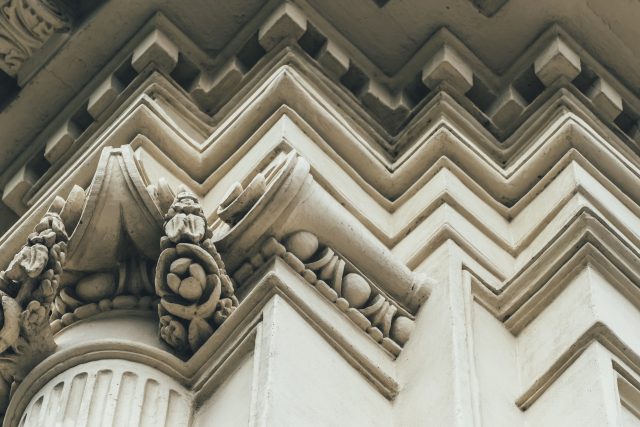
The struggling Liberal party of Sweden made an interesting proposal a few weeks ago, regarding the architecture of schools. Historically considered the party for education issues, it is both surprising and unsurprising that this idea was put forward by this modern and usually progressive party. But it is most welcome, and a manifestation of how the tides are turning in the favour of the return of traditional authority, as well as traditional aesthetics.
The Liberals’ party leader Simona Mohamsson seems to have spontaneously formulated her idea in conjunction with a visit at a school, followed closely by media. The proposal is that Swedish school facilities should be standardised by law to follow traditional, imposing and authoritative styles of architecture, as opposed to the low-statured, box-like, and ideologically “egalitarian” buildings that normally house schools today. The context of this statement by Mohamsson was that she was impressed by the school she was visiting; an old fin de siécle gymnasium built in brick, several stories tall, and with a grand adorned central entrance. Why are not all schools built like this, in order to convey status and importance to its surrounding environment, she asked.
Some additional context that deprives some credibility to the proposal was the the Liberals have, in their quest to more than double their abysmal polling in order to maintain their representation in parliament, tossed out radical ideas left and right in the past few months, with the strategic intent to gain media relevancy and rally the few voters who might still take them seriously.
As a conservative, an acknowledgement that the aesthetics of our physical environment matters is actually a very appreciated message coming from a party leader. Combined with some previous proposals by the Liberals, such as the introduction of school uniforms, the ‘return to tradition’ that the Liberals have demonstrated on paper should be enough to pique the interest of some conservative voters. It is unlikely that they will directly vote for the Liberals as opposed to the Sweden Democrats, but the mutual concern for idealistic issues such as architecture should help to build some cross-party trust and solidarity.
Architecture has become a real political issue
This political game is the manifestation of a real change towards conservative values in society. The Liberals, typically a socially liberal party but with a significant centre-right legacy, have been known for a rhetorically authoritarian view on education – order and obedience in the classroom, if one were to make a rather imperfect summary. This backbone of the party, which is associated with its historical ties to the civil service class, has been more or less resting through the very liberal 21st century, but is very fitting to resurrect now that conservatism is making a come-back.
All around Europe, there are grass root movements calling for a return to classical architecture, objective standards of beauty, and the preservation and restoration of historical urban environments. Sweden is no different, and in fact, the formalised European Architectural Revival movement originated in the form of the Swedish Arkitekturupproret first in 2014.
It is not only the Liberals who have woken up to the political potency of architecture, but the Sweden Democrats as well as the largest current ruling party the Moderates have since long been engaged with these topics on municipal levels. In Gothenburg, Sweden’s second-largest city, even the ruling Social Democrats have shown a rare commitment to classical revivalism – the party more guilty than any other for its “year 0” vision of Swedish cities, and which deliberately replaced historical city centres with modern, homogeneous, ‘functional’ blocks.
The Liberals’ paradoxically characteristic-yet-uncharacteristic acknowledgement about architecture also points out the relationship between power and aesthetics. Mohamsson indirectly reacts to how certain forms of social engineering have deprived public spaces of tradition and romanticism, in order to instill “equality” and functionalism as the primary goals of the physical environment. Education used to be associated with classical ideals, beauty, and authority, and this was reflected in school architecture until the modernist take-over of the public sector. The buildings were typically symmetrical, stood taller than their surroundings, and were imbued with their history. Often school buildings were tied to older institutions worthy of veneration, such as the Church, government administration, or the military.
School buildings in Sweden constructed under the Social Democratic and subsequent liberal paradigm possesses none of the qualities of older sites of learning. The typical school in Sweden is a low and flat office-like complex, which understandably does not exactly inspire pride, duty, or higher ideals in pupils.
When the classical ideals have been replaced by the maxims of mass-production, mass capacity, functionalism, and ideologically imposed equality, it may also contribute to the declining quality of the school experience.
A necessary step towards a serious school
Swedish schools are not only anti-traditional in their physical structures, but also in their teaching methods. Classes are typically organised in loose forms, prioritising free discussion and critical reflection of the topics at hand, supposedly in order to develop independent thought in the pupils. Teachers are non-authoritative, and have taken the role of guides rather than as lecturers.
Subsequently, the teachers’ role as the enforcer of order has been drastically reduced. This cultural and largely political imposition has happened simultaneously as children have lost their ability to concentrate, which is often blamed on technology. Immigration has, in the meantime, created social and cultural tensions that often lead to violence and distrust between teachers and pupils. Reports of pupils who fail entire years have skyrocketed, as have reports of violent incidents in school settings.
This is the background against which the Liberals have found their solution one century in the past. Today, the party supports the return of traditional teacher-led instruction, school uniforms, and classical school architecture – all parts of a greater whole that reflects conservative values. These proposals, which definitely stray from the script as far as social liberalism goes, were unfortunately largely ignored or shrugged off as unserious by those who would find them appealing. The rest of the political establishment jointly condemned the ‘reactionary’ ideas as wasteful and superficial.
The Liberals’ party leader Simona Mohamsson, mostly known for her earth-shattering coalition agreement with the nationalist Sweden Democrats and subsequent media appearances with its leader Jimmie Åkesson, showed a resilience in the face of ridicule by the centre-left that ought to impress even conservatives. She argued that when you tighten the budget on architecture, you are not far from tightening the budget on books and teachers. Indirectly, she evoked a very holistic view on education that involves all the parts that make any experience. These are ‘mystical’ aspects that enhance any organised activity, that modernism has stripped away from public education in the name of rationality.
The Liberals’ passing school architecture episode carries far more connotations than just about any commentator or media is giving it credit for. The values that were, perhaps inadvertently, espoused by Simona Mohamsson can be used to restore public confidence in much that has gone wrong in other sectors of society as well. Proud, classical architecture that appeals to traditional beauty commands respect, and in a country with a massive shortage of respect for law and order among certain groups, it would be well to legislate not only beautiful school facilities; but police stations, courts, and city halls as well.