





 Subscribe


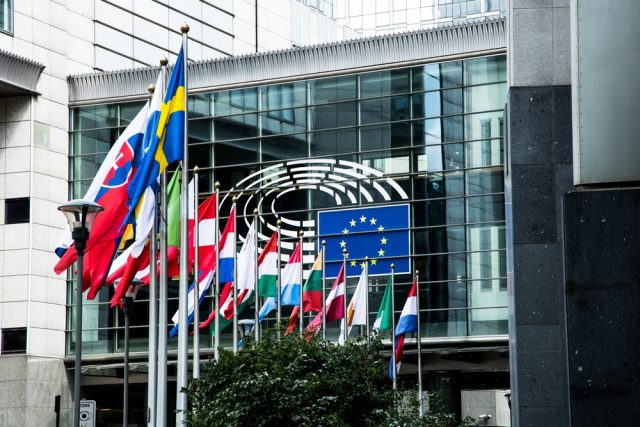
Twenty-two years after the largest enlargement wave in European Union history – when 10 countries formally became members – and thirteen years after Croatia’s entry, the topic of EU enlargement has once again become a burning issue. This is the longest period that has passed since the last accession, and the prospects and challenges of a larger Union are significant. Ahead of the European Council summit in mid-October, the Commissioner for Enlargement recently outlined the Commission’s “reformist” vision for future accessions.
In a speech delivered on August 24 in Zagreb, Marta Kos emphasized the importance of fulfilling commitments, the benefits of a gradual integration, a more flexible decision-making process, and stronger guarantees to reinforce the rule of law and democratic mechanisms.
Beyond clichés, such as candidate countries must truly respect “our common values”, certain emphatic statements, or paying tribute to Croatia and its achievements, Commissioner Kos praised the unprecedented progress made this year regarding the enlargement process. On the one hand, we have Montenegro, which is closest to joining the EU; Albania, held up as an example for closing the chapter on the rule of law; and Ukraine and Republic of Moldova. As for Iceland, at the time of the speech in Zagreb, it was preparing for a referendum on resuming accession negotiations; however, the outcome on August 29 – when 53% of citizens voted against it – effectively put an end to that aspiration.
Beyond individual cases, which are at various “stages” of the accession process, the question is how to fully understand whom we are welcoming within our borders. A Union that fails to defend its external borders in the face of an existential threat, a Union suffocated by excessive regulations and promoting ideologies that fundamentally undermine the family, freedom of speech, and national sovereignty – how truly prepared is it to expand any further? It would be like a house to which a new floor is added while its foundation is falling apart.
Commissioner Kos believes that the decision-making process must be more efficient and flexible – a legitimate goal – but one way to achieve it is to reduce the areas in which a single member state can exercise its veto. In other words, the kind of reform that would prevent unpleasant “surprises” from states that do not fully comply with Brussels – a topic that has caused considerable resentment in recent years. Another phrase used by the Slovenian commissioner was to ensure that “Trojan horses” are not allowed to penetrate, so that “fundamental European values” and “the rule of law” can no longer be violated. The same flawed rhetoric that the pseudo-elites use in their disregard for the peoples and their interests. These are some of the steps toward Europe regaining its “independence,” as envisioned by the Commissioner for Enlargement.
We are all too familiar with grandiose rhetoric and empty phrases. EU enlargement must be judged by the extent to which it strengthens or weakens what makes Europe Europe. An enlarged European Union should mean a strengthening of our bloc, not a weakening of it. Does it bring more order, more prosperity, and more respect for true values, freedom, and sovereignty? If the answer is “yes,” then enlargement should be welcomed. But if it serves only as a tool for a large-scale ideological project that perverts its stated goals – stability, prosperity, and freedom – then it must be rejected or, at the very least, regarded with the highest degree of caution.
For the European Union to remain a union of nations, it is imperative that it choose clarity and realism. Otherwise, it will risk finding itself, sooner rather than later, transformed into something unrecognizable. And then, enlargement will amount to nothing more than another nail in the coffin.