


 Subscribe


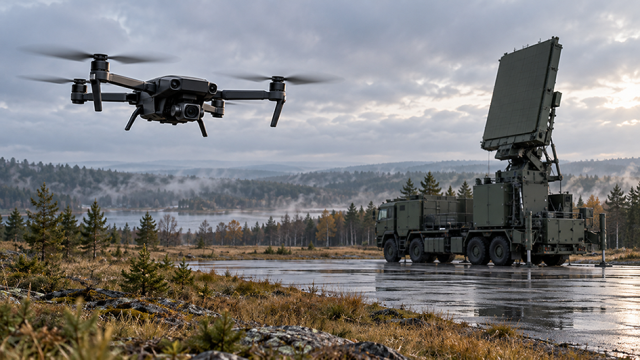
Drones, air defence and industrial readiness framed the ECR debate on turning technological ambition into credible deterrence within NATO.
Europe’s security ambitions face a practical test: how quickly can governments turn technological innovation into equipment that armed forces can deploy? In Vilnius, that question connected the debate over defence spending to the urgent business of preparing for threats that evolve faster than traditional procurement cycles.
It also provided the central theme of “Panel III: Deterring Tomorrow’s War: Drones, Air Defence and the Innovation Race”, held during the European Awareness Days organised by the European Conservatives and Reformists Party on 23 and 24 October 2026. Under the title “Peace Through Strength: Defending Europe”, the event examined how stronger national capabilities could reinforce collective security.
The panel brought together Vojtěch Munzar, vice-chair of the Czech Parliament’s Budget Committee; Nikodem Rachoń, adviser to the Polish president; Tomasz Szatkowski, ECR Group secretary-general and former Polish ambassador to NATO; and Sigutė Stankevičiūtė, Mach Industries’ director for the Baltics and Poland. Małgorzata Samojedny, president of the Opportunity Institute, moderated.
Their backgrounds connected four dimensions of military preparedness: public finance, political decision-making, alliance strategy and industrial development. The organiser’s presentation emphasised equipment that performs under operational pressure, bringing drones, cyber threats and air defence into the same discussion about adapting military capabilities.
The significance of that approach extends beyond individual technologies. A promising system becomes useful only when it meets an operational requirement, reaches military units and can be maintained. Innovation therefore depends on relationships between soldiers, engineers, manufacturers and the officials responsible for purchasing equipment.
Vilnius offered a particularly revealing setting. Lithuania’s borders with Belarus and Russia’s Kaliningrad exclave give defence planning an immediacy that can disappear in more distant European capitals. Here, readiness concerns the protection of territory, infrastructure and citizens along NATO’s eastern flank.
The wider conference placed that urgency within an explicitly Atlantic framework. ECR Party president Adam Bielan argued that Russia’s full-scale invasion of Ukraine had shattered assumptions that trade, diplomacy and inexpensive Russian energy could replace military capability. His message called for greater European strength within NATO and a renewed commitment to transatlantic cooperation.
Carlo Fidanza, the party’s executive vice-president, reinforced that position in a video message. Stronger national forces, a more competitive defence industry and greater European responsibility were presented as mutually supporting objectives. His reference to Italian air forces serving in Lithuania gave a concrete example of solidarity expressed through deployed capabilities.
Panel III’s focus added an industrial question to that political argument: can Europe deliver at the pace its security environment demands? Announcing investment begins the process. Its strategic value depends on production capacity, dependable supply chains, trained personnel and equipment available when required.
Related discussions during the separate Defence Roundtable on 24 October sharpened this perspective. WB Group representative Marlena Zając highlighted the importance of predictable orders for expanding production. Munzar stressed resilient industrial supply chains. Together, those contributions showed why defence innovation requires sustained demand and reliable manufacturing alongside research.
The resulting policy challenge is to connect immediate requirements with lasting capacity. Governments need equipment that addresses existing vulnerabilities while preserving room for adaptation. Industry needs sufficient confidence to invest in facilities, skills and production. Armed forces need procurement decisions informed by practical experience.
Public support forms another part of this equation. ECR Party secretary-general Antonio Giordano described security investment as a foundation for freedom and prosperity. His advocacy of civilian resilience also broadened preparedness to include the skills people need during blackouts, disasters and other emergencies.
Read together, the Vilnius discussions suggest a demanding standard for deterrence. Political resolve must be supported by usable technology, industrial endurance and cooperation among allies. Panel III placed the innovation race within that larger responsibility: ensuring Europe can respond effectively enough to discourage aggression. The measure of success will be the capabilities delivered, the readiness sustained and the confidence allies can place in one another when security is tested.
Alessandro Fiorentino