





 Subscribe


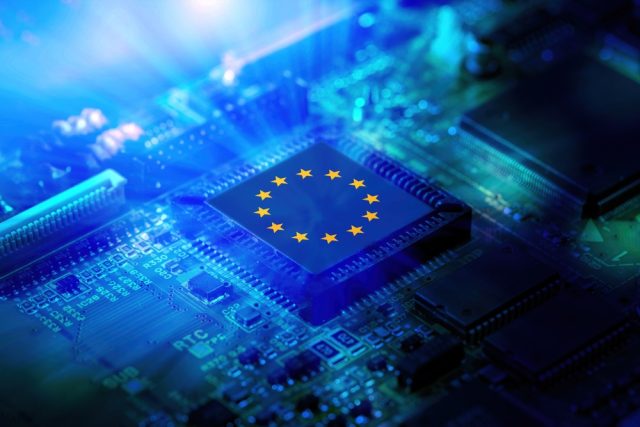
For a long time, European security was discussed almost exclusively in military terms: troop numbers, defence spending, and NATO commitments. Today, that framework is no longer sufficient. The most serious vulnerabilities facing the European Union are not located at its borders, but inside its supply chains, industrial ecosystems, and technological dependencies.
Rare earths, semiconductors, and artificial intelligence are no longer neutral economic sectors; they are strategic assets. The files now piling up in Brussels tell a consistent story: Europe is discovering—late and often in crisis mode—that resilience cannot be improvised. This is a structural stress test revealing how fragmented decision-making and regulatory inertia are eroding Europe’s capacity to act in a world where economic dependencies are increasingly used as weapons.
Critical Raw Materials: The Hidden Front Line
The debate on rare earths offers the clearest entry point into this crisis. These 17 elements are essential for everything from smartphones to permanent magnets in wind turbines and guidance systems for precision munitions. Yet, Europe remains precariously dependent, importing 95% of its rare earths. China currently dominates the landscape, controlling 70% of global extraction and up to 90% of processing capacity.
The EU’s response, the Critical Raw Materials Act (CRMA), sets ambitious 2030 targets: 10% internal extraction, 40% domestic processing, and 25% recycling. However, reality is lagging behind theory. The Per Geijer project in Sweden, the largest known rare earth deposit in Europe, is a case in point. Despite its “strategic project” status, it faces a legal marathon involving stringent environmental codes and biodiversity protections that threaten to delay production for years. Without secure access to these inputs, no industrial or defence policy can be truly credible.
Semiconductors: Sovereignty Discovered Too Late
If raw materials expose upstream weaknesses, semiconductors reveal midstream fragility. Europe possesses critical assets but governs them defensively. ASML, the world leader in lithography, provides a rare point of leverage, yet its leadership warns that total “technological sovereignty” is unrealistic given the deeply integrated global ecosystem.
The Nexperia case is even more illustrative of the geopolitical squeeze. In late 2025, the Dutch government was forced to intervene, using emergency powers to appoint public managers and suspend the CEO of the Chinese-controlled firm to prevent the “hollowing out” of European expertise. This move, triggered by US pressure and fears of technology transfer to China, resulted in immediate retaliatory export controls from Beijing. The lesson is clear: the EU Chips Act aims to double Europe’s market share to 20% by 2030, but it lacks robust tools to protect existing assets from internal “drainage” or external weaponization.
Artificial Intelligence: Regulation Without Power
The imbalance between ambition and capability is most visible in AI. While the EU leads in ethics with the AI Act, it is losing the global race on nearly every other metric. The numbers are stark: the US has produced 40 foundational models and China 15; all of Europe combined has produced only three.
The “innovation gap” is fueled by a massive funding disparity. US private investment in AI reached $400 billion over the last decade, compared to just $50 billion in the EU. Furthermore, Europe suffers a systemic talent drain: three out of four European PhDs trained in the US remain there for at least five years. As startup leaders note, Europe has spent too much time focusing on regulation instead of becoming the most competitive place on the planet. Without control over hardware and hyperscale cloud infrastructure—65% of which is controlled by three US firms—Europe risks becoming a rule-maker in a world it does not own.
The Regulatory Paradox: When Strategic Goals Collide
The “Green Deal paradox” further complicates the landscape. Europe defines sectors as “strategic” for its climate and digital goals, yet subjects them to regulatory frameworks that actively block execution. In Sweden, the push for “green” minerals is slowed by the very environmental laws designed to protect the continent.
This is a failure of coherence. Strategic autonomy cannot survive within a governance system that treats raw materials, AI, and energy as separate silos. While competitors like China integrate state planning and long-term investment, the EU remains fragmented into 27 national markets, forcing its fastest-growing startups to register in places like Delaware just to access capital.
Resilience Requires Control
The European Union stands at a crossroads. Security has expanded far beyond the military domain into the very fabric of industrial production. Resilience cannot be built through declarations or funding announcements alone; it requires control over critical assets and the capacity to act decisively under pressure.
The evidence points to a single conclusion: Europe does not lack talent or awareness, but an integrated approach to power. Until the gap between regulatory ambition and industrial reality is closed, every new supply chain disruption will arrive not as a surprise, but as confirmation of a closing window of opportunity.