





 Subscribe


As a child, I was fascinated by a chapter on the Polish national hero Tadeusz Kościuszko in a collection of essays, The Torch of Freedom: Twenty Exiles of History, published in Icelandic in 1945 (Kyndill frelsisins). The author, the twentieth-century poet Józef Wittlin, described Kościuszko’s participation in the American Revolutionary War, his fight against the partitions of Poland, and his attempt to abolish serfdom. Remarkably, Poland adopted a liberal constitution in 1791, based on the British political tradition and the 1789 American Constitution, as its main author, King Stanisław August, observed. But with the third partition, in 1795, Poland was wiped from the map. She was not fortunate in her neighbours, the kingdom of Prussia and the Romanov Empire, and it was only after they had crumbled that she could become a nation-state. The fourth partition of Poland took place in 1939 when Hitler’s Nazis seized the western part and Stalin’s Bolsheviks the eastern one.
The Dark Side of the Moon
On 27 September 1939, in an Icelandic newspaper, the communist Halldór Laxness (later to receive the Nobel Prize in Literature) applauded Stalin’s annexation of eastern Poland, writing that fifteen million people under medieval feudalism, notorious for its dirt-poor peasants, had ‘smoothly jumped’ into the Soviet republic of workers and farmers. The truth was quite different. While the Nazis certainly behaved with unspeakable cruelty in their part of Poland, it is less well known that the communists did likewise in theirs: they murdered not only 22,000 Polish officers in 1940, but also deported 1.7 million people to Siberia and Kazakhstan, as described in a well-written book reported on by an Icelandic newspaper in 1946, The Dark Side of the Moon by Zoe Zajdlerowa.
Katowice, Kattowitz, Stalinógrod
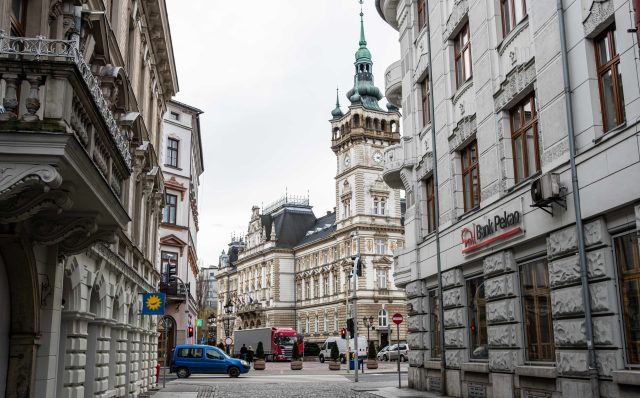
I have been to Poland many times, and in late May 2026, I found myself there again, in the Silesian city of Katowice. It is a pleasant mid-sized city with many ornate nineteenth-century buildings in the centre. Its complicated history illustrates the ravages of Central Europe. Long a part of the Kingdom of Poland, Silesia passed to the Habsburgs in 1526 and was seized by Prussia in 1742. After that, Katowice was mostly a German city, renamed Kattowitz, and developed rapidly in the nineteenth century, fuelled by nearby coal deposits. After Germany’s defeat in the First World War, the population of Upper Silesia was to decide in a plebiscite whether to remain in Germany or join the new Polish state. While Katowice voted overwhelmingly for Germany, the surrounding rural districts went for Poland, resulting in these two and other nearby regions becoming a semi-autonomous Polish province with its own parliament. The city gradually became mostly Polish. Under communism, Katowice was renamed Stalinógrod in 1953, but regained its original name in 1956.
The Epitome of Evil: Auschwitz
Two places near Katowice symbolise the worst and the best of European history. Auschwitz (Oświęcim) lies 36 km south of the city and was the site of the Nazis’ most notorious extermination camp. More than 1.1 million people were murdered there, mostly Jews. This is a place that leaves no visitor untouched. Some survivors have written poignantly about their experiences. Primo Levi observed that human monsters existed but were too few to be dangerous; the ordinary men, ready to obey and act without asking questions, were more dangerous. Elie Wiesel remarked that to forget the victims was akin to killing them a second time.
The Embodiment of Culture: Kraków
Kraków, 85 km east of Katowice, is, on the other hand, a truly magnificent European city, the embodiment of culture and commerce. Poland’s capital until 1596, it takes pride in many gorgeous churches, the largest medieval market square in Europe and the Jagiellonian University, founded in 1364. In the early twentieth century, a school of economics flourished at the University, inspired by the Austrian economic liberals Carl Menger, Eugen von Böhm-Bawerk, and Ludwig von Mises. It favoured free trade, private property, and limited government, the three pillars of Western civilisation.