





 Subscribe


When I was a child in Iceland, my classmates and I used to shake our heads over past follies. Women, young and old, were convicted of witchcraft and burned at the stake as late as 1727. The Hindus did not want to eat beef, we were told, because they regarded cows as sacred, whereas the Jews and the Muslims did not want to eat pork, because they regarded pigs as unclean. I still remember a scene in Walter Scott’s Ivanhoe where the Jew Isaac of York is horrified when a brawn (pig’s head) is thrust at him. In those days, we were surprised that anyone should have taken seriously the attempts by alchemists to produce gold and by adventurers to build a perpetual motion machine. We were amused by H. C. Andersen’s tale about the Emperor’s New Clothes, where it took a child to state the obvious. But those past superstitions have their modern counterparts.
Show Trials and Cancel Culture
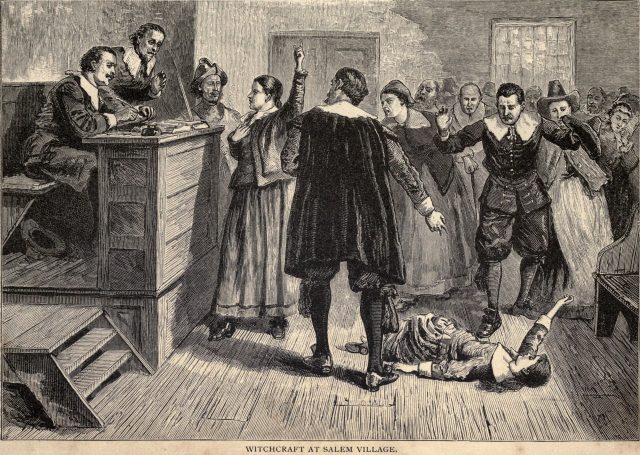
The modern counterpart to witch trials of the past (depicted) is not as much the Holocaust as the communist show trials, such as the Moscow trials of 1936 and 1938. The show trials served two important functions: to explain that the dismal performance of the planned economies was the result of sabotage, and to instil fear. Fortunately, in the West, the rule of law mostly protects people from show trials. But aspects of modern cancel culture seem to be somewhat similar to them, except that the accused, the cancelled, do not lose their lives, only their livelihood. There is no due process, only accusations to be accepted without hesitation. Sometimes the victims fight back; for example, James Tooley, who had been suspended as Vice-Chancellor of Buckingham University on charges brought by his estranged wife. The charges were found to be unsubstantiated, and he was reinstated. But often the targets lose their jobs, as did James Damore, a senior engineer at Google, who wrote an internal memo arguing that differences between the sexes were ignored in hiring practices. This was regarded as a thought crime. The left-wingers in control want to intimidate independent people.
Whales Not Sacred
The modern counterpart to old superstitions about beef and pork is the widespread rejection of eating whale meat. Whales have no inherent qualities that entitle them to more protection than cattle or sheep. It is not a rational argument that today’s ecofundamentalists may regard whales as sacred. Moreover, at least in my part of the world, the whale stocks are not endangered. The Icelanders harvest two stocks, the fin whale, with a population of 20–25 thousand in the Icelandic waters, and the minke whale, with a population of 45–50 thousand. Only a fraction of the stocks are harvested each year. When foreign ecofundamentalists demand the prohibition of whaling, they are in effect demanding that the Icelanders feed the whales for them. Each year, the whales consume about 2 million tonnes of krill and small fish in the Icelandic waters, while Icelanders harvest about 1 million tonnes of larger fish that feed on the same creatures. Thus, a prohibition of whaling adversely affects the fish stocks.
The Doomsday Industry
The modern counterpart to the alchemists, builders of perpetual motion machines, and the two rogues pretending to weave clothes for the emperor, is the doomsday industry. We all want a clean environment, reduced pollution, and the preservation of rare species. But this can mainly be achieved by extending private property rights to unowned resources, whereby they gain guardians; poachers become gamekeepers. It is also likely that the current moderate rise in average temperatures is partly caused by greenhouse gas emissions. But it is by no means certain that the negative effects of global warming outweigh the positive ones. At any rate, man cannot control the climate as a pilot would an aeroplane. Our best bet is to continue developing new technologies to adapt to climate change. Most of the costly measures taken by the European Union to combat climate change are futile, as Bjørn Lomborg has cogently argued, or they cancel each other out. But they stifle innovation and entrepreneurship. The emperor has no clothes.