





 Subscribe


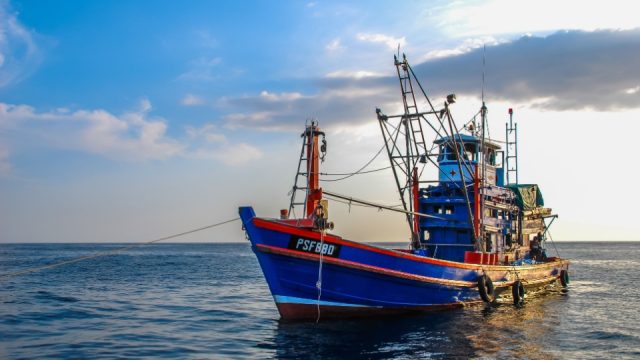
The EU Agriculture and Fisheries Council reached an agreement in late December 2025 regarding the total allowable fish catches for 2026 in EU waters and certain non-EU waters.
This agreement imposed severe reductions on several fish stocks which are critical to the Irish fishing industry.
Key pelagic species now face particularly steep cuts: a 70 percent reduction in the total allowable catch for mackerel, 41 percent for blue whiting, and 22 percent for boarfish.
These adjustments resulted in an overall quota loss of approximately 57,000 tonnes for Irish vessels.
According to data reported by RTÉ, the remaining Irish quota for 2026 is estimated at 120,000 tonnes with a first-sale value of €205 million, representing a reduction of about one-third, or €100-105 million, in comparison to 2025 levels.
When secondary economic activities such as processing, distribution, and export are factored in, the total impact could approach €200 million, placing around 2,300 direct and indirect jobs in coastal areas at risk.
A focal element of Irish criticism has centred on the failure to apply the Hague Preferences.
This provision, agreed in 1976 during negotiations preceding Ireland’s accession to the European Economic Community, allows for additional quota allocations to Ireland (and, to a lesser extent, other peripheral states) when certain stock levels decline below predefined reference points.
It was designed to offset the structural disadvantages faced by Ireland, including a historically limited fishing fleet at the time of entry and the granting of extensive access rights to vessels from other member states in what became Irish waters under the emerging Common Fisheries Policy (CFP).
In 2025, Ireland sought to invoke these preferences for the first time in relation to multiple stocks; however, a group of member states, led by France, Germany, the Netherlands, and Poland, blocked their activation.
This marked the first instance since the mechanism’s establishment where such an invocation was denied, intensifying the effects of the underlying scientific recommendations.
The scientific basis for the quota reductions stems from advice provided by the International Council for the Exploration of the Sea, which highlighted pressures on stocks partly attributable to fishing activities by non-EU countries, including Norway, the United Kingdom, the Faroe Islands, and Iceland.
While these external factors contributed to stock depletion, the refusal to deploy compensatory tools within the EU framework shifted a disproportionate share of the conservation burden onto Irish operators, who have maintained high levels of compliance with EU regulations.
Political reactions in Ireland demonstrated an unusual degree of unanimity across government and opposition benches. During the Dáil Éireann debate on 17 December 2025, Minister of State at the Department of Agriculture, Food and the Marine, Timmy Dooley, outlined the government’s efforts to secure better outcomes and expressed profound disappointment at the blockage of the Hague Preferences.
He noted that the opposing member states have historically derived substantial benefits from access to waters now under Irish jurisdiction, describing the decision as inconsistent with prior understandings. Sinn Féin spokesperson Pádraig Mac Lochlainn went further, framing the outcome as a direct threat to Irish sovereignty over national resources and to the viability of family-run enterprises in coastal communities.
Mac Lochlainn pointed to the influence of large industrial fleets from other member states and urged consideration of legal action through the European Court of Justice. Contributions from
independent deputies reinforced this narrative, underscoring Ireland’s isolation in the negotiations and the stark asymmetry whereby foreign vessels continue to land significant quantities from Irish zones while domestic quotas are curtailed.
This development must be understood against the longer historical trajectory of the Irish fisheries sector within the European integration process. Upon accession in 1973, Ireland contributed one of the Union’s most extensive marine areas—encompassing highly productive fishing grounds, to the common pool, in anticipation of economic advantages that would accrue through membership.
However, the CFP, fully implemented in 1983, institutionalised a system of relative stability in quota shares that locked in allocations based on historical catch records from the 1970s. At that juncture, Ireland’s fleet was comparatively underdeveloped, resulting in a persistent mismatch: Ireland controls approximately 12-15 percent of EU waters but receives quota shares amounting to roughly 4-6 percent of the total EU catch value, depending on the stocks in question.
The challenges compounded following the United Kingdom’s departure from the EU. The EU-UK Trade and Cooperation Agreement mandated a 25 percent transfer of quota shares from EU to UK fleets over a phased period ending in 2026. I
Ireland absorbed a disproportionately high portion of this transfer, estimated at around 40 percent of the total value lost by the EU side, due to the concentration of affected stocks in western waters.
Cumulative financial losses from this arrangement alone are projected to exceed €180 million by the close of 2025.
Industry voices had foreshadowed the risks of the 2025 negotiations well in advance. In reports published by The Fishing Daily ahead of the December Council, representatives such as Brendan Byrne of the Irish Fish Processors and Exporters Association and Cormac Burke of the Irish Fishing and Seafood Alliance warned that the combination of drastic proposed cuts and potential non-application of safeguards could push the sector beyond sustainable limits, particularly for pelagic operations reliant on mackerel and blue whiting.
Operationally, the 2026 quotas impose stringent limitations. Certain vessels may be restricted to as few as 14-20 days of fishing activity per year, while onshore processing plants in regions like Killybegs in Donegal, Castletownbere in Cork, and Dingle in Kerry face underutilisation and potential closures.
These areas, already characterised by economic fragility and limited alternative employment opportunities, stand to experience amplified socio-economic strain.
Beyond Ireland’s borders, the episode carries implications for the position of smaller member states within the Union’s decision-making architecture.
The CFP is predicated on principles of equitable distribution and shared responsibility for resource management. Yet, when coalitions formed by larger or more centrally located states override protective clauses intended for peripheral economies, it exposes vulnerabilities in the system’s ability to uphold balanced outcomes.
Ireland’s case exemplifies how negotiating dynamics, shaped by differing fleet sizes and economic priorities, can lead to results that favour established industrial operators at the expense of more dependent national sectors.
This pattern has the potential to undermine broader EU solidarity.
Cross-party calls in the Dáil for structural reforms, including enhanced monitoring of third-country vessels, reinstatement of reliable compensatory mechanisms, and exploration of treaty-based challenges, signal deepening frustration.
Suggestions for establishing a national task force to support affected communities, alongside diplomatic initiatives during Ireland’s forthcoming EU Presidency in the first half of 2026, indicate a determination to pursue corrective measures.
Industry stakeholders continue to advocate for practical steps such as compulsory remote electronic monitoring on all vessels operating in EU waters and dedicated financial instruments to offset losses.
In summary, the AgriFish Council’s 2026 quota agreement, coupled with the unprecedented blockage of the Hague Preferences, constitutes a profound setback for Ireland’s fisheries sector amid an accumulation of prior disadvantages.
The unified Irish political perspective regards these developments as a prioritisation of other member states’ interests over commitments to fairness and mutual support.
For the European Union as a whole, the affair highlights the risks inherent in policy frameworks that fail to adequately safeguard smaller participants against disproportionate impacts.
Maintaining internal cohesion necessitates ongoing attention to geographical and structural disparities. In the absence of such an approach recurring perceptions of inequity will certainly erode the cooperative ethos upon which the Union relies.