





 Subscribe


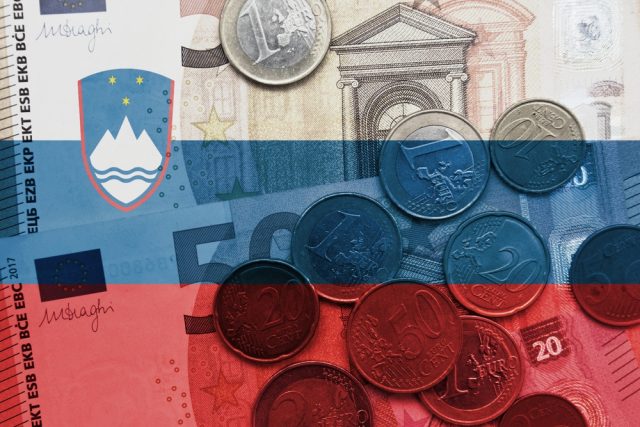
When a European country guarantees, through its Constitution, the right of every citizen to pay with cash, we know that the fight to defend our fundamental rights and freedoms is by no means lost. This is what Slovenia did, a huge step toward protecting not only the use of physical money, but also freedom, security, and sovereignty.
On December 1, the National Assembly, the lower house of the Slovenian Parliament, voted 61 to 0 in favour of a constitutional amendment, the new Article 74A, which establishes the freedom of Slovenian citizens to use cash, in the form of banknotes and coins, in any financial transaction. The initiative to amend the Constitution did not come from parliamentary groups, but was the result of a very active social media campaign, which began in 2023 and managed to collect over 50,000 signatures. According to Slovenian law, one of the ways to initiate a constitutional amendment is for at least 30,000 citizens with voting rights to sign a petition to that effect, and then for two-thirds of the members of parliament present to vote in favour. This time, the vote was unanimous—a (very) rare consensus among the parliamentary parties.
The introduction of a constitutional amendment guaranteeing this is a significant achievement and definitely a model to be followed by any state acting to protect the freedoms of its citizens.
The debate on restricting or protecting the right to use cash is increasingly heated at European level, with obvious ideological motivations. No one wants to actually ban cash, claim advocates of cash limits, but discouraging its use is an increasingly widespread trend.
Yes, we live in a world where digitization is advancing at an accelerated speed.
Yes, we live in a society where online payments involve transactions that, in many cases, take only a few seconds.
Yes, progress is necessary, and transactions must be secure.
But are the speed—which is staggering, let’s admit it—and the supposed security of online transactions grounds for reducing the use of cash to irrelevance?
There can only be one answer: no.
In a very concise and comprehensive piece published on the European Central Bank’s website, ECB explains the role and benefits of using cash. It “ensures freedom, autonomy, and privacy,” with banknotes and coins being the only form of money that anyone can hold without having to rely on anything else like electricity or Internet and which respects the essential right to privacy and personal data protection.
The European Central Bank also tells us that cash “has proven to be secure against cybercrime, fraud, and counterfeiting.” On the contrary, online transactions have not only failed to “prove” themselves secure in these respects, but have in many cases proved highly questionable in terms of the actual protection of identity or private data.
According to ECB, cash is a legal means of payment which, under normal circumstances, cannot be refused between two partners, facilitates commercial transactions for all citizens, including those who are vulnerable or have limited access to online applications, and helps to keep more accurate records of expenses. These – and many more – are the benefits of using cash.
The successful pro-cash campaign that began at the grassroots level in Slovenian society, and was unanimously voted by the Parliament, is a powerful signal that should provide momentum for other European countries as well. Advocates of restricting freedoms from left to right accross the political spectrum will say that banning cash is out of the question. That is true: banning cash is out of the question YET. But there is a lot of concern about imposing all kinds of restrictions.
Facts: cash means freedom, cash means privacy and increased security, cash means sovereignty. This is a battle we cannot afford to lose.