





 Subscribe


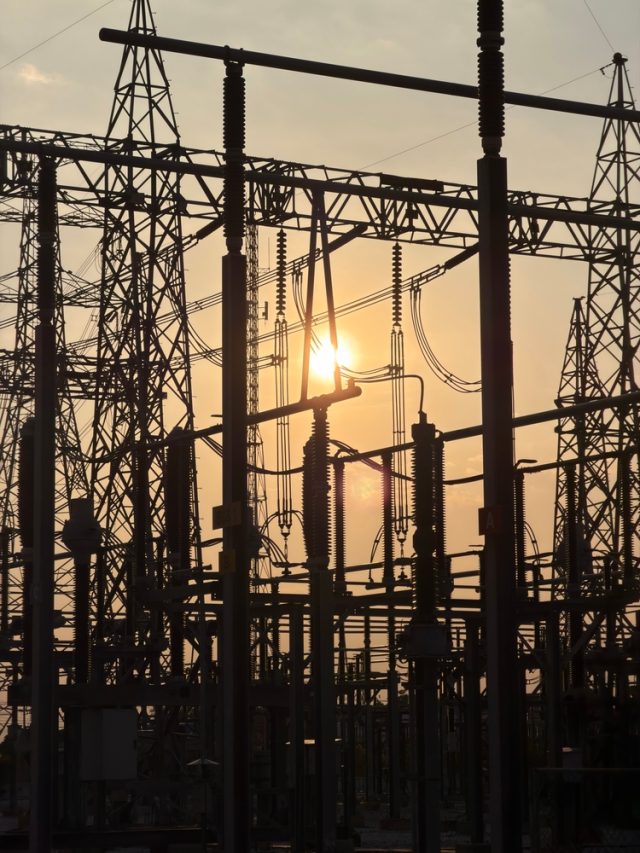
If we were to choose three phrases to describe the behaviour of Eurocrats, one would certainly be “excessive centralization” or “hyper-centralization” – the determination to monopolize and concentrate all decision-making power in the hands of a small group, which takes no account of national specificities or interests of member states. Hyper-centralization is not an invention of “the other side,” nor is it a concept exploited politically by conservatives to attack bureaucratic-federalist elites. It is a reality that public institutions, private organizations, and citizens across the European Union encounter almost constantly.
Extensive efforts are being made to push this bureaucratic system to new heights, while sovereignty and national identity are to be devoured or melted away. Because these are “relics” of that “abominable” past, that must be erased or, at “best,” rewritten.
Sovereignty is being trivialised, and when it comes to energy sovereignty, all we hear from Brussels is the relentless narrative of the “green transition” and decarbonisation as an absolute necessity. Energy sovereignty cannot be a political tool or an optional matter, subject to one person’s or another’s convenience.
Thus, when a public initiative takes a different stance from Brussels’ centralized plans for the energy sector, this should be understood as a sign that the battle for sovereignty is far from lost.
A few days ago, five EU member states – Bulgaria, Finland, France, Poland, and Sweden – signed a joint statement in which they strongly opposed Brussels’ increasingly centralizing tendencies in the electricity infrastructure sector. In that document, this ad hoc coalition accused the Commission of failing to understand the concrete and complex mechanisms underlying the operation of national energy systems – that is, real-world conditions – and accused the Commission of deliberately ignoring the national competences of member states in the highly sensitive and challenging field of energy.
Instead of imposing top-down centralization, and given the lack of sufficient knowledge of the ground realities, the Commission should focus on national companies and network operators, the only ones capable of providing objective information based on reality, rather than the useless papers produced in Brussels offices.
Let’s take the issues one by one. According to Article 194 of the Treaty on the Functioning of the European Union, the article on “energy,” each member state has the right to decide on the conditions under which to exploit its own energy resources and to choose the energy sources it needs. Under the Treaty, policy in this area is a shared competence, with states managing the operational aspects in accordance with their own strategies and interests, and with a view to ensuring their own energy security.
According to the five countries that formed this coalition, the European Commission is seeking to assume the powers held by the member states. This behaviour should not, in fact, come as a surprise, since such an approach is fully consistent with Brussels’ overall strategy of absolute concentration of power and prerogatives, to the detriment of the national states.
To what extent is this obsessive drive toward hyper-centralization compatible with subsidiarity, one of the fundamental principles of the European Union? Have European citizens been asked whether they agree that the European electricity infrastructure should come entirely under the Commission’s control, that the member states’ prerogatives in the energy sector should be taken over by the European government – a violation of the provisions of the Treaty on the Functioning of the EU? Is there not a stark contradiction between the principles Brussels claims to defend and the way it actually acts?
One of the main concerns raised by the five signatory states is the complexity of the energy infrastructure; its local and regional characteristics make it nearly impossible to effectively and cost-efficiently impose a top-down system, as Brussels is demanding. What the bureaucrats in Brussels can deliver is dangerous centralization and rising electricity costs, not an impartial and truly useful strategy. The assumption that there is “only one way,” namely the one imposed by the European Commission, is counterproductive and fundamentally flawed, according to the five countries that have voiced such criticism.
What Bulgaria, Finland, France, Poland, and Sweden are actually proposing is a regional approach to electricity grids. Member states must continue to be able to analyse and make decisions based on their own interests, and national grid operators must play a fundamental role: regional coordination, not top-down control in which states have no say; a piece of reasoning as simple as it is crucial.
In the aforementioned document, those five states do not seek to remove the European Commission from this process, but recommend that its role be more akin to that of a “project coordinator,” while national companies retain substantive authority over technical and grid infrastructure issues. Effective cooperation between regions, rather than the concentration of power and oppressive bureaucracy, is the essence of this initiative from Sofia, Helsinki, Paris, Warsaw, and Stockholm.
Apart from its interest in maintaining full control over the energy system, the Commission is also showing particular concern regarding future investments, another sensitive issue that should remain within the competence of the member states.
Among the five countries that signed that document is Sweden, which has spoken out very strongly against a Commission funding proposal that would go against Swedish own national interests. Stockholm’s anger is much more severe, threatening to halt electricity exports to neighbouring countries. According to Swedish Energy Minister Ebba Busch, the proposal to use part of the revenue from congestion charges for the projects indicated by the Commission is “unacceptable,” with the minister announcing that the project for the new connect cable to Denmark will be halted. “The EU should not receive Swedes’ electricity money,” stated the Swedish energy minister.
Halting the construction of the power cable to Denmark is not the only harsh measure Stockholm is threatening to take if the conflict with Brussels is not quickly resolved. The cancellation or limitation of electricity exports to countries in the region will be a disruptive factor for both the energy market and the already turbulent political waters – a specific but particularly relevant dispute that risks escalating and turning into a full-blown cold war.
The European Commission’s obsession with the energy transition has taken on major proportions with the launch, in December 2025, of the European Grids Package; the key challenge is the €1.2 trillion to be invested by 2040. The strategy is the same every time: replacing the national approach with the highly centralized European logic – in fact, the implementation of that “single scenario” through which Brussels will decide on long-term investments and impose only those priorities that the European Commission finds necessary. Big decisions will be made in Brussels, while the powers of member states will be pretty much diminished.
It is precisely this development that is criticized by the unofficial coalition of the five states, which advocates for a clear division of responsibilities – with member states retaining their political powers, while the Commission should assume the role of coordinating and facilitating dialogue among the relevant players.
The document signed by Bulgaria, Finland, France, Poland, and Sweden pulls the alarm bell against an attitude that has become a standard for Eurocrats: unscrupulous forced centralization, with disregard for local particularities or national realities. It is not utopian plans or green fantasies that will ensure energy security, but realism and strong responsibility.