





 Subscribe


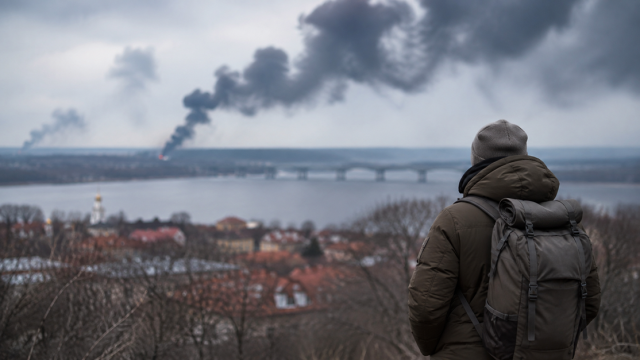
Bulgaria, Estonia, Latvia, Lithuania, Poland, Romania and Slovakia want the EU’s next long-term budget to help tourism businesses suffering from their proximity to Russia, Belarus and Ukraine
The economic consequences of Europe’s security crisis are increasingly being felt beyond defence, energy and trade. Tourism is becoming another casualty, particularly in regions close to Russia, Belarus and war-torn Ukraine. Seven European Union countries — Bulgaria, Estonia, Latvia, Lithuania, Poland, Romania and Slovakia — are calling on Brussels to provide financial support for tourism businesses in areas affected by geopolitical tensions and security concerns. In a letter addressed to EU Commissioners Apostolos Tzitzikostas and Raffaele Fitto, tourism and finance ministers from the seven countries asked for part of the EU’s proposed €2 trillion Multiannual Financial Framework to support hotels, small businesses and tourism operators in frontline regions.
“Tourist flows have decreased significantly in most of these regions,” the ministers warned. Small and medium-sized enterprises are particularly vulnerable. Businesses are facing weaker investor confidence, greater operational uncertainty and more limited access to financing at precisely the moment when seasonal revenues are essential to surviving throughout the year. The seven governments also want security and geographical exposure to conflict incorporated into the EU’s forthcoming Sustainable Tourism Strategy. The non-binding strategy is intended to strengthen the competitiveness and sustainability of European tourism while tackling familiar problems such as overcrowding at major destinations and improving cross-border mobility. Frontline countries argue that Europe’s dramatically changed security environment must now become part of that discussion.
Latvia shows the scale of the problem
Latvia offers one of the clearest examples. Jurģis Miezainis, parliamentary secretary at Latvia’s Ministry of Economics, says incursions by unidentified drones generate anxiety not only among residents but also among potential foreign visitors “Tourism is very much based on emotions,” he explained, meaning even isolated security incidents can influence travellers’ perceptions of an entire region. Drone incursions can be followed by hotel and event cancellations, directly reducing revenues for local businesses. Latvia shares 449 kilometres of border with Russia and Belarus, making perceptions of insecurity particularly difficult to overcome. The impact is especially visible in Latgale, an eastern Latvian region known as the Land of Blue Lakes because of its more than 2,000 bodies of water.
A recent survey by the Latgale Tourism Association covering 94 tourism and hospitality businesses found that 72 percent had experienced declines in revenue and visitor numbers in June 2026 compared with June 2025. One in five reported losing at least half of their earnings over the same period. The war has also eliminated an important traditional source of visitors. Before Russia’s full-scale invasion of Ukraine, significant numbers of Russian and Belarusian tourists crossed nearby borders and supported local businesses. Those borders are now largely closed. Latvia is consequently looking further afield, targeting visitors from countries including Japan, Canada and the United States while developing relationships with cruise operators. Yet officials argue that national initiatives cannot completely compensate for a structural problem affecting Europe’s entire eastern frontier.
A wider European challenge
International tourism statistics support concerns about the region. UN Tourism figures showed Latvia receiving 38 percent fewer tourists in 2022 than in 2019. Finland recorded a 36 percent decline over the same period, while Slovenia registered a 42 percent drop.
The European Commission itself has acknowledged the broader economic damage caused by Russia’s invasion. Its latest cohesion report notes that some regions have suffered substantial reductions in investment, trade and economic activity, including tourism, alongside new economic barriers and job losses. The question is therefore whether proximity to geopolitical instability should become a criterion for European financial assistance. For the seven governments behind the letter, the answer is clearly yes. Their argument is that frontline regions are effectively absorbing an economic cost created by a security crisis affecting the EU as a whole.
The Commission has confirmed receiving the request but has not yet indicated what its response will be. Brussels says, however, that the specific difficulties faced by frontline regions are being considered as preparations continue for the future European tourism strategy. The debate illustrates how the consequences of war can spread far beyond the battlefield. A destination does not have to experience fighting to suffer economically: perceptions of danger alone can discourage visitors, cancel bookings and undermine investment. For Europe’s eastern regions, keeping tourism competitive may therefore require more than marketing campaigns. The seven countries now want Brussels to recognise tourism resilience as part of the EU’s broader response to a conflict whose economic consequences increasingly cross borders.
Alessandro Fiorentino