





 Subscribe


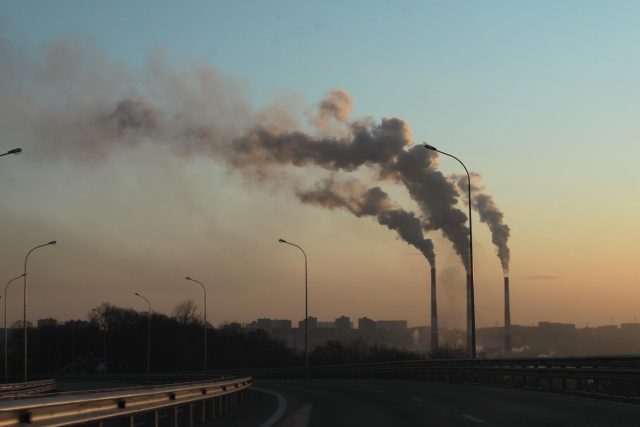
Eurostat data for 2013–2024 show steady progress in cutting emissions across most sectors, even as mobility and building activities continue to rise
Greenhouse gas emissions generated by the European Union’s economy have fallen sharply over the past decade, confirming that the bloc is moving—albeit unevenly—towards its climate goals. According to the latest Eurostat data, total emissions from economic activities and households reached 3.3 billion tonnes of CO₂ equivalent in 2024. This represents a 1% decline compared with 2023 and a much more substantial 20% reduction compared with 2013, marking a significant structural shift in Europe’s emissions profile.
The long-term trend reflects the combined impact of climate policies, technological innovation, changes in energy production and, to some extent, evolving consumption patterns. However, behind the headline figures lies a more complex picture, with notable divergences between sectors. While energy, industry and services have made considerable progress in cutting emissions, transport and construction stand out as persistent—and growing—sources of greenhouse gases.
Over the 2013–2024 period, the energy sector recorded by far the most dramatic reduction in emissions. Eurostat reports a 49% drop, equivalent to 512 million tonnes of CO₂ emissions avoided. This decline reflects the gradual decarbonisation of power generation across the EU, driven by the expansion of renewable energy sources, the phase-out of coal in several member states, and improvements in energy efficiency. The transformation of the energy mix has been a cornerstone of EU climate strategy, and the data suggest that this effort is delivering tangible results.
Other sectors have also contributed meaningfully to the overall decline. Emissions from mining and quarrying fell by 37% between 2013 and 2024, corresponding to a reduction of 25 million tonnes of CO₂ equivalent. Manufacturing, traditionally one of the most emissions-intensive parts of the economy, cut its emissions by 18%, or 146 million tonnes. The services sector recorded a 14% reduction, equal to 36 million tonnes. Together, these decreases point to a broad-based shift towards cleaner production processes, improved efficiency and, in some cases, structural changes in Europe’s economy.
Yet not all sectors are moving in the same direction. Transport and storage activities have seen emissions rise by 14% over the eleven-year period, adding an extra 57 million tonnes of CO₂ equivalent. This makes transport the single largest contributor to the increase in emissions among all economic activities. The trend reflects continued growth in road freight, aviation and logistics, as well as the slow pace of electrification and alternative fuel uptake in heavy transport. Despite stricter vehicle standards and investments in rail and public transport, overall mobility demand has continued to climb, offsetting efficiency gains.
Construction has also gone against the broader downward trend. Emissions from the building sector increased by 6% between 2013 and 2024, adding around 3 million tonnes of CO₂ equivalent. This rise is linked to sustained construction activity across the EU, driven by urbanisation, infrastructure investment and housing demand. While energy efficiency standards for buildings have improved, the sector remains highly dependent on carbon-intensive materials such as cement and steel, and progress in decarbonising these inputs has been slower.
Beyond absolute emissions, Eurostat highlights another important indicator: emissions intensity, which measures greenhouse gas output relative to economic activity. From 2013 to 2024, the EU’s emissions intensity fell by 34%, suggesting that the economy has become significantly less carbon-intensive even as it continued to grow. This decoupling of emissions from economic output is a central objective of EU climate policy and a key metric for assessing long-term sustainability.
Performance, however, varies widely across member states. Estonia recorded the steepest drop in emissions intensity, at 64%, followed by Ireland with a 50% reduction and Finland with 44%. Italy registered a 29% decrease, broadly in line with the EU average but leaving room for further improvement. These differences reflect national energy mixes, industrial structures and policy choices, as well as the starting point in 2013.
Overall, the Eurostat figures paint a picture of steady progress tempered by structural challenges. The EU has succeeded in significantly reducing emissions over the past eleven years, particularly in energy and industry. At the same time, rising emissions from transport and construction underline the difficulty of decarbonising sectors closely tied to daily life, infrastructure and economic growth. As the EU looks ahead to more ambitious climate targets for 2030 and beyond, addressing these lagging sectors will be essential to sustaining—and accelerating—the downward emissions trend.
Alessandro Fiorentino