





 Subscribe


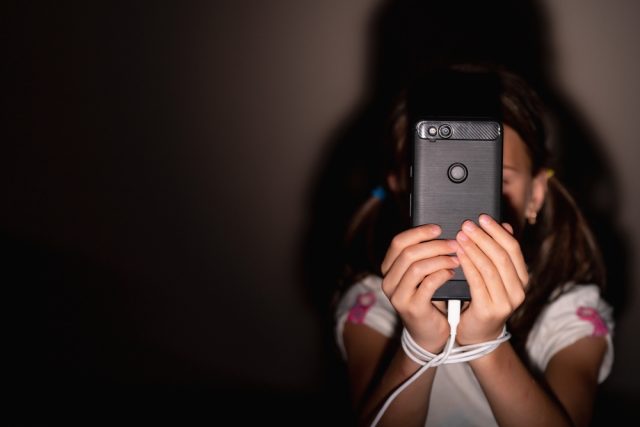
France is very close to becoming the first country in Europe—and the second in the world, after Australia—to legally ban children under the age of 15 from having accounts or using social media. Following the overwhelming vote in the National Assembly, the lower house of the French Parliament, a few days ago, when 116 deputies voted in favour of this amendment, public opinion is awaiting the outcome in the Senate, a vote that will take place sometime in February. According to the government and President Macron, who are among this bill’s biggest supporters, the goal is for the ban to be operational by the start of the next school year and for the process of verifying users’ ages to be completed by the end of 2026. As for the rules by which the law will be implemented, nothing specific has been announced yet, which means that fears about increased state control over private life are far from unfounded.
Is banning access to social media a measure that should bring children back on the right track, at a time when addiction to technology and constant “socializing” is an increasingly obvious and frightening reality? A significant number of people agree with this idea.
Certainly, almost all parents are convinced that it is the only way left for their children to stop wasting their childhood sitting for hours in front of screens that enslave their minds, leading to isolation and anxiety. No child can develop emotionally and cognitively if they replace real experiences with online interactions. It may be a tautology, but it is no less terrifying.
On the one hand, we are faced with one of the most serious concerns of our times, the excessive and self-destructively use of social media by children, and on the other hand, the intervention by legislators to regulate a situation that should have remained the responsibility of parents. It is no less true that parents do not seem to have enough tools or sufficient arguments to persuade their own children to use social media wisely. In short, parents are not doing their job as parents, in which case the state (in this case, the French state) intervenes and imposes an almost total ban. There is no doubt that things have gone too far in terms of virtual interaction through these “social networks”. It is also a legitimate concern that the state seems to be taking advantage of a situation that requires an urgent solution, in order to extend its control over society.
As long as the technical details of the law’s implementation are not known to the general public, the fear of a part of society regarding increased control over online communications and the enforcement of stricter censorship is justified. There are voices arguing that age verification will be carried out by a third party, other than state institutions or social networks. This third “player” will confirm the user’s age either by using facial recognition or by analysing the ID card data, and then completely delete all personal information. So far, so good, right? If this is the case, we have nothing to fear, do we?
But how can we really know? How can we be sure that, under the guise of this pressing need, this whole endeavour is not just the beginning of another, much more dangerous form of quasi-totalitarian control? How do we know that the government will not be the one playing the leading role, monitoring the entire process of verifying users’ identities, thus fueling fears about the hidden motives behind this bill?
On the other hand, how do we know that this ban will not push those impacted by it to find other ways to continue accessing social media? This is a plausible scenario, which has already occurred in recent history.
France will most likely be followed by other European countries seeking to severely restrict children’s access to social media. Has a new Pandora’s box been opened at the European level?