





 Subscribe


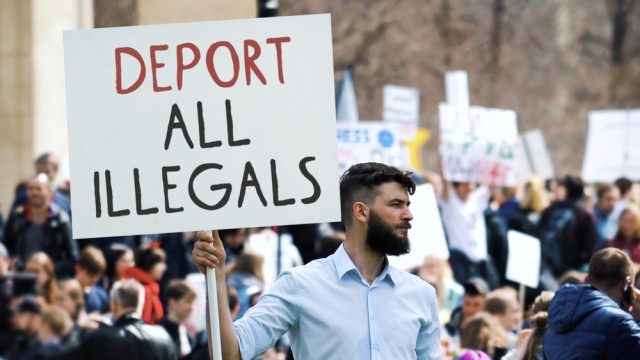
It has rarely happened that a decision adopted by the European Parliament has sparked such enthusiastic reactions from conservatives as the vote on March 26 did. A comfortable majority of 389 lawmakers voted in favor of a system that will speed up the deportation of illegal migrants and pave the way for the establishment of detention centers outside the European Union’s borders.
Once implemented, this plan should help rid the EU of persons staying illegally in member states and offer Europeans a safer future—one in which they no longer fear walking the streets or taking their children to the park. The new Regulation, which will replace an inefficient and outdated one from 2008, is considered historic and a cornerstone for truly combating illegal migration.
To say that Europe is at a crossroads has become a cliché, almost a platitude. Beyond figures of speech and rhetoric, Europe truly is at a crossroads. And not just since yesterday, but for over a decade, ever since then-Chancellor Angela Merkel’ infamous statement: Wir schaffen das. “Yes, they did.” Since that summer of 2015. They have repeatedly facilitated the invasion of Europe, inviting millions of migrants to cross our borders. They did so by invoking humanitarian and noble arguments and told a lie that, if they thought they repeated it a million times, would become the truth: that migrants would adapt easily, work tirelessly for the prosperity of the communities where they settled, and save Europe from collapsing into a demographic abyss.
None of this has happened, nor will it ever happen. But the reality is far more grim than that. Europe, at least its western part, bears less and less resemblance to the Europe we know. The majority population has ceased to be a majority, the joy of going to a Christmas market has been replaced by fear, and the normal order has turned into chaos.
“We can do this.” Angela Merkel’s words echoed in my mind again when I heard the results of the March 26 vote. There were 389 votes “for” and 206 votes “against” these great new measures to fight illegal migration. Not only did the center-right and conservative groups join forces in a historic vote, but, to the shock of many, twelve Renew MEPs and seven MEPs representing the S&D group voted in favor. Who would have thought that nineteen representatives of the left would support the mass repatriation of illegal migrants? And yet it happened.
Following this vote, the European Parliament will negotiate with member states to increase the returns of illegals and will open the so-called “return hubs” in third countries. In implementing these major measures, authorities will also enforce certain “enhanced” ones, namely the confiscation of identity documents, the imposition of detention lasting up to two years, a ban on re-entry into the EU that may extend to a lifetime ban, as well as the mutual recognition of decisions adopted between states. Fair enough.
How did “civic” organizations react? Nothing new on that front. Not only do the new measures violate fundamental rights, they are also more “aggressive” and “coercive”, but the term used is the “ICE-ification” of Europe, an explicit reference to U.S. Immigration and Customs Enforcement, likely the most infamous federal agency according to the leftists. While, for most of the liberals, greens, and socialists, the implementation of the new Regulation will intensify the climate of fear, for conservatives this system will set the stage for those without legal residency to be returned immediately to their countries of origin. Which is perfectly reasonable.
The vote in the European Parliament reflects “a broad convergence in Parliament to impose tougher sanctions on those who refuse to comply and to reinforce the external dimension of our migration policy,” said Charlie Weimers, the ECR’s shadow rapporteur, who has been quoted numerous times in this case.
After years in which disastrous migration policies have pushed Europe toward self-destruction, a clear-headed and common-sense majority in the European Parliament has voted to stop an existential threat. Even though negotiations between the Parliament and the member states on the final form of the Regulation are still to come, we are one step closer to a return to sanity. We can do this.