





 Subscribe


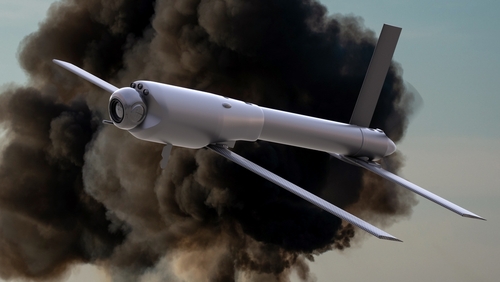
It is a well-known fact that war accelerates technological development. Especially in the transitional stages where new technology is being developed but has not yet had its full impact on military equipment and combat technology.
The First World War is often highlighted as the great conflict in which the industrial revolution first had a full-scale breakthrough. During the years 1914-18, airplanes, submarines, machine guns and gas were used for the first time on a large scale, and the development of technical knowledge was accelerated by the conflict.
And it is perhaps no coincidence that today, 110 years later, we are once again seeing a protracted conflict in Europe stuck in a kind of trench war due to new weapons technology. Perhaps it is once again the existence of new effective weapons that causes the warring parties to freeze in a frozen front line.
During the First World War, we still lived in a world where soldiers’ lives were not valued so highly. Young men were sent up in almost futile attempts to conquer a few hundred meters only to be mowed down almost immediately by the opposing machine guns. Today, at least one side in the Russia-Ukraine conflict continues to sacrifice the lives of its soldiers for only marginal gains. And once again, it is new weapons technology that seems to render any attempts to seriously move the front futile.
The question that more people are now asking is whether Western Europe’s current armament is adapted to this new warfare.
In a debate article in the Swedish daily Svenska Dagbladet, the CEO and founder of a Swedish arms company that specializes in developing drone combat systems and kinetic interceptor aircraft for civilian and military purposes, and a former Swedish foreign minister who now works for the same company, write that “we are preparing for the wrong war”.
Just like other countries in NATO and the EU, Sweden is currently investing a lot of money in developing its military capabilities. The investment is being made largely in traditional weapons systems in areas such as artillery and infantry. Here we can note that Sweden has sent several artillery pieces of the Archer system to Ukraine. According to some information, a number of these pieces have been knocked out by Russian drones. Even ultra-modern, fast-moving and recognized effective weapons systems can therefore be knocked out by drones today.
The two representatives of the arms company who – to some extent in their own interest – emphasize that the Ukraine war is largely a drone war write: “The war that is being fought in Europe right now is not decided primarily by the number of tanks, artillery pieces or fighter jets. It is decided by a small-scale, decentralized and rapidly iterated technology that costs a fraction of the platforms in which we have historically measured defense capability: drones.”
What they also emphasize is that the drone war is also a war of technological development. The warring parties are competing to develop drones that are effective, difficult to detect and that can simply knock each other out. And that is why it is so important, the authors of the article emphasize that procurement and planning are allowed to take place much more spontaneously and unregulated. Quick purchases from small and technology-developing companies that quickly produce the best products have been more significant for the course of the war than contracts for heavy weapons systems that run over several years.
So how should we think? What war should we prepare for?
And it is certainly true that we must carefully study what has happened in Ukraine and learn from the very adaptable Ukrainians. But we must also invest in conventional weapons for the time being. Because if it is the case that drone technology is easy and cheap to develop if you are only prepared to improvise and be adaptable, then it is also cheap and easy to develop.
The large weapons systems require longer planning and larger investments, and we cannot afford to risk being without them for now.