





 Subscribe


The Platform of European Memory and Conscience was established in 2011 in response to a European Parliament resolution calling for the memory of victims of totalitarianism to be kept alive. I applaud its mission: in 2009, I translated the Black Book of Communism into Icelandic, and in 2011, I published a history of the Icelandic communist movement. Since 2012, I have attended almost all of the Platform’s meetings. Its 2026 annual meeting was held in Katowice, Poland, alongside a one-day conference on heroism and remembrance. Totalitarianism not only claimed victims: it also produced heroes. One of them was the Polish cavalry officer Witold Pilecki. In 1940, at the age of thirty-nine, he willingly allowed himself to be captured by the Nazis under a false name. His mission was to learn what was happening in the Auschwitz concentration camp in southern Poland, near Katowice. For the next two and a half years, subject to the same treatment as other inmates, he gathered information about the camp, the torture and the murders, and smuggled it out while organising sabotage inside. However, the Allies did nothing to stop the atrocities.
The Warsaw Rising
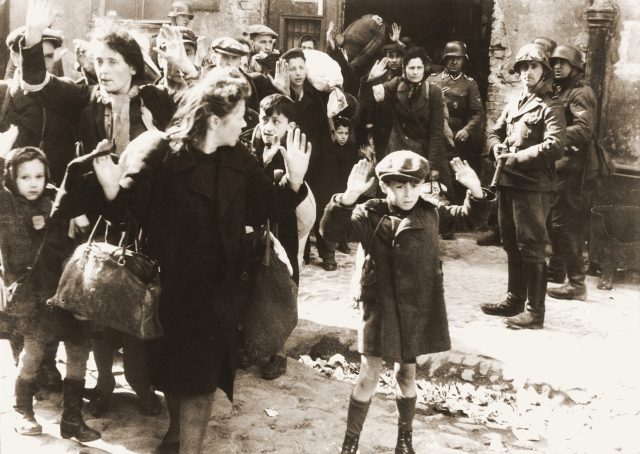
In the spring of 1943, Pilecki escaped from the camp and joined the Polish resistance. Germany was losing the war, and when Stalin’s Red Army was rapidly approaching Warsaw in August 1944, Pilecki took part in an uprising against the Nazis. The city lies on the western side of the Vistula River, but instead of helping the Polish fighters, the Red Army halted on the eastern side, watching the Nazis mercilessly suppress the uprising. Stalin even hindered his Western allies from delivering supplies to the fighters by air. Pilecki was captured by the Nazis but was liberated from a prisoner-of-war camp in Germany a few months later. He returned to post-war Poland, where the communists were seizing power with Stalin’s support. A strong anti-communist, Pilecki was arrested in 1947 and executed in 1948.
The Cold War
The main topic in Katowice was how to convey totalitarian crimes as well as heroic deeds to the younger generation, for whom they were distant and almost unreal, through survivor testimonies, history textbooks, social media, museums, and elsewhere. All too often, for example, the Cold War is described in textbooks as a game played by two superpowers, the Americans and the Soviets. When I was a visiting scholar at the Hoover Institution in Stanford forty years ago, I had many conversations about this issue with the American philosopher Sidney Hook. He said that the Cold War was essentially about one question: whether the Gulag would be extended to the whole world.
Numbers and Names
History is not only about numbers. It is also about names. Of course, numbers are important: the Nazis murdered six million Jews, and communism cost about one hundred million lives. But these numbers only come to life when they are attached to people of flesh and blood. Some victims’ voices were heard at the Katowice conference. Kordian Borejko, who was deported by the Soviets in 1940, a one-year-old with his parents to Kazakhstan, and returned to Poland in 1946, gave a moving speech. Antoine Arjakovsky, a French historian and moderator at one of the panels, recalled that his grandfather, a Russian Orthodox priest in France, had died in a Nazi camp, and that several of his Russian relatives had perished in the Soviet Gulag.
Perpetrators, Accomplices, and Collaborators
Another topic at the conference was the distinction between perpetrators, accomplices and collaborators. Arjakovsky mentioned the mass arrest of more than 13,000 Jews in Paris on 16–17 July 1942 (which I have also written about). It was carried out by the French police at the initiative of the Nazi occupiers. The victims were confined at the Vélodrome d’Hiver, a sports arena, and subsequently deported to Auschwitz and other Nazi concentration camps. None of the 3,900 children survived. Later, French President François Mitterand refused to apologise for this action, but his successor, Jacques Chirac, did so in 1995.