





 Subscribe


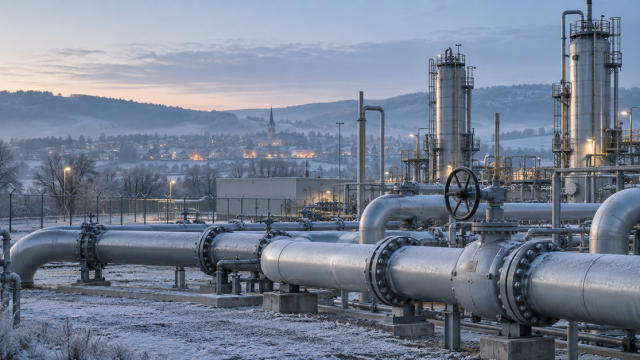
Brussels urges restraint as thin gas reserves and expensive imports expose the difficult balance between securing supplies and keeping energy affordable.
Europe’s latest energy warning comes with an uncomfortable distinction: there may be enough gas to avoid an immediate emergency, but obtaining it at an acceptable price is another matter. As winter approaches, Brussels is asking governments to treat lower consumption as an essential part of their response, alongside efforts to secure imports and replenish storage.
In a letter seen by Euronews, European Energy Commissioner Dan Jørgensen urges member states to maintain or introduce measures that reduce gas and electricity demand. His assessment is cautious rather than reassuring. Conditions have not improved since his earlier warning in March, while reserves remain unusually low.
According to Gas Infrastructure Europe figures cited in the report, EU storage facilities are approximately 70% full, around 12 percentage points below their level a year earlier. That shortfall does not establish that shortages are inevitable. It does, however, leave less room to absorb unexpected supply disruptions or a prolonged period of heavy consumption.
The market is already reflecting that vulnerability. The Dutch TTF benchmark is trading around €72 per megawatt-hour, according to the report, roughly €40 above its level before the February 28 US and Israeli strikes on Iran. Middle Eastern disruptions and competition from Asian buyers for liquefied natural gas are putting further pressure on European purchasing power.
Analysts cited in the report warn that winter prices could exceed €100 per megawatt-hour if Gulf LNG exports fail to recover or Norwegian maintenance extends supply constraints. These are conditional forecasts, not a prediction that such prices are unavoidable. Nevertheless, they explain why Brussels wants action before temperatures fall.
The Commission’s central argument is straightforward: electricity savings can also conserve gas. When demand falls during peak hours, less gas may need to be burned in power stations. Reducing those peaks can therefore ease pressure on both fuel supplies and electricity prices.
Drawing on the experience of 2022, Brussels points to practical options: shifting consumption through smart meters and retail tariffs, adjusting temperatures in public buildings, restricting outdoor heating and switching off unnecessary public lighting at night. The emphasis remains on voluntary, carefully planned measures rather than mandatory restrictions.
The challenge is making participation realistic. A household with flexible appliances may be able to shift consumption; a small business with fixed opening hours may have fewer choices. Effective measures should make savings accessible and worthwhile, rather than assume that every consumer has the same capacity to adapt.
Equally significant is the Commission’s warning against an indiscriminate rush to fill storage. Jørgensen encourages governments to use existing flexibility and consider an 80% filling level instead of aggressively pursuing 90%. The reasoning reflects a genuine tension: purchasing more gas improves the reserve cushion, but simultaneous buying in a tight market can drive prices higher.
Brussels argues that 80% could provide sufficient security under current conditions while allowing purchases to be spread over time. That assessment should be understood as conditional. Storage levels are one part of preparedness, alongside continuing deliveries, actual consumption and the duration of any disruption.
Governments are also being reminded to review emergency plans, including interruptible gas contracts and switching power stations to alternative fuels. Keeping these tools ready does not mean they will necessarily be used. It means that voluntary restraint needs a credible contingency behind it.
Europe enters this period with a more resilient energy system than before Russia’s invasion of Ukraine, Jørgensen says. Yet resilience cannot eliminate exposure to global competition for cargoes or geopolitical shocks.
The immediate test is whether national governments can coordinate restraint without creating public alarm or undermining economic activity. Clear information, targeted incentives and disciplined purchasing would help. Europe’s problem is not simply how much gas it can secure, but how much it must consume, and at what ultimate economic cost.
Alessandro Fiorentino