


 Subscribe


Many conservatives accuse liberals and Marxists of arguing based on simplistic, unambiguous principles. Liberals might speak of “openness” or “freedom” as if these were absolute values that never require compromise. Marxists (including social democrats) might speak of “justice” and “equality” as if these concepts were, in themselves, entirely unproblematic.
Conservatives seem more comfortable navigating trade-offs, negotiations, and sustainable solutions. Openness and freedom are valuable, but so are traditions and sound authority. Justice and equality are desirable, yet a society must also accept that some individuals will fare better in life than others. Justice and equality must not be devolved into coercion and dictatorship.
One-dimensional thinking is an easy target for criticism. However, two-dimensional thinking can also lead us astray. If, for instance, one considers the liberal emphasis on openness to be problematic, it is all too easy to drift into the opposing camp—suddenly finding oneself defending closedness and isolation. Moreover, one is easily perceived by others as an advocate for such closedness and isolation. This is the curse of two-dimensional thinking: it tends to create and perpetuate a polarization in which two seemingly irreconcilable principles stand in opposition. Political adversaries then invariably accuse one another of taking their respective principles—such as openness versus closedness—to an absurd extreme.
Indeed, a significant portion of our political discourse is built upon dichotomies between incompatible principles, or at the very least, upon two opposing, extreme positions. It could be a matter of immigration or non-immigration. Openness or closedness. Development or preservation. Change or permanence. Rearmament or disarmament. High taxes or low taxes.
The problem with such dichotomies is that they tend to blind us to the fact that policy often operates along a spectrum. We do not always have to choose between mass immigration and no immigration at all, or between high taxes and low taxes. We can seek a middle ground—allowing for some level of immigration, provided it is controlled or limited. We can believe in an open society and an open world without relinquishing control over our borders. We can aim to generate substantial tax revenue without allowing the tax burden to stifle entrepreneurship and economic growth.
It is precisely here that conservative thought should shine at its very best. Many argue that being conservative is, in essence, the ability to make careful trade-offs—to find the “golden mean” (Aurea mediocritas) between two extremes, and to arrive at a sustainable solution that balances competing interests.
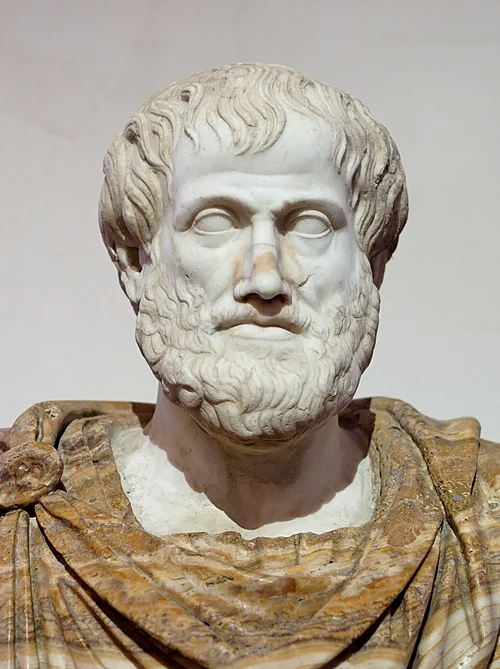
Aristotle is frequently cited in this context. In his renowned work, Nicomachean Ethics, he defends the principle of the golden mean. Happiness and harmony are most easily attained when we avoid extremes and instead strive for what is reasonable, good, and sustainable—qualities that can always be found somewhere along a spectrum between two seemingly opposing principles.
Money, for instance, should be handled with neither greed nor wastefulness. It is the balanced use of money that proves sustainable in the long run. Wastefulness leads to ruin, as does persistent stinginess. The greedy person may possess wealth yet derives no joy from it. In the famous play “The Miser” by the French comic playwright Molière, the miser’s money becomes a source of anxiety and worry rather than a source of joy and security.
Similarly, relationships with friends should not be characterized solely by compliance or, conversely, by an unwillingness to compromise. A well-intentioned person must also set boundaries and be able to look after their own needs.
Political discussions often get stuck in seemingly insoluble dichotomies. Either we have high taxes or low ones. Either we cede all power to the EU—at the expense of the nation-states—or we cede none at all. Either we have open borders with large-scale immigration, or we close the EU’s borders and permit no immigration whatsoever.
However, we ought to operate using scales or degrees when engaging in such discussions. Doing so would make these debates far more fruitful, and it would be much easier to orient policy toward practical solutions. One-dimensional principles rarely lead us in the right direction—and neither do two-dimensional dichotomies (such as “order versus chaos”). It is only when order and chaos, openness and boundaries, and both tradition and change are all accommodated within our political thinking that we can truly address reality as we navigate it.