





 Subscribe


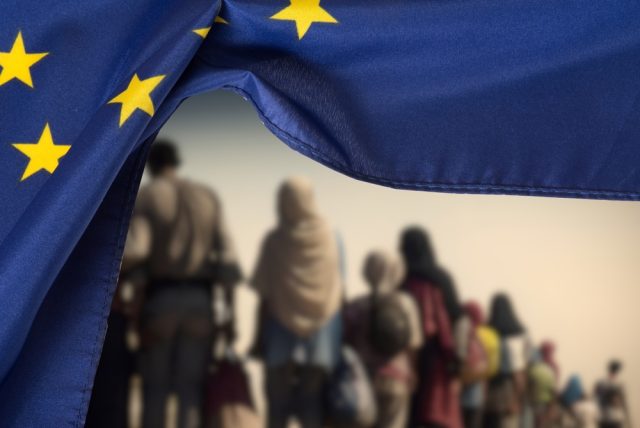
Sweden has long been known for its open policy toward refugees and migrants, but it is currently at a turning point. Authorities in Stockholm are preparing a sweeping reform of immigration legislation that will introduce a key requirement for maintaining the right to stay. Refugees and migrants must demonstrate that they behave in a manner considered appropriate and responsible in accordance with the norms of Swedish society. The new migration policy, set to take effect on the 13th of July 2026, marks a shift in the Swedish mindset, with the focus moving from protection and integration toward individual responsibility and social conformity.
According to the draft, non-EU residents in Sweden could be assessed not only based on compliance with criminal laws but also based on a broader set of criteria related to general conduct. Consequently, the right to reside in the country is no longer viewed as guaranteed in the long term, as it is currently, but as a status that must be continuously justified through behavior. In certain situations, authorities could decide to revoke a residence permit, and in extreme cases, even deport the individual. This legislative initiative comes in a political context where migration has become one of the most sensitive topics of public debate in Sweden. The current government, supported by right-wing parties, believes that the previous system was too permissive and that stricter measures are needed to ensure social cohesion and the efficient functioning of the state. The central idea is that integration should not be a passive process, but an active one, in which the migrant has clear obligations toward the host society.

The proposed new rules are broad and include a variety of situations that may influence the Swedish authorities’ decision to renew or suspend the right of residence, or even to deport. This is not just about serious crimes, but also about minor offenses or behaviors considered socially problematic. Examples that may lead to the suspension of the right of residence include accumulating debts with no intention of paying them, involvement in social welfare fraud, undeclared work, or participation in activities that could affect public order. These factors may weigh in the final assessment that asylum-holding citizens undergo when applying to extend the validity of their residence permits. Moreover, even the expression of opinions considered extremist could be scrutinized by the authorities, which opens up a broad discussion about the limits of freedom of expression. At the heart of this immigration policy reform lies the concept of “honest life,” a notion that, while seemingly clear, is not precisely defined. This lack of clarity raises concerns among human rights organizations and many legal experts, who warn that subjective interpretation of the new law could lead to inconsistent or even discriminatory decisions. Critics of the proposed immigration reform believe that such an approach could create a climate of uncertainty, in which those affected do not know exactly which behaviors are acceptable and which are risky. In addition to the legal implications, the reform also has a significant social impact. There are fears that, out of concern for potential consequences regarding their status, migrants will become more reluctant to engage in public life, particularly in civic activities or peaceful protests. This trend could lead to a decline in civic participation and a division within Swedish society, where certain groups feel less protected or less free to express their opinions.
From Openness to Caution: The Evolution of Migration in Sweden
To fully understand this shift in direction by the authorities in Stockholm, we must consider the immigration situation in recent years. It is well known that Sweden was one of the countries most affected by the 2015 refugee crisis, when the conflict in Syria led a very large number of people to seek asylum in Europe. Sweden recorded approximately 163,000 asylum applications that year, an unprecedented level relative to the country’s population of 10.7 million. This situation, marked by a large number of asylum applications, placed considerable pressure on state institutions and the social welfare budget. Following the 2015 migrant wave, Swedish authorities began implementing stricter measures, and the number of asylum applications dropped significantly. The figures stabilized in subsequent years at much lower levels, ranging annually between approximately 12,000 and 30,000 asylum applications. However, the long-term impact of the migration wave remains visible in Sweden, both demographically and socially. In total, from the onset of the 2015 migrant crisis to the present, Sweden has received several hundred thousand asylum applications, which has irreversibly contributed to the transformation of the population structure. Most migrants have settled primarily in major cities, where there are more job opportunities and adequate infrastructure for integration. The country’s capital, Stockholm, is home to the largest share of the migrant population, followed by Gothenburg and Malmö. These cities have become multicultural hubs, but also places where integration challenges are increasingly evident. In certain urban areas, strong migrant communities have formed, which can facilitate initial adaptation but can also create risks of social segregation. Swedish authorities are attempting to address these challenges through integration policies, but the results are mixed, and public debate remains intense. The new shift in migration policy also reflects a shift in public opinion. While in past years there was broad consensus among the native population in favor of welcoming refugees, there is now greater concern about the economic, social, and cultural impact of migration. This shift in perception has also influenced the Swedish political scene, where parties advocating more restrictive policies have gained electoral ground.
Sweden Between Openness and Restrictions
The reform proposed by Sweden is not an isolated phenomenon, but part of a broader trend across the European Union. In recent years, many member states have begun to tighten their migration laws in an effort to strike a balance between refugee protection and border control. Sweden, which was previously considered one of the most permissive countries in the European Union in terms of migration legislation, has gradually moved closer to the European average. The introduction of temporary residence permits, stricter conditions for family reunification, and an emphasis on integration are elements that reflect this shift. At the same time, there are significant differences among European countries. Germany, for example, remains one of the main destinations for asylum seekers, maintaining a relatively open but increasingly regulated system. Portugal and Spain are often considered more flexible, particularly regarding the integration of migrants into the labor market and the provision of pathways to regularization. On the other hand, some countries have adopted much stricter policies. In this regard, Denmark is often cited as an example of tough legislation, including proposals to process asylum applications outside European territory. Hungary and Poland have implemented rigorous border controls and significantly restricted access to asylum procedures. This diversity of approaches reflects the political, economic, and cultural differences among member states, but the general trend is toward tightening controls and redefining migration policies in a more restrictive direction.
Sweden’s initiative raises important questions about the future of the European model. On the one hand, there is a need to ensure the security and efficient functioning of states. On the other hand, the fundamental rights and democratic principles underpinning the European Union must be protected. It remains to be seen to what extent the new measures will succeed in achieving their objectives without generating negative effects in the medium and long term. What is certain is that Sweden is no longer the country it was a decade ago when it comes to migration, and the current direction suggests a profound reconfiguration of the relationship between the state and migrants, in a delicate balance between responsibility, control, and rights.