





 Subscribe


There is no doubt that children’s safety in the digital environment is far from a minor issue; it is not a trivial matter that can be classified under “miscellaneous” and therefore does not require special attention. Not only is it not an unimportant issue, but ensuring that children “navigate” the extremely turbulent waters of social media as safely as possible is one of the most significant challenges of our time. It is a topic that raises a long list of questions and offers very few helpful answers.
We will not analyze here the psychological and moral motivations behind the “need” (or, in fact, the addiction?) to constantly check the news feed, to exchange messages with virtual friends, to engage in constant communication, nor the effects or risk factors that “withdrawal”—whether intentional or not—into the digital world poses to health, daily activities, interpersonal relationships, and face-to-face interaction.
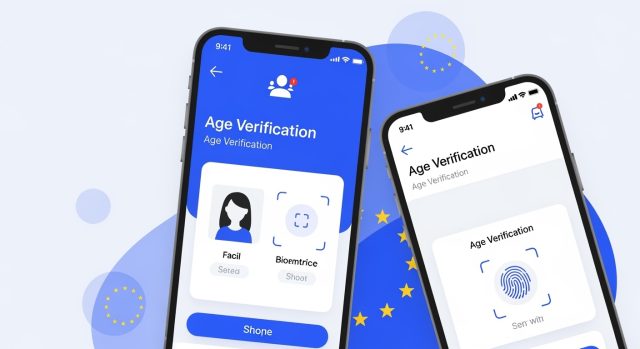
News is coming from the European Commission that, at first sight, is encouraging. If we read the recent statement by President Ursula von der Leyen and Executive VP for Tech Sovereignty, Security and Democracy, Henna Virkunnen, a new era is about to begin, in which efforts to make social media safe for children will finally be successful. And all of this—thanks to a digital age-verification app, which will allow access to social media only to those who meet this fundamental criteria. Nothing more, nothing less. As if this were enough to ensure real protection against the long-term damaging effects of social platforms.
The President of the European Commission praised the upcoming app as the “solution” that member states had been waiting for to ensure that children’s online safety does not remain merely a goal. The EU chief announced that the app is “technically ready” and will be available shortly, listing several features that would make it very easy to use, while praising its innovative nature and its level of privacy. As for the app’s “highest privacy standards,” that’s arguable (to put it mildly). Shortly after the Commission’s statement, European media reported that the app had failed a basic security test and could be hacked with little effort.
Fears of potential cyber incidents prompted Commission representatives to announce that emergency measures had been taken to improve its security. How secure it will be in terms of user data protection remains to be seen. However, this first official experience with the outside world makes the lack of trust in its “highest standards of confidentiality” justified.
Along with praising its user-friendliness and its—far from convincing—level of security, the Commission President emphasized the need for a harmonised and unified approach so that every citizen can use it. A situation almost identical to that of nearly five years ago, when the EU Digital COVID Certificate was praised as the successful tool that made “safe” travel possible and the revival of national economies. Most people today wouldn’t think the same way.
In the same emphatic manner, this new green certificate for confirming the age of social media users is described as “the solution” that will save children from being enslaved by platforms and smart devices. Not a word about total control and mass surveillance.
Totally agree with this: the responsibility lies with parents, not social platforms. Parents are the only ones who have a duty to ensure that their children maintain emotional health, do not isolate from real life, and do not immerse themselves in the virtual world. When parents rely on an institution—whether supranational or not—believing that this will save their children from digital captivity, they are simply abdicating their fundamental parental role, whether they realize it or not.
To think that a digital app can be free of “vulnerabilities” or that it could guarantee safety in use is, at the very least, naive, if not downright foolish. Establishment propaganda will continue, with even greater zeal, to promote the so-called extraordinary benefits of using this app, which “will make the digital world safer for our children.”
Very recent developments, however, show us that this tool is on the verge of being used for purposes contrary to freedom and the protection of privacy. As for ensuring a safe online environment, a bit more common sense won’t hurt anyone. Quite the contrary.