





 Subscribe


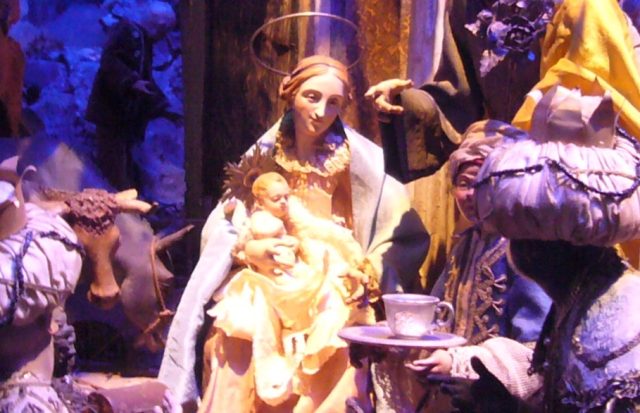
We Europeans celebrate Christmas in memory of the birth of Christ. The Christian meaning of Christmas is impossible to misunderstand. God sent his son to earth to offer people reconciliation and forgiveness. Christmas is celebrated during the darkest days of the year to mark that the son’s arrival brings light to the world.
But even if you are not a literal Christian, you can perceive a meaning to Christmas that has to do with birth, rebirth and light in the darkness.
Basically, you can say that Christmas is the holiday when we celebrate life itself as it appears in its most basic form. It is about motherhood, the birth of a child and the divine in man. But it is also about the light of consciousness. Consciousness, self-consciousness, being itself is like a light in the cosmic darkness. God says at the beginning of the Book of Genesis that there was light before he created heaven and earth. Light is the very first thing he creates with his creative word. Light is the very prerequisite for perception and consciousness.
And for us humans, our own birth can be described as an opening towards the light. The Word came before the light because it is the word that creates the light: “Fiat lux”. But then it is fundamentally the light rather than the word that characterizes human existence. Or as the evangelist John writes: “In the beginning was the Word, and the Word was with God, and the Word was God. It was in the beginning with God. Through him all things were made, and without him nothing was made that was made. In him was life, and the life was the light of men. And the light shines in the darkness, and the darkness has not overcome it.” (John 1:1)
Christmas is truly the festival of light. The light from the star of Bethlehem. And with it the cosmic light from the winter sky. The light from our houses where we huddle together in the winter darkness and cold. The light from the burning candles. And then of course the light as longing and promise as we leave the winter solstice behind us and move towards brighter times.
Christmas is also the celebration of the family. The family as the creator and recipient of the little child whose birth and arrival into the human light is the center of Christmas. Many single people travel home over Christmas, celebrating the holiday with elderly parents or siblings. Christmas is the holiday when we gather this smallest and perhaps most fundamental building block of society that is the family. We celebrate and strengthen the bonds between children and parents.
But above all, Christmas is perhaps the celebration of the gift. Specifically, everyone who celebrates Christmas gives Christmas presents to each other or at least to our children. What this celebrates is perhaps fundamentally the gift of life that we once received when we were born and which is perhaps what we really celebrate every Christmas.
It is a well-known theme among writers and thinkers to describe life as a gift. We never asked to be born, we did not have to pay anything to be born. Suddenly one day it was as if someone said “Fiat lux” and we found ourselves in the light rather than in eternal darkness.
Perhaps it is this fundamental gift that we actualize and symbolize when we buy Christmas presents for each other. And we all know that it is not the thing itself, the object that we give or receive, that matters but the “thought”, the thought: the will to give for the sake of giving and for the sake of life itself.
But Santa Claus? Who is he? He is the one who brings the presents. He is the one who, despite being a little scary, gives the children the presents they deserve if they have been good during the year.
To tell the truth, he seems to be a figure who fulfills several and rather unclear symbolic functions. But in some way, he should still be understood as the mediator of Christmas gifts and the representative of the Christmas mystique. And his importance also proves that Christmas is not only a Christian holiday but that other aspects of our mythology and our belief systems also come into play.
And none of this, of course, excludes the possibility that Jesus of Nazareth was in fact the son of God and that it is fundamentally his birth that we should pay attention to during Christmas.