





 Subscribe


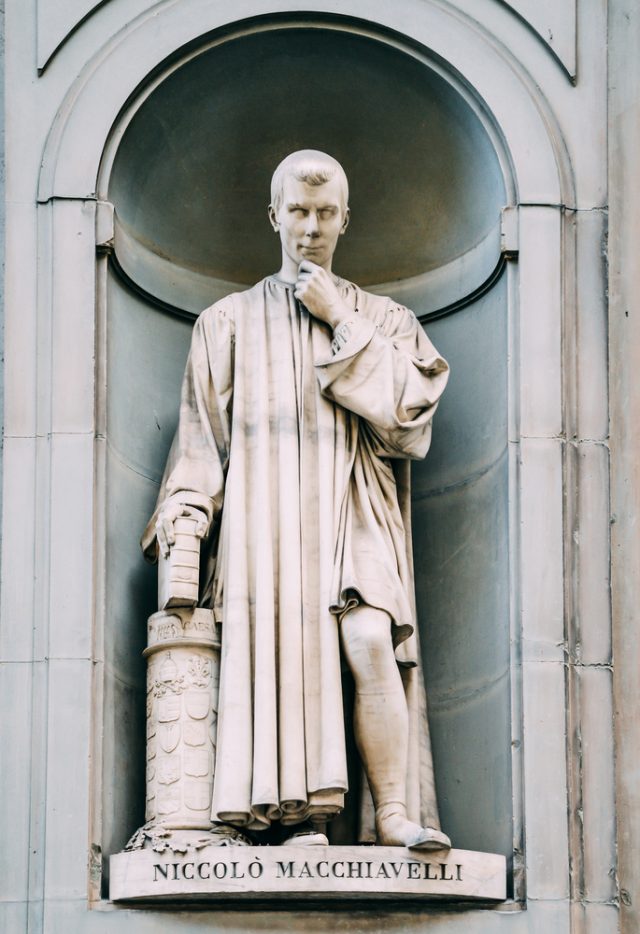
In an interview a few days ago, Dutch Foreign Minister David van Weel said that the future government in The Hague “will look at the world as it is, and not as it wishes it to be.” This statement immediately brought to my mind Niccolò Machiavelli and his landmark work, “The Prince”. Written in 1513 and published for the first time nineteen years later, posthumously, “The Prince” is one of the most famous manuals on the art of leadership of all time, probably the most commented on, praised, but above all, criticized treatise on political power and its implications, on people’s actions and what lies behind them.
“It appears to me more appropriate to follow up the real truth of the matter than the imagination of it,” wrote Machiavelli in Chapter XV of the book he dedicated to Lorenzo de’ Medici (grandson of the far more famous Lorenzo the Magnificent), hoping that it would be useful to him in achieving greatness.
In reinforcing his concept, the former secretary of the “Council of Ten” of the Florentine Republic refers to the striking contrast between the way people live and the way they should live, and that those who prefer an imaginary world to the real and concrete one will ultimately fail. Machiavelli is firmly concerned with what exists, not what should be, with the world as it is, with its good and bad sides, not with a fantasized version of it. His concern is the pure and objective truth, not the fiction crafted by idealists.
La verità effettuale della cosa highlights the preeminence of direct examination of objective reality, to the detriment of naïve and utopian conceptions, and represents the core of Machiavelli’s political thought.
This distinction between aspiration and reality, between appearance and essence, is exponential in Machiavellian doctrine, and understanding the reality of things—as they are—is no less important today than it was in the 16th century.
The next question is a logical and legitimate one: How current and relevant is Machiavelli’s political thinking today? Yet it is a rhetorical question, with an obvious answer. Far from being an outdated philosophy, Machiavellian realism is more relevant today than ever. Even the most ardent critics of Machiavelli and his revolutionary vision are beginning to agree with his realism, which is at times ruthless and dark, rather than an overly optimistic and, why not, lucid representation of the world around us.
Protecting national interests requires pragmatism, clarity, and a vision grounded in reality. Whether we like it or not, that’s what it’s all about. The old order is seriously crumbling, and a new order is being established—we have been hearing this increasingly often. More and more protagonists and observers on the global stage are talking about the challenges and importance of adapting to a very complex and no less tumultuous geopolitical landscape. New circumstances require tailored responses. But for this, the world must be seen as it is, not as we dream it should be.
I have no doubt that statements such as the one made by the Dutch foreign minister are not the first of their kind and will not be the last. Certainly, new voices will echo, directly or indirectly, in one form or another, the words of the illustrious Florentine secretary and the concepts he left behind, in fact to the need to understand what is happening around us through realistic thinking. Perhaps the victors are the ones who write history, but realists are the ones who present the facts as they happen, the concrete truth, the person in flesh and blood, with his virtues and flaws.
Next year, humanity will commemorate half a millennium since the death of Niccolò Machiavelli, and the increasing references to his writings should come as no surprise. On the contrary. By looking at the world as it is, preferring the “real truth of the matter,” we have a better chance of understanding human actions and the forces that drive them. This includes the powerful figures of these times.