





 Subscribe


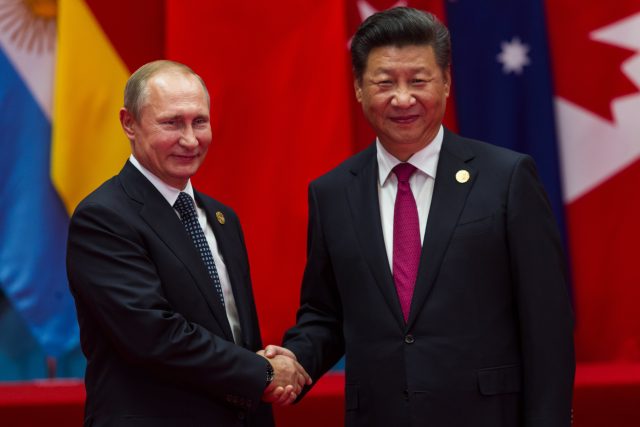
In a recent anthology, Free Trade in the Twenty-First Century, edited by Max Rangeley and Lord Daniel Hannan, the arguments supporting free trade are clearly restated. However, the book is not merely a reiteration of old truths. Its most compelling essays are by former politicians, including two prime ministers and several trade ministers, who discuss the limitations they see in the principle of free trade. These experienced individuals point out that since the early 2010s, the world has witnessed a pause in, if not a reversal of, globalisation, as well as the rise of polarisation, with Putin’s Russia and Xi’s China effectively initiating a new Cold War against the West. Putin and Xi view the West not only as weak but also recognise that its freedom, prosperity, and tolerance threaten their autocracy and, in Putin’s case, kleptocracy.
No Longer Laughing
Only a few people noted when Putin invaded Georgia in 2008. Many people noted when he invaded Ukraine in 2014. Everyone noted when he invaded Ukraine again in 2022. In 2014, Western nations imposed sanctions on Russia, although they were mostly symbolic. Russian oil and natural gas were exempted because many European countries depended on those energy sources, including Germany after the reckless closure of her nuclear power plants. We all remember the scene at the UN General Assembly on September 25, 2018, when the German delegation laughed at U.S. President Trump’s warning that Germany might become too reliant on Russian energy. The Germans are no longer laughing, and the European Union is working on a plan to become independent of Russian energy sources.
Trade Presupposes Trust
The Russian example shows that free trade relies on a basic agreement among trading partners. They are expected to follow, at least somewhat, the same rules. Russia broke these rules when she responded to the increasing Western sanctions after the 2022 invasion of Ukraine by shutting down gas supplies through Nord Stream 1 and stopping the construction of Nord Stream 2. In his essay in the book, former Australian Prime Minister Tony Abbott provides another example. When Australia called for an independent investigation into the origins of the Wuhan virus in 2020, China retaliated by banning about $20 billion worth of Australian exports on unproven grounds. (This reaction itself fuels suspicion that the virus causing the 2020–2021 pandemic leaked from a laboratory rather than evolving naturally.)
Unreliable Trading Partners
In 1986–1987, I lived in Hong Kong for a while. On February 16, 1987, I published an article in the Asian Wall Street Journal where I expressed the hope that it would not be China taking over Hong Kong in 1997, but rather Hong Kong influencing China — that China would learn a lesson from Hong Kong about the creative powers of a free society. For a time, this seemed possible. But under Xi since 2012, China has taken a different path. She violates intellectual property rights, provides illegal subsidies for key commodities like steel, bullies her neighbors, including India, behaves aggressively in the South China Sea, breaks her promise to Hong Kong on ‘one country, two systems,’ suppresses internal dissent, and threatens Taiwan. Neither Russia nor China are reliable trading partners because they, in Abbott’s apt phrase, never really believed in competitive markets, only in competitive countries. It is hard to disagree with Abbott’s conclusion that the West cannot fully extend the principle of free trade to Russia and China, the two elephants in the China shop. Security trumps trade.