





 Subscribe


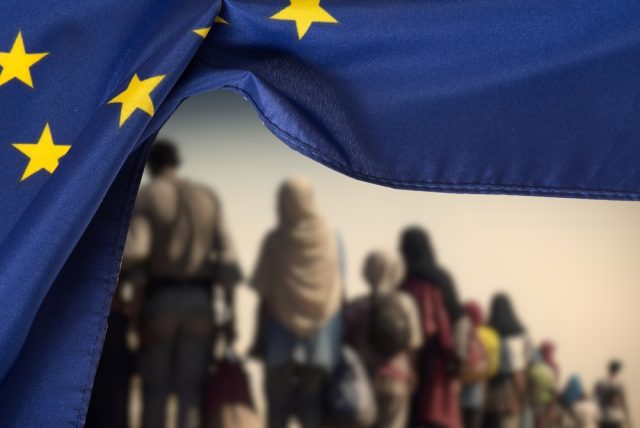
Israel and the US have launched extensive armed attacks on Iran. The goal is said to be to remove the highest power elite and to help the Iranian people overthrow the regime.
However, many wonder how this will work in practice. The experience of previous similar projects in the Middle East is horrifying.
As Europeans and Westerners, we can be both enthusiastic and worried about the development. Not many in the West are lamenting the fact that the Islamist regime in Iran is faltering. The massacres carried out around January 8 against its own population testify to the ruthless regime that rules in Tehran. On the other hand, Vladimir Putin is certainly shaken. Iran has been a reliable ally in the war against Ukraine and in the more global ambition to only cause trouble for the West.
Some confused left-wing activists in Europe are also mourning the attack on Iran. Their inability to see the world in colors other than black and white, where black is always associated with “US imperialism” and its “extended arm” Israel, means that certain left-wing circles paradoxically defend a deeply reactionary Islamist theocracy.
Moreover, not many political circles around Europe defend the mullahs’ right to continue oppressing their people.
At the same time, we know from experience that we cannot predict the results of international armed conflicts. Experiences from countries such as Afghanistan, Iraq and Libya teach us that initial enthusiasm over the fall of totalitarian regimes can quickly turn into horror over a development of violence that nothing seems to be able to stop.
In addition, we have the justified fear of new, large-scale refugee flows. Many in Europe believe that European countries have already taken sufficient responsibility for the people who fled, especially in connection with the aftermath of the Arab Spring. But the pressure on Europe has generally been strong for several years.
The EU is currently trying to regulate immigration with the help of the new migration pact. And extensive refugee flows from new military conflicts that could arise in a possible power vacuum in and around Iran are not what the EU wants most of all now. A quick end to the war and a new power elite in Iran that the US and Israel can accept and that also exercises full control over the entire large Iranian territory would probably be welcome.
The Iranians themselves also want democracy. If something like that could be realized, it would be fantastic. Unfortunately, we know from history that ethnic and religious conflicts are not buried because countries in the Middle East hold elections and try to introduce democracy. Quite the opposite.
The political forces in Europe that are most skeptical of continued immigration will try to resist a large-scale refugee reception even if the conflicts in the Middle East continue. And this is done, among other things, with the argument that Iran is not in Europe’s immediate vicinity.
Unlike Ukraine, which borders several EU countries and is fighting an expanding Russia that could eventually threaten other European countries, including EU members, Iran is not in Europe’s immediate vicinity. However, it is conceivable that the extensive Iranian diaspora in Europe is pushing for friends, acquaintances, relatives and compatriots to be protected within Europe’s borders.
We also do not know how the world economy will be affected by a prolonged conflict. And it is not just about the possibility of reduced access to oil and the possibility of the Strait of Hormuz being closed. It is also about the fact that an uncertain situation creates what our markets seem to dislike most of all: uncertainty.
The economic strains that the world has had to endure after the pandemic, after the war in Ukraine and President Trump’s use of tariffs as a tool for political influence have plagued our Western economies for several years. Now many had hoped for a calmer Trump and more stable economic development. But now the situation looks uncertain.
Most things are currently characterized by uncertainty. We must start to get used to it. While we Europeans must be a constructive force in the current situation, we must also dare to have ice in our stomachs. This is not a conflict in Europe’s absolute vicinity. Nor is it a conflict in which we ourselves are primarily involved. We will have to wait and see what happens. We must be able to live with uncertainty.