





 Subscribe


Rome weighs a landmark investment in the Global Combat Air Programme with the UK and Japan, aiming for technological sovereignty and a sixth-generation combat system by 2035
Italy is facing a decision that goes far beyond the boundaries of an annual budget law. In the coming weeks, Parliament will be asked to approve a major financial commitment to the Global Combat Air Programme (GCAP), a trilateral initiative with the United Kingdom and Japan designed to develop a next-generation air combat system. For Rome, the price tag is substantial—around €9 billion by 2035—but so are the strategic stakes: joining the small group of countries capable not only of operating but also of designing and governing advanced combat air systems.
The decree submitted by Defence Minister Guido Crosetto will be examined by the parliamentary committees on Defence and Budget. Formally, it authorises increased spending; politically and strategically, it represents a choice about Italy’s future role in high-end military technology. At issue is whether the country intends to act as a full-fledged partner with equal access to know-how and greater operational sovereignty or remain tied to cooperation models in which technological control largely rests with stronger allies.
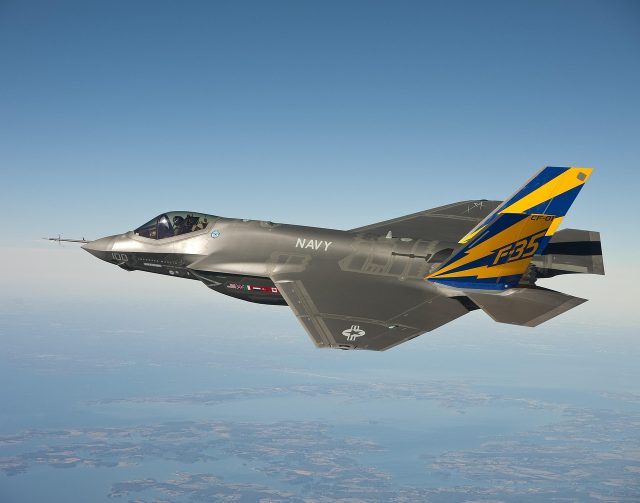
GCAP is a cornerstone of Italy’s medium-to-long-term military planning and marks a potential break with past programmes such as the Eurofighter and the F-35. In those cases, Italy participated significantly but often with limited access to critical technologies and decision-making, particularly in the US-led F-35 programme. GCAP, by contrast, is explicitly designed to ensure parity among partners.
The programme emerged from the merger of two national projects: the UK’s Tempest and Japan’s FX. Its goal is to deliver by 2035 a sixth-generation air combat system intended to gradually replace platforms like the Eurofighter Typhoon and Japan’s Mitsubishi F-2. Crucially, GCAP is not centred on a single aircraft. It envisages an integrated architecture combining a stealth fighter with advanced penetration capabilities, uncrewed “collaborative” drones, distributed and networked sensors, artificial-intelligence-enabled command and control, secure communications and next-generation electronic warfare. The result is a system designed for complex, high-intensity conflict and deep interoperability with allied forces.
According to Italy’s multi-year defence planning document, Rome’s contribution to GCAP is estimated at roughly €9 billion through 2035, covering the development phase only. It does not include future production or lifecycle costs. For 2025 alone, funding exceeded €600 million, making GCAP one of the most expensive items in Italy’s military aviation portfolio alongside the F-35 and Eurofighter upgrades. As with most major defence programmes, initial cost estimates may evolve over time, a possibility acknowledged by the Defence Ministry itself.
GCAP will coexist for years with Italy’s existing fleets. The country currently operates 118 Eurofighters and plans to acquire 115 F-35s, for a combined total of more than 180 combat aircraft around 2040. Over time, GCAP is expected to replace the Eurofighter while complementing the F-35. It will also help close Italy’s gap in uncrewed combat air systems by developing advanced auxiliary platforms linked to the main fighter.
Strategically, the programme reflects a changing perception of the role of Italy’s armed forces. As Alessandro Marrone of the Istituto Affari Internazionali (IAI) notes, in a multipolar world Italy is likely to face missions very different from traditional peacekeeping or counter-terrorism operations. Past combat deployments—from the Gulf War to Kosovo, Libya, Afghanistan and Iraq—were largely against adversaries with limited capabilities. Deterrence vis-à-vis a major military power such as Russia, and more broadly the need to respond to growing Chinese assertiveness, demands far more advanced capabilities.
Unlike the F-35, which sparked deep political divisions in Italy, GCAP has so far enjoyed relatively broad consensus. One reason lies in its cooperative model. The F-35 programme was heavily dominated by the United States, with limited technology transfer and the presence of so-called “black boxes”—closed systems inaccessible to partner countries. GCAP excludes the US entirely and is based on equal 33.3 percent shares for Italy, the UK and Japan, guaranteeing significantly greater industrial returns and technological sovereignty.
Italy participates through Leonardo, alongside the UK’s BAE Systems and Japan Aircraft Industrial Enhancement Co. (JAIEC), a company backed by Mitsubishi Heavy Industries. The three firms have formed a joint venture with equal stakes to develop and manage the system over the long term. Leonardo acts as Lead Systems Integrator, with Avio Aero and Elettronica Group as Lead Sub-Systems Integrators, supported by MBDA Italia and the wider national aerospace and defence supply chain.
The opportunity is substantial, but so are the risks. GCAP’s complexity requires sustained coordination, secure handling of classified information and a resilient supply chain. Skills shortages, funding continuity and clear export rules will all shape the programme’s success. For Italy, GCAP is both an unprecedented investment and a high-stakes test: a chance to secure real technological autonomy, or a reminder of how hard that ambition is to achieve.
Alessandro Fiorentino