





 Subscribe


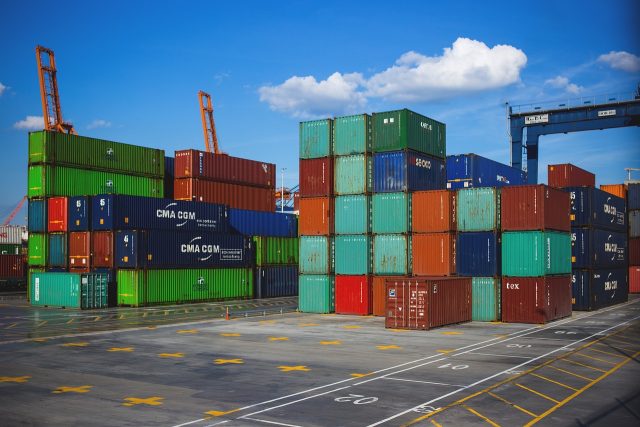
The European Union’s Carbon Border Adjustment Mechanism (CBAM) became fully operational on January 1, 2026. This instrument represents a significant innovation in international trade and climate governance, as it introduces a system of economic taxation on the carbon dioxide emissions embodied in specific categories of goods imported from third countries. Through the CBAM, the European Union aims to assign a monetary value to the emission content of goods, gradually aligning it with the carbon price applied to domestic producers under the EU ETS. The objective is twofold: on the one hand, to strengthen the coherence and effectiveness of European climate policies, contributing to the reduction of global emissions and combating the phenomenon of emissions leakage; on the other, to restore fair competition between EU companies and non-EU companies operating in environments characterized by less stringent environmental standards. From this perspective, the CBAM is framed not only as an environmental tool, but also as an economic and regulatory lever, with potentially significant implications for global value chains, trade, and the European Union’s economic and diplomatic relations.
ORIGIN AND ECONOMIC REASONING OF THE INSTRUMENT
The CBAM was created within the broader framework of the European Green Deal and represents a structural response to one of the main challenges of the ecological transition: the risk that companies subject to high environmental standards will suffer a loss of competitiveness compared to competitors producing at lower costs because they do not have to meet the same environmental constraints. Within the European Union, companies are required to comply with strict rules regarding climate-altering emissions, which implies significant investments and higher production costs. Without corrective measures, this regulatory asymmetry risks resulting in unfair competition and pressure to relocate production.
COVERED SECTORS AND SCOPE
The mechanism applies to imports of a range of highly carbon-intensive products: these include cement, iron, steel, aluminum, mineral and chemical fertilizers, electricity, and hydrogen; all sectors that, according to international analyses, contribute significantly to global CO₂ emissions. Heavy industry, in particular, is recognized as a major source of climate-altering gases and, within the European Union, is responsible for approximately 15 percent of total annual emissions.
FROM THE TRANSITION PHASE TO FINANCIAL OBLIGATIONS
The CBAM was not introduced suddenly: a transition phase lasting over two years, starting in 2023, allowed the testing of methodologies for calculating embodied emissions and the collection of detailed import data. During this period, importers were primarily subject to reporting obligations. Starting in 2026, the system will enter its fully operational phase, with the introduction of actual financial obligations. European Union importers will be required to purchase and deliver CBAM certificates corresponding to the CO₂ emissions generated in the production of imported goods.
THE LINK WITH THE EUROPEAN CARBON MARKET
The price of CBAM certificates is directly linked to the value of emission allowances in the European carbon market, the Emissions Trading System. In this way, the environmental cost of imported products is gradually aligned with that borne by European companies. In recent years, the price of CO₂ on the European market has shown considerable variability, fluctuating between €70 and €100 per ton, with a recent value of around €87, after peaking above €100 in 2023. This mechanism aims to ensure that foreign production does not benefit from a competitive advantage resulting from more permissive environmental standards.
PROTECTING EUROPEAN COMPANIES AND REBALANCING COMPETITION
One of the key aspects of the CBAM is its potential role in supporting European companies. Over the years, these companies have had to adapt to increasingly stringent climate regulations, incurring additional costs for emissions reduction and technological innovation. Non-European companies, on the other hand, often produce in contexts where such requirements are absent or less stringent, thus managing to place products on the European market at lower prices. The CBAM addresses this very imbalance by imposing a carbon price on imports as well, helping to restore fairer conditions of competition.
THE RISK OF CARBON LEAKAGE AND THE EUROPEAN RESPONSE
One of the mechanism’s stated objectives is to combat carbon leakage, a phenomenon whereby production activities are relocated to countries with weaker environmental regulations, which would lead to an overall increase in global emissions rather than a reduction. In the past, this risk has been exploited by the most polluting European industries to demand an extension of the free allocation of emissions allowances under the ETS. With the entry into force of the CBAM, the European Union is also beginning a gradual phase-out of these free allowances, a process that – partly as a result of pressure from industry lobbies – will continue until 2034.
ECONOMIC IMPACTS AND SUPPORT FOR UNION INDUSTRIES
The introduction of a carbon price at borders inevitably leads to increased costs for some production chains, both for importers and for European industries that depend on raw materials from abroad. Aware of these critical issues, the European Commission has proposed establishing a temporary fund, partially financed by CBAM revenues, to support the most exposed industries during the implementation phase. This instrument is designed to facilitate the investments needed for decarbonization and mitigate short-term losses in competitiveness.
ALLOCATION OF REVENUES AND THEIR ROLE IN THE EUROPEAN BUDGET
Another important aspect concerns the allocation of resources generated by the CBAM. In the initial phase, revenues will flow into the budgets of the Member States. From the next Multiannual Financial Framework, beginning in 2028, a new distribution structure is envisaged, under which approximately 25 percent of the resources could be allocated to the Member States and the remaining 75 percent to the European Union budget as own resources. According to some technical estimates, revenues could reach approximately €1.5 billion per year, contributing to the financing of common policies.
INTERNATIONAL REACTIONS AND TRADE TENSIONS
The adoption of the CBAM has sparked mixed reactions internationally. Several countries, including the United States, China, India, Russia, and South Africa, have expressed opposition, arguing that the mechanism represents a form of disguised protectionism. The United States, in particular, has exerted political pressure on Brussels, stating that the measure risks creating obstacles to transatlantic trade relations. These tensions arise in an already complex context, characterized by increased tariffs (by the United States) and growing global trade conflict.
COMPATIBILITY WITH INTERNATIONAL TRADE RULES
A central point of the debate concerns the CBAM’s compatibility with World Trade Organization rules. Some countries have raised doubts about the instrument’s legitimacy, while the European Commission maintains that the mechanism is based on objective and non-discriminatory environmental criteria. According to Brussels, the CBAM does not introduce an arbitrary trade barrier, but extends the same carbon price to imports as domestic production, thus respecting the principles of international trade.
OPERATIONAL COMPLEXITY AND SYSTEM CRITICISMS
Alongside political challenges, the CBAM has also been the subject of technical criticism. Some observers point to the complexity of accurately measuring the emissions embodied in imported products, a process that requires reliable data and shared methodologies. This complexity could translate into significant administrative burdens for businesses and implementation difficulties, especially in the initial phase. However, the lengthy transition phase was designed precisely to address these critical issues and refine the calculation tools.
THE CBAM AS AN INDUSTRIAL AND CLIMATE POLICY TOOL
Overall, the Carbon Border Adjustment Mechanism represents a crucial step in the evolution of European climate policy. In addition to being an emissions reduction tool, it serves an industrial policy function, offering indirect support to European companies operating under a more stringent regulatory framework than their non-European competitors. By introducing a carbon price at borders, the European Union is attempting to combine climate ambition and competitiveness protection, making environmental sustainability a structural element of global economic relations. In this sense, the CBAM is not just a tax, but an experiment in economic governance that could profoundly influence the future of international trade and climate policies.