





 Subscribe


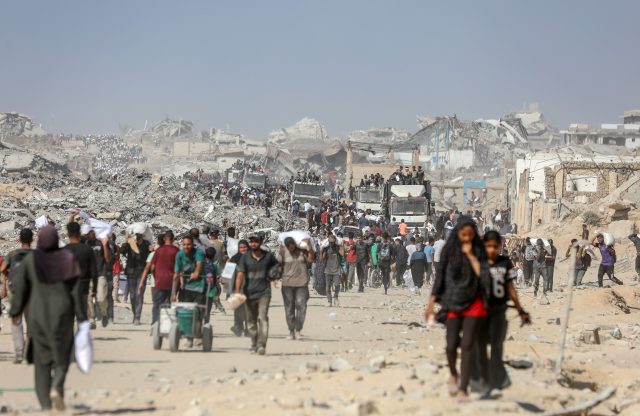
The proposal put forward by the US administration led by Donald Trump to establish a Peace Council with global jurisdiction, particularly with a central role in managing the future of the Gaza Strip, represents an ambitious attempt to redefine the tools of international conflict governance. This initiative takes place in an extremely complex geopolitical context, marked by the ongoing war in Gaza, the Russian invasion of Ukraine, and a general weakening of traditional multilateralism embodied by the United Nations. The American project presents itself not only as a platform for the physical reconstruction of the Palestinian territory devastated by the conflict, but also as a possible functional alternative to existing multilateral bodies, sparking mixed reactions among allies, rivals, and regional actors directly involved.
COMPOSITION OF THE COUNCIL AND THE INVITATION TO RUSSIA
One of the most controversial aspects of the new Peace Council is the invitation extended to Russian President Vladimir Putin to join it. Confirmation of this invitation came directly from the Kremlin, which clarified that Moscow is evaluating the US offer, seeking to fully understand its implications and operational modalities. The possibility of the Russian leader joining a body dedicated to resolving global conflicts appears problematic, given that the invasion of Ukraine is approaching its fourth year and that Russia has shown no concrete signs of willingness to reach a peace agreement. Moscow’s inclusion, however, appears to reflect Trump’s logic of involving all major powers, regardless of their responsibilities in ongoing conflicts, in the hope of building a framework for stabilization under American leadership.
THE ROLE OF THE UNITED STATES AND TRUMP’S VISION
The Peace Council is conceived as a body chaired directly by the President of the United States, underscoring Washington’s centrality to the project. According to the invitation letters, the initiative is based on a bold and innovative approach to conflict resolution, suggesting a desire to overcome the often paralyzed decision-making mechanisms of the United Nations Security Council. The United States has contacted dozens of countries and international figures with the aim of building a broad and comprehensive structure capable of intervening not only at the diplomatic level, but also at the administrative, security, and financial levels, particularly in the second phase of the Gaza plan.
THE INVOLVEMENT OF THE EUROPEAN UNION AND ITS KEY ALLIES
The European Union has also been involved in the project, with a formal invitation addressed to Commission President Ursula von der Leyen. The Commission has confirmed its intention to contribute to a comprehensive plan to end the conflict in Gaza, although it has not clarified whether the invitation has been formally accepted. Italy is also among the countries contacted, while the United Kingdom, through Prime Minister Keir Starmer, has stated that it is in dialogue with its allies on the Peace Council and is willing to play an active role in the second phase of the plan, although without confirming official membership. This attitude reflects widespread caution among Western partners, torn between the desire to contribute to the stabilization of Gaza and concerns about the structure and legitimacy of the new body.
ISRAEL’S REACTION AND DOMESTIC OPPOSITION
The Israeli government has expressed strong opposition to the formation of the Council, emphasizing that the initiative was not coordinated with Jerusalem and conflicts with official Israeli policy. This opposition has been reiterated with particular force by members of the more radical wing of the government, who have characterized the project as harmful to Israeli interests, openly calling for its cancellation and asserting Israel’s right to independently determine the future of Gaza. According to this view, the Strip represents a matter of existential security for Israel, which should assume full administrative and military responsibility for the territory, including through direct military administration.
GAZA, HAMAS, AND THE QUESTION OF DISARMAMENT
At the heart of the debate lies the essential condition of Hamas’s complete disarmament, a key element of the second phase of the peace plan. The agreement provides not only for the return of hostages, including the body of the last kidnapped hostage, but also for the elimination of the Islamist organization’s military capabilities. Israeli government officials have raised the possibility of a new large-scale offensive if Hamas does not accept an ultimatum that includes the effective disarmament and exile of its members. In this context, any reconstruction and stabilization project appears, from the Israeli perspective, meaningless without the definitive defeat of the group that has governed Gaza.
THE CONTROVERSIAL PRESENCE OF QATAR AND TURKEY
Further tensions arise from the possible inclusion in the Council and its Executive Board of countries such as Qatar and Turkey, considered strategic adversaries by Israel. Qatar is seen as one of Hamas’s main supporters, both financially and through media influence, while Turkey is perceived as the political and ideological center of the Muslim Brotherhood, a movement deemed hostile to the very existence of Israel. The presence of these actors in a body tasked with overseeing Gaza’s security and reconstruction is interpreted as a direct threat, especially since these countries appear to have little interest in Hamas’s disarmament. However, their involvement also fits Trump’s logic of maintaining a broad front of allies and interlocutors under the American umbrella.
A COMPLEX AND MULTI-LEVEL STRUCTURE
The Peace Council is part of an extremely complex institutional architecture, including a board of directors, an executive committee, a high representative with an independent support structure, a National Committee for the Administration of Gaza, and an international stabilization force. Overall, the number of countries involved could rise from over sixty initial invitees to around eighty full participants, including states that have already accepted, private investors, and major donors. This multiplicity of decision-making levels recalls already tested models of international governance, but on a scale and with an ambition aimed at creating a true alternative system to the United Nations.
FUNDING AND THE ROLE OF MAJOR DONORS
A central element of the project is the funding mechanism. A contribution of at least $1 billion is expected to secure a permanent seat on the board of directors for a period of more than three years. The funds raised would be used for the reconstruction of the war-torn Gaza Strip. However, the Council’s statutes have not been made public, and numerous questions remain regarding its operating procedures, the transparency of funding, and the actual balance of power among its members. The presence of major investors and international figures reinforces the idea of an initiative strongly tied to financial capacity rather than political representation.
THE IMPLICIT COMPARISON WITH THE UNITED NATIONS
The American initiative has been interpreted by many observers as an attempt to bypass or circumvent the United Nations system, perceived as ineffective and blocked by cross-vetoes. The creation of such a broad international body, led by the United States, could give rise to a new form of multilateralism under American hegemony, in contrast to previous models.
ISRAEL BETWEEN OPPOSITION AND STRATEGIC ADAPTATION
Despite strong official opposition, Israel could adopt a pragmatic strategy toward the Peace Council. Strengthened by the ongoing support of the current US administration, the Netanyahu government could seek to limit the influence of members deemed hostile by imposing conditions that reduce their operational role, such as barring them from deploying troops, possessing weapons, or carrying out verification functions. In this way, Israel would attempt to defend its security interests without breaking head-on with Washington, maintaining the freedom of action it considers necessary to address a permanent existential threat.
BETWEEN GLOBAL AMBITION AND POLITICAL FRAGILITY
The Gaza Peace Council promoted by Donald Trump presents itself as a project of historic significance, capable of redefining the balance of international conflict governance. However, its effectiveness appears to be tied to a series of difficult-to-reconcile political conditions: Hamas’s disarmament, Israeli acceptance, coordination between deeply divergent actors, and the management of a very large number of countries and interests. The inclusion of controversial figures like Vladimir Putin and states perceived as hostile by Israel heightens tensions and raises doubts about the project’s coherence. Ultimately, the American initiative reflects both the ambition to build a new international order and the profound fragilities of a system that seeks to impose peace without having resolved the political and ideological roots of the conflict.