





 Subscribe


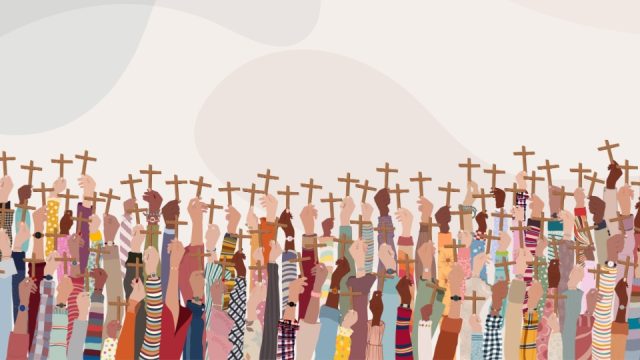
In recent years, it has become commonplace to describe Western Europe as marching steadily toward secularisation, with Christianity framed as a fading cultural remnant rather than a living social force.
Yet new polling and survey material complicate this received narrative, particularly in Ireland and Northern Ireland, where several indicators point to a quiet but measurable return to Christian identification and practice. This movement—most evident within Catholicism—has begun to surface in parliamentary debates on religious liberty across the European Union (EU), revealing potential policy implications that stretch well beyond the island of Ireland.
Such developments carry political as well as cultural weight, offering the possibility of renewed conservative frameworks shaped by traditional doctrines on family, education, and social cohesion.
By resurgence, observers do not mean a sweeping restoration of mid-20th-century religiosity, but rather a stabilisation and slight reversal of decades-long decline. Ireland, long defined by Catholic influence, saw a dramatic erosion of ecclesial authority following clerical abuse scandals and major liberal referenda on divorce, marriage, and abortion.
By the 2016 census, Catholic self-identification had fallen to 79% from 94% in 1961, while the unaffiliated reached 10%. Even so, recent analyses suggest a flattening of the downward curve, with hints of renewal among younger cohorts—countering the assumption that secularisation is inevitable or irreversible.
The Iona Institute’s major Northern Ireland poll, published in October 2025, reinforces this impression. Surveying 1,200 adults in a region marked by long-standing religious divisions, the data show 56% identifying as religious and/or spiritual, compared to 39% who describe themselves as neither.
This stands in marked contrast to the Republic, where comparable European Social Survey figures place religious identification closer to 40%. Prayer, notably, is a central practice—51% of respondents pray regularly—suggesting that personal devotion persists even when institutional loyalty weakens.
Patterns in churchgoing add a further dimension. In Northern Ireland, 44% attend services at least occasionally, a level of stability that defies the assumption of relentless secular drift since the Troubles. Among Catholics, 40% attend Mass regularly—twice the rate in the Republic, where weekly attendance has slipped below 20% according to 2023 reports in the Irish Catholic.
This divergence highlights how Northern Ireland’s political and cultural context has sustained religious identity in ways not mirrored elsewhere on the island.
The poll’s most striking dimension concerns young people. Respondents aged 18–24 show the strongest enthusiasm for Christianity, with 30% expressing a “very positive” view compared to only 4% holding a “very negative” one.
This cohort also reports the highest rates of prayer (60%) and engagement with religious texts (45%), surpassing older generations. These findings echo a broader “quiet revival” observed across the Anglosphere—in Britain, the United States, and parts of Canada—where younger adults seek meaning amid economic uncertainty, mental health crises, and digital overload.
In Northern Ireland, this emerging revival tilts toward Catholicism: 17% of young respondents express a positive view of the Church, the highest of any age group. Though 60% cite past scandals as an obstacle, the poll also reveals notable cross-community goodwill: Catholics rate Protestant churches more positively (45%) than Protestants rate Catholic ones (30%), hinting at the possibility of greater ecumenical openness.
Turning to the Republic, additional evidence supports the claim of stabilisation. The 2022 census recorded Catholic affiliation at 69%, with flattening declines among those under 25. Diocesan reports point to increased attendance at youth retreats and expanding online faith communities—patterns intensified by the isolation of the COVID-19 years.
While these developments do not amount to a sweeping revival, they point to a durable cultural role for Catholicism within Irish identity, even in a globalised and pluralistic society.
Placed in a wider EU context, the Pew Research Center’s 2018 study, Being Christian in Western Europe, provides valuable background. Surveying 24,599 adults in 15 countries—among them Ireland, the UK, France, Germany, Italy, and Spain—Pew found that Christianity remained a majority identity, though often detached from formal religious practice.
At the time, 71% of Western Europeans identified as Christian. Non-practising Christians formed the largest group at 46%, exceeding both regular churchgoers (22%) and the unaffiliated (23%).
Ireland exceeded these figures: 80% Christian identification, with just 15% unaffiliated, affirming its exceptional status within the EU’s secularising trajectory.
Belief patterns further complicate assumptions of decline. Only 22% of non-practising Christians affirmed the biblical God, but 59% acknowledged some form of higher power. Majority support for belief in an afterlife (57%) persisted across much of the region. In Catholic-majority nations such as Italy and Portugal, church attendance ranged from 25–30%, and Ireland’s 40% monthly attendance significantly surpassed the EU median.
Yet long-term declines remained evident. From the 1960s onward, Christian identification dropped by 20–30 percentage points in countries such as Spain and the Netherlands, driven by liberalisation, institutional scandal, and ideological divergence between churches and their congregants.
Common reasons for disaffiliation included ethical disagreements—40% cited positions on LGBTQ+ issues—and the belief among 25% that science supersedes religion.
Even so, Pew identified countercurrents. Many non-practising Christians still saw churches as valuable community anchors (65%) and supported a mild form of cultural nationalism (35%). Immigration from Muslim-majority regions has also triggered what some scholars call “reactive Christianity,” prompting secular Europeans to reaffirm cultural religious identity. In Ireland, post-2015 migration surges coincided with stabilising Catholic affiliation, according to the CSO. Subsequent surveys, such as the 2019 Eurobarometer, found youth in southern EU nations—Italy and Poland in particular—expressing positive Christian identification at rates of around 50%, echoing trends observed in Northern Ireland.
This developing landscape underpins growing political interest at EU level. The European Parliament’s 2025 inquiry Christianity and the EU (Question E-003184/2025), submitted by ECR MEP Emmanouil Fragkos, underscores Christianity’s historical and cultural influence, from antiquity to modern welfare ideals rooted in Christian charity. The question highlights Europe’s Marian heritage, the architectural prominence of cathedrals, and Christianity’s integral role in shaping European values.
Referencing Article 17 of the Treaty on the Functioning of the European Union, which mandates structured dialogue with churches and religious organisations, the inquiry asks the Commission: (1) how it collaborates with Christian churches in defending Europe’s common principles; (2) whether Christian terminology is ever incorporated into programmes such as Horizon Europe; and (3) whether Christian feasts—Easter, Christmas, the Assumption—inform policy decision-making.
The Commission’s response, issued on 19 September 2025, was terse. It reaffirmed respect for national arrangements governing churches and pointed to Article 17’s general framework for dialogue, but offered no specifics regarding engagement with Christian bodies, programme naming, or the role of religious festivals in policymaking.
There was no reference to pluralism initiatives, nor to ongoing dialogue with COMECE or other major Christian institutions. The omission of explicit references to the Charter of Fundamental Rights’ protections under Articles 10 and 21 struck many as a missed opportunity. The brevity of the reply reinforced perceptions of a widening gap between parliamentary interest in Christian cultural heritage and the Commission’s procedural neutrality.
The political implications of Christian stabilisation—or cautious resurgence—are significant. Historically, Christianity, especially Catholicism, has underpinned conservative positions on social and moral questions, subsidiarity, and community-based welfare, principles reflected in early drafts of EU constitutional documents.
Ireland’s 2024 referenda, where 67.7% voted No to redefining family structures beyond marriage, may be interpreted as an expression of enduring Catholic cultural norms. In Northern Ireland, increased youth religiosity could temper Sinn Féin’s progressive aspirations, potentially fostering new conservative alignments across the island.
Across the EU, rising Christian self-identification aligns with electoral gains for conservative parties such as Poland’s Law and Justice (PiS) and Italy’s Brothers of Italy. The 2024 European elections saw conservative blocs secure approximately 30% of seats, partly through campaigns invoking Christian heritage against perceived ideological overreach. These gains translate into concrete policies: expanded family supports (Hungary), tighter migration controls justified through cultural preservation, and renewed emphasis on religious education.
Economically, religious participation contributes to lower social-welfare dependence; World Bank studies suggest reductions of up to 15% in high-engagement communities. Politically, faith networks can reduce polarisation by fostering dialogue, as demonstrated in the EU’s 2025 interfaith summits. For a continent grappling with demographic decline, migration pressures, and external geopolitical threats, a Christianity-infused conservatism may offer an anchor of stability.
Challenges remain, particularly in sustaining youth engagement. Nevertheless, indicators—from Northern Ireland’s 30% strongly positive youth sentiment to Ireland’s 80% belief in God—suggest that what is emerging is not a return to the past but an adaptation of Christian identity to new cultural circumstances.
As the EU advances through its 2025 agenda, the reassertion of Christian consciousness, especially within Catholic contexts, stands poised to shape governance, culture, and political debate in ways that many had prematurely dismissed.
In summary, the signs of Catholic and Christian renewal in Ireland and beyond suggest a broader conservative realignment within Europe. Projections for 2030 foresee Christian identification levelling at 60–65%, influencing policy towards communitarian and value-based approaches. These empirical developments reaffirm that religion retains a persistent and evolving role in European public life.