





 Subscribe


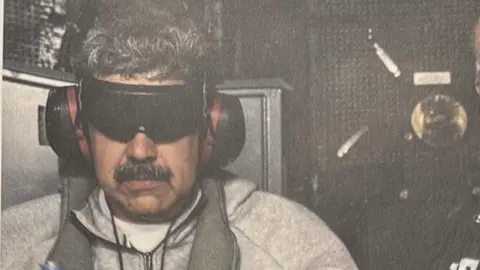
Europe’s response to the United States’ arrest of Nicolás Maduro has revealed far more about Europe than about Venezuela. What initially appeared as a fragmented mix of legal objections, political caution, and selective applause has crystallised into a deeper problem: a crisis of strategic coherence—one that affects the European right in particular.
Venezuela has become a stress test. And Europe’s reaction has exposed not only its instincts, but also its inhibitions.
It is important to begin with a clear distinction. The European left has not been ambivalent. Its reaction has been largely uniform and unequivocal. Across institutions, parties, and media ecosystems, the left has condemned the operation either on formal legal grounds—framing it as a violation of international law and state sovereignty—or because of long-standing political and ideological sympathy for the Chavista regime. For much of the European left, Maduro’s Venezuela has been treated less as a criminalised state than as a political cause, or at the very least as a convenient counterweight to American power.
This position, however flawed, has been internally coherent. It follows a familiar pattern: moral denunciation of American action combined with selective blindness toward authoritarian regimes aligned with progressive or anti-Western narratives.
The real dilemma, however, lies elsewhere. The ambivalence exposed by the Venezuelan episode is a crisis of the European right.
A Strategic Decapitation, Not an Ideological Crusade
The arrest of Maduro was neither impulsive nor symbolic. It followed years of legal preparation, intelligence penetration, and coordination with regional actors, including figures embedded within the Venezuelan regime itself. Executed as a tightly controlled, casualty-free operation, it represented a classic decapitation strategy aimed at dismantling a state that had long ceased to function as a sovereign political entity and had instead evolved into a transnational criminal hub.
Crucially, Washington did not frame the operation as a humanitarian intervention or a democracy-promotion exercise. It was presented as a law-enforcement and national security action, grounded in indictments related to narcotrafficking, money laundering, and state-level criminality. The United States acted because it assessed that continued inaction would further degrade regional security.
Europe, by contrast, has responded as if procedure itself were the political outcome.
European Reactions: Three Postures, One Weakness
European responses broadly fall into three overlapping categories.
First, qualified approval, particularly among conservatives and the national-populist right. In parts of Central Europe, Southern Europe, the Nordic states, and among Atlantic-oriented conservatives, Maduro’s removal has been welcomed as strategically beneficial, albeit accompanied by insistence that such actions remain exceptional and legally uncomfortable.
Second, strategic silence, especially among leaders who privately acknowledge the operation’s utility but are reluctant to articulate support in Europe’s legally sensitive and media-hostile environment. This silence is not neutrality. It reflects risk aversion combined with political calculation.
Third, legalistic condemnation, concentrated mostly on the centre-left but also visible in parts of the right—most notably in France and Britain—where the operation has been framed as an unacceptable violation of sovereignty. This reaction is rooted in political cultures deeply suspicious of American extraterritorial power and committed to a rigid, formalist conception of international law.
What unites all three responses—including approval—is Europe’s inability to articulate a doctrine that bridges legality and enforcement. Europe continues to speak the language of norms while remaining structurally uncomfortable with power.
The Right’s Dilemma: Sovereignty Without Agency
Contrary to caricatures, the European right is not broadly anti-American. In Italy, Poland, Hungary, much of Central Europe, and across the Nordic countries, Atlanticism remains a core strategic orientation. And the sympathy for Trump is also firmly grounded.
Nevertheless, Venezuela has revealed a subtler vulnerability: a tendency to treat sovereignty as restraint rather than responsibility.
If sovereignty is inviolable, does it shield regimes that operate as criminal enterprises? If national interest is paramount, can Europe tolerate narco-states exporting drugs, organised crime, migration pressure, and regional instability? And if not, what mechanisms—legal, political, or strategic—is Europe willing to activate?
Too often, sovereignty is invoked not to justify action, but to excuse abstention. Silence, in this context, becomes complicity through omission. It allows power to define legality retroactively while Europe retreats into moral formalism. Law without enforcement ceases to be order; it becomes ritual.
A Familiar Pattern of Strategic Anxiety
This episode echoes February 2025, when several European conservative leaders publicly aligned with Donald Trump during CPAC Washington amid an escalating transatlantic tariff dispute. At home, they were swiftly portrayed by national media as unpatriotic or submissive to American interests. The political cost was real.
The lesson many absorbed was not how to defend strategic alignment coherently, but how to minimise exposure. Venezuela has reactivated that instinct. Applauding the outcome while distancing oneself from the method has become the default European posture—safe, but strategically thin.
Spain’s Responsibility: A Voice That Cannot Remain Silent
Nowhere is this ambiguity more damaging than in Spain.
Spain cannot afford equivocation on Venezuela. It holds a historic responsibility in EU–Hispanic America relations that no other European country possesses. Yet for years, that responsibility has been not merely neglected, but actively inverted.
Under successive governments led by the Spanish Socialist Party, Spain has played a deeply corrosive role in legitimising, enabling, and politically laundering the Maduro regime. This responsibility is particularly associated with José Luis Rodríguez Zapatero, former Prime Minister of Spain, who has for years acted as one of Maduro’s most effective international enablers—normalising the regime under the guise of dialogue while Venezuela descended into criminal statehood.
This legacy makes the Spanish government’s condemnation of Trump’s actions not just politically cowardly, but morally and strategically untenable.
If Europe is to contribute meaningfully to Venezuela’s democratic transition, Spain must speak with clarity—not as an ideological actor, but as a civilisational and political bridge between Europe and Hispanic America. A transition process in which Spain remains paralysed by its own political compromises will lack credibility and legitimacy.
Washington Is Taking Notes
The United States is watching closely. In Washington’s strategic community, Venezuela is not an isolated case but a signal. How reliable is Europe when legality and security diverge? Can Europe’s conservative movements translate rhetorical sovereignty into operational responsibility? And how aligned are they, in practice, with an America First doctrine that prioritises decisive action over procedural comfort?
These questions matter. Analysts openly note that Colombia, Mexico, Honduras, and Nicaragua remain under scrutiny, with electoral timing carefully considered. Greenland has also re-entered strategic discussions. Europe’s reaction to Maduro is already shaping American expectations.
International Law or Moral Alibi?
International law matters. But when invoked to defend regimes that have hollowed out sovereignty from within, it risks becoming a moral alibi for paralysis. The Maduro regime systematically destroyed Venezuelan sovereignty while invoking non-interference as a shield. Defending such sovereignty in abstract terms empties the concept of meaning.
Europe must confront a fundamental question: does sovereignty protect countries, or does it protect regimes?
Conclusion: The Price of Strategic Innocence
In Suicidal Empathy (2026), Gad Saad describes a pathology in which empathy, severed from prudence and self-preservation, becomes self-destructive. Individuals, he argues, can become so fearful of causing harm that they accept their own erosion.
The Venezuelan episode suggests that states—and perhaps entire continents—can suffer from the same ailment.
Europe’s discomfort with enforcement, its reflexive retreat into legal formalism, and its preference for moral signalling over strategic responsibility point to a form of geopolitical suicidal empathy. A continent shaped by historical trauma has become hesitant to exercise power even when inaction carries greater moral and material costs.
Sovereignty must include responsibility. Empathy, if it is to remain virtuous, must be bounded by realism.
Maduro is no longer in Caracas. And Europe—the right, the left, and the rest—must finally abandon the illusion of strategic innocence. This is a moment of truth for European conservatism, for our allies, and for ourselves.