





 Subscribe


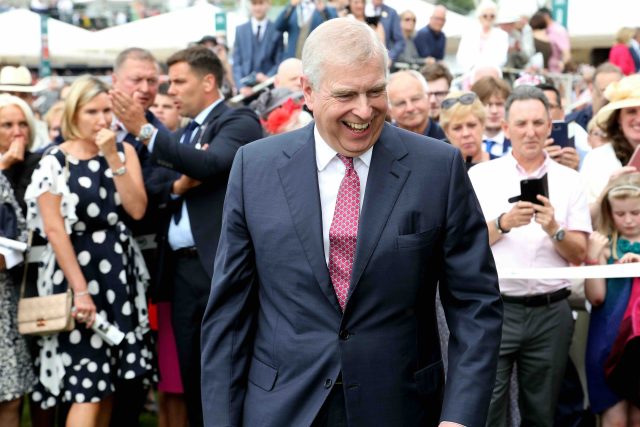
The Daily Telegraph recently published a story about the Epstein files, involving the former Duke of York, now Andrew Mountbatten-Windsor, and my country, Iceland. In February 2010, the Duke’s secretary wrote to a British official: ‘The Duke of York met with the prime minister of Iceland at Davos and would very much like to receive an update note on the latest position between the UK and Iceland on the matter of the deposits and the deposit scheme.’ A week later, the secretary received the necessary information. She passed it on to the Duke, who then shared it with a friend, Jonathan Rowland, whose family had purchased a remaining part of one of the Icelandic banks that collapsed during the 2007–2009 financial crisis in July 2009. In fact, the Duke got the office of his contact wrong. He met not with Iceland’s prime minister but with the president, Olafur Ragnar Grimsson. It’s unclear from the Telegraph story why this email exchange was in the Epstein files, nor is the official’s update note included. However, it would have been interesting to see the note, as it related to a story I wrote a report about in 2018 for the Icelandic Treasury.
No Deposits Lost
The Telegraph reporters comment: ‘At the time, Britain and Iceland were involved in a diplomatic dispute over British deposits lost during the 2008 banking crisis.’ They go on to say: ‘When the banking system collapsed, the Icelandic government prevented foreign depositors from withdrawing their money to protect the nation’s economy. Many of the depositors who lost access were British.’ This is not entirely accurate. No British deposits were lost in the 2008 Icelandic bank collapse. In Great Britain, Icelandic banks operated in two ways: some as subsidiaries (independent British companies owned by Icelandic banks), and others as branches of their parent banks in Iceland. The subsidiaries, as British banks, were protected by the British depositors’ insurance scheme. This applied to the bank of which the Rowland family had purchased a part, Kaupthing Singer & Friedlander, KSF. The depositors were fully covered in Great Britain. The dispute between Britain and Iceland concerned deposits in the British branch of Landsbanki, an Icelandic company, which was covered by the Icelandic depositors’ insurance scheme rather than the British one. During the collapse, the British government paid out the deposits and then demanded that the Icelandic government guarantee the payments, instead of waiting for the sale of the bank’s estate.
The Duke and the British Confused Three Issues
This dispute, however, was irrelevant to KSF, a British bank. After part of KSF was sold to the Rowland family, it was renamed Banque Havilland. The British authorities suspected foul play by the Icelandic banks operating in Great Britain, Landsbanki and KSF, but after numerous thorough investigations and police raids, they found no evidence. The Icelandic banks were certainly not blameless, but they had not been guilty of money laundering, like Danske Bank (rescued by dollar swap deals between the U.S. Federal Reserve System and the Danish Central Bank), or manipulating interbank rates (Libor), like the Royal Bank of Scotland, RBS (rescued by the British government). However, it appears that the Duke of York, like many of his compatriots, confused three separate issues: how to handle depositors’ claims for the British branch of Landsbanki (sell the assets and pay the depositors); how to handle depositors’ claims for the British bank KSF (pay the depositors through the British deposit insurance scheme and sell the assets); and whether the Icelandic banks had been guilty of any criminal activities (besides manipulating their stock prices, as nearly all banks did during the financial crisis). Finally, it should be noted that the British banks owned by Icelandic banks, Kaupthing’s KSF and Landsbanki’s Heritable Bank, both turned out to be solvent in resolution, unlike, for example, RBS. Therefore, it would have been interesting to read the note prepared by the British official for the Duke of York.