





 Subscribe


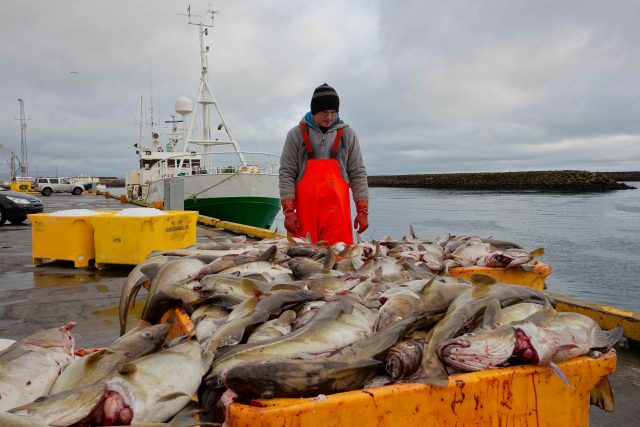
On 18 April 2026, Emil Eire Frerk Olsen, a journalist at the Danish newspaper Berlingske Tidende, published an extraordinary article on Iceland. According to him, the country is dominated by an oligarchy that holds most of the harvesting rights in Iceland’s fertile fishing grounds. People dare not criticise the oligarchs, who control not only the harvesting rights but also the media and some political parties. He cites interviews with more than twenty Icelanders. This is absurd. Probably no group in Iceland is subject to more criticism and envy than the owners of the Icelandic fishing firms. Olsen did not speak to the only two internationally recognised experts on the Icelandic fisheries, Professor Rögnvaldur Hannesson at the Bergen Business School and Professor Ragnar Árnason at the University of Iceland, who would have told him quite a different story. Needless to say, he did not consult me, although I have written two books in English on the Icelandic fisheries. Instead, he relies on a disgruntled leftist, Thorvaldur Gylfason, by no means a fisheries expert, who in 2013 founded a political party against the system in the Icelandic fisheries, receiving less than 2.5 per cent of the votes and no representation in Parliament. Few Icelanders take him seriously. (He has also suggested that Nixon had Kennedy killed and that the Twin Towers in New York were destroyed by bombs planted inside them.)
The Development of the Quota System
The first step towards the Icelandic system was taken in the herring fishery after its total collapse in the late 1960s. When harvesting resumed in 1975, each herring boat received a quota, or proportion, of the total allowable catch of herring. In 1979, those quotas were made transferable to increase flexibility and efficiency. A few years later, the same was done in the capelin fishery. After some erratic experiments in the much more important demersal fisheries (harvesting cod, haddock, halibut, and other species), the same system was adopted there in 1983. Each fishing vessel received a quota of the total allowable catch for each stock, based on its catch history over the previous three years. It is therefore false, as Olsen asserts, that the quotas were given to specially chosen people. The quotas became transferable, which meant that the more efficient fishermen could buy out the less efficient, and gradually the over-investment in the fisheries (caused by the previous open access) was reduced. The fishermen developed a strong interest in the long-term profitability of the fish stocks in which they held quotas.
Quotas Allocated by Catch History
The quotas for all fish stocks are now allocated through a lively quota market. The initial allocation has been criticised, but a moment’s reflection shows that this was the only feasible way to allocate the quotas at the outset. If the quotas had been allocated, for example, by a government auction, perhaps half of the fishing community would immediately have had to leave the fisheries because they could not bid against the owners of the most economically powerful fishing firms. Clearly, the fishing community would not have accepted this. A reduction in fishing effort was necessary. Instead of the government driving half the fishermen out through an auction, the fishermen themselves were allowed to buy one another out through free transfers of quotas over the years. This was a peaceful, gradual change in the system in which nobody became worse off (a Pareto-optimal change, as economists call it).
Pure Fantasies
It is also a pure fantasy that the fishing firms dominate Icelandic politics. In fact, all political parties are required to provide the Icelandic General Accounting Office with full information about their donors each year. It turns out that donations from the fishing firms are a negligible fraction of the political parties’ income, which is (unfortunately, I think) mostly financed by the government.
Olsen also swallows hook, line, and sinker the stories told by some journalists at the far-left online magazine Heimildin about their persecution by one of the fishing firms. The facts are quite the opposite. They have been obsessively persecuting this company and have been shown to have used illegally obtained material from the company’s staff. It is a complicated case and is still under investigation.